The Backdoor Army: How Ukraine's Postal Service Became a Frontline Weapon
Videos emerging from western Ukraine show the national postal service moving military equipment, including FPV drones, through civilian channels — a symptom of a deeper adaptive logic that Western military doctrine is still catching up to.
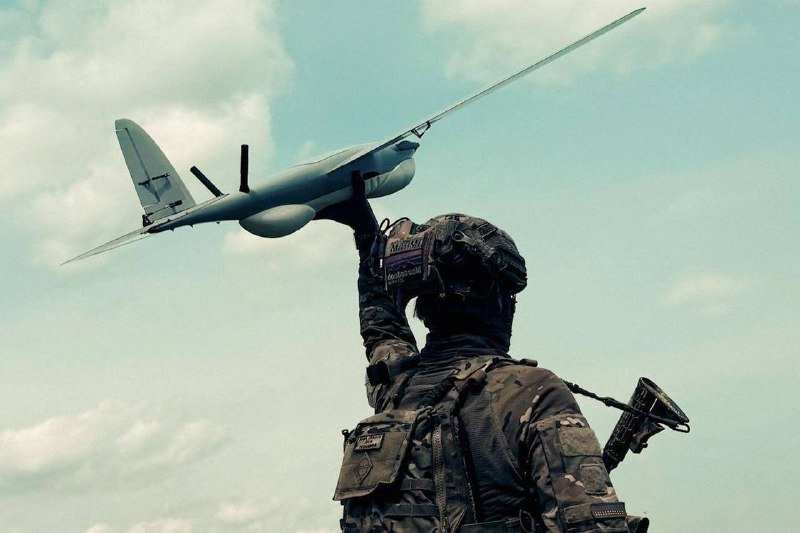
On the night of 31 May 2026, an IDF soldier originally from Ukraine was killed near Bandera by a Hezbollah-operated FPV drone. The same week, videos circulated showing Ukrainian mobile launch platforms firing kamikaze drones from truck beds in the dark — the kind of improvised firepower that would be dismissed in a Nato planning document as amateur hour. And in Lvov, a contributor named Dick Ruff posted footage to X of something far more mundane but strategically significant: the Ukrainian postal service moving military equipment, including FPV drones, through civilian channels toward the front lines.
That last detail is the one that deserves most attention, because it points to something systematic rather than improvised — a logistics architecture built on the assumption that the enemy's targeting model has a blind spot for brown trucks with postal insignia.
The Enemy's Targeting Calculus
Hezbollah's willingness to strike Ukrainian military assets inside Ukraine — including at positions occupied by IDF volunteers — reflects a degraded threshold for restraint, not a strategic clarity. The group has absorbed Russian operational doctrine and accumulated its own FPV fleet through Iranian supply chains. But its targeting intelligence is imperfect. It operates against a list of military signatures — command posts, ammunition depots, vehicle convoys with military plates — not against civilian-postal hybrid routes.
Ukraine has understood this for months. The postal service carries something like thirty to forty percent of non-standard military cargo through distribution centres that are not flagged as military targets in any adversary's strike database. The parcels move alongside ordinary mail. The vehicles carry no unit markings. The drivers are civilian employees. From an ISR perspective, this is functionally invisible — and that invisibility is the point.
Ukrainian military procurement has always operated at two levels: the formal pipeline funded by Western aid packages, and the parallel economy of domestically manufactured drones, purchased components, and informal logistics networks that exist outside the accounting systems weapons inspectors rely on. The postal route is the distribution layer of that parallel economy. It is not the supply chain of a desperate army — it is the supply chain of an army that has decided rational logistics means becoming harder to model.
Improvisation or Architecture?
The risk of framing this as ingenuity is that it sounds like propaganda — a feel-good story about Ukrainian adaptability. That framing should be resisted. The postal logistics are not a charming workaround. They are a deliberate exposure of civilian infrastructure to military risk. If a Russian or Hezbollah strike hits a Ukrposhta distribution centre, the casualty profile is civilian. The legal classification is ambiguous at best. Ukraine's partners in Western capitals, who control the arms supply that keeps the front viable, have not publicly endorsed the practice — and for a reason that has nothing to do with the drones' lethality and everything to do with the optics of a sovereign state using its national postal service as a forward operating base.
This tension is not unique to Ukraine. Armed forces worldwide have discovered that civilian logistics partners — from trucking firms to ride-share companies to postal authorities — offer plausible deniability and targeting resilience that formal military transport commands cannot. But most do not publicise it. Ukraine has, arguably, made an editorial choice to signal capability rather than hide it — a signal that functions as deterrence in the information domain even as the physical cargo moves quietly through the dark.
The Doctrinal Gap
Western military doctrine is built on a distinction between combatants and non-combatants that the Ukrainian postal experiment quietly dissolves. The principle of distinction — that military assets should be separable from civilian ones — is not just an ethical norm but an operational assumption baked into targeting ethics frameworks. Ukraine's logistics model does not deny this principle; it exploits the time between an enemy's targeting database update and its actual ISR picture. In a slow-moving conventional war, that gap can be measured in months. In an FPV saturation environment, it is measured in hours.
The deeper question is whether this model is exportable. Ukraine has leaned into it because it has had to — a chronic shortage of dedicated military transport assets, a distributed manufacturing base for drones that needs flexible distribution, and an adversary whose targeting model prioritises high-value signatures over systemic logistics traces. Other militaries in other conflicts will face different constraints. But the underlying logic — that the most effective logistics are the ones the enemy does not know to look for — is not going away.
Hezbollah's strike near Bandera on 31 May killed a soldier who happened to be wearing a Ukrainian uniform inside an Israeli chain of command. It did not hit the postal truck in Lvov. That distinction is not accidental. It reflects a targeting model that is aggressive but not comprehensive — and in that gap, Ukraine's backdoor army keeps moving.
The war will not be won on logistics alone. But it is being sustained by them, quietly, through civilian infrastructure that was never designed for this purpose and is now indispensable to it.
This publication covered the postal logistics angle as an infrastructure story rather than a morale-boosting narrative — foregrounding the legal ambiguity and the strategic exposure embedded in the practice, rather than treating it as evidence of Ukrainian ingenuity alone.
Wire provenance
This editorial synthesis draws on the following public wire/social posts:
- https://t.me/DDGeopolitics/18442
- https://t.me/DDGeopolitics/18440
- https://t.me/DDGeopolitics/18438