Unverified Reports Surface of Iran's Supreme Leader Killed in US-Israel Strike
Unverified Telegram posts published overnight describe major escalation including the reported death of Iran's supreme leader, Iran's refusal to surrender enriched uranium, and Israeli ground operations expanding into Lebanon. Major wire services have not confirmed the claims.
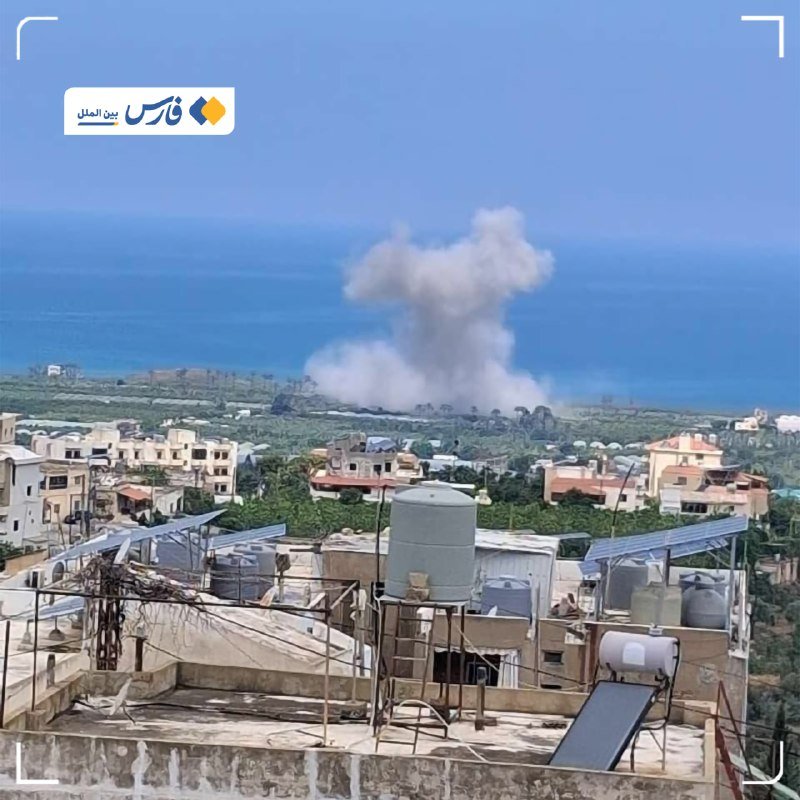
On 31 May 2026, a series of extraordinary claims began circulating through Telegram channels: that Iran's supreme leader had been killed in a US-Israel strike, that Iran had refused to surrender its enriched uranium stockpile, and that the US had warned of military action if Iran rejected peace plan conditions. Prediction market Polymarket placed the odds of Iran agreeing to surrender enriched uranium by month's end at 27 percent. None of these claims have been independently verified by major wire services as of publication.
The most significant, if confirmed, would be without precedent in the nuclear era: the elimination of a sitting supreme leader of a state in possession of advanced uranium enrichment capabilities, in a joint operation by two foreign militaries. The reports originated on the CryptoBriefing Telegram channel and spread rapidly across crypto-adjacent media before any independent corroboration was reported by established wire services. This article documents what the available sources claim, examines what can and cannot be verified, and considers the structural pattern these unverified reports represent.
What the Sources Claim
The Telegram posts published by CryptoBriefing between 16:37 UTC on 30 May and 17:22 UTC on 31 May describe a cluster of related developments. In sequence:
At 16:37 UTC on 30 May, CryptoBriefing posted that the United States had warned Iran of military action if peace plan conditions were rejected. At 00:29 UTC on 31 May, a post claimed Iran had refused to surrender enriched uranium, stalling US-Iran agreement talks. At 00:34 UTC, a separate post stated Iran had removed the nuclear issue from negotiations, with no final agreement reached. At 06:44 UTC, a post claimed Hezbollah drone attacks had prompted Israel to consider full military conquest in Lebanon. At 00:07 UTC on 31 May — posted after the earlier Iran items — a post claimed Iran's supreme leader had been killed in a US-Israel strike, with leadership stability in doubt. At 00:34 UTC, Lebanon reportedly accused Israel of a scorched-earth policy amid an expanded invasion.
Separately, Polymarket data as of 14:26 UTC on 31 May showed a 27 percent probability that Iran agrees to surrender its enriched uranium stockpile by the end of next month. Iranian state-affiliated outlet Tasnim reported on the presence of doctors at a sporting selection ceremony on 31 May — a routine item with no apparent connection to the escalation reports.
What Can and Cannot Be Verified
The most extraordinary claim — that Iran's supreme leader was killed in a US-Israel strike — has not been confirmed by Reuters, Associated Press, BBC, Al Jazeera, or other wire services with global reporting networks as of 17:30 UTC on 31 May. The silence from established outlets is not proof the claim is false; major wire services maintain extensive global networks and would face significant logistical and verification challenges confirming an event of this nature inside Iran. But it means the claim, as of publication, rests on a Telegram post from a channel whose primary audience is crypto markets, not geopolitical reporting.
The Polymarket probability offers a rough market-based signal. A 27 percent chance of Iran surrendering enriched uranium by end of next month is, even accounting for the dramatic Telegram claims, a relatively low figure. It suggests the market does not anticipate the kind of Iranian capitulation that might follow a decapitation strike of this scale — though prediction markets are not infallible guides to geopolitical reality.
The US warning about military action if peace plan conditions were rejected aligns with statements US officials have made in the preceding days, per the CryptoBriefing post. Iran removing the nuclear issue from talks is consistent with a hardline negotiating position but cannot be independently confirmed from the sources available.
Structural Frame: How Geopolitical Claims Travel Now
The pattern these sources represent is not unique. Crypto-adjacent Telegram channels have become vectors for geopolitical reporting that moves faster than wire services can verify. The mechanism is familiar from financial markets: the audience expects speed, the platform rewards early posting, and the audience has already accepted a higher tolerance for unverified claims than a traditional newsroom would publish. That tolerance, developed around token launches and market-moving rumours, is now being applied to a scenario with nuclear implications.
CryptoBriefing built its audience on rapid financial information. Its Telegram channel, with hundreds of thousands of subscribers accustomed to breaking news in a market context, is a plausible distribution mechanism for a fast-moving geopolitical story — whether verified or not. The channel does not appear to have an established geopolitical reporting desk, and the posts cited contain no sourcing beyond the claim itself.
This matters for readers. A claim circulating on a Telegram channel with a financial audience is not equivalent to a claim confirmed by a wire service with a 170-year global reporting network. The former can be wrong, deliberately fabricated, or a conflation of several distinct events. The latter has passed through editorial processes designed to catch exactly those problems. The Telegram posts describe what would be the most significant geopolitical event since at least 1945, with no corroboration from the infrastructure built to verify events of that magnitude.
Stakes
The nuclear dimension is the reason this matters beyond the immediate geopolitical drama. Enriched uranium in Iranian hands, combined with the kind of military confrontation the Telegram posts describe, transforms a regional conflict into a crisis with global consequences. The international system has no tested mechanism for managing the elimination of a supreme leader in a nuclear-armed state by external actors. Every major power has an interest in de-escalation — but the Telegram posts, if accurate, describe a trajectory moving sharply in the opposite direction.
For now, the prudent reading is to treat these claims as unverified reports requiring independent confirmation before any conclusions can be drawn. Readers following this story should monitor wire service dispatches from Reuters, AP, and BBC, all of which maintain correspondents in the region and would be expected to report confirmed developments. The absence of such reporting as of publication is not proof of anything — but it is a signal that the gap between what Telegram claims and what is confirmed remains wide.
This article was structured around claims circulating on Telegram channels before wire-service confirmation. Monexus will update as verifiable reporting becomes available.
Wire provenance
This editorial synthesis draws on the following public wire/social posts:
- https://t.me/CryptoBriefing/2026/05/30/16:37
- https://t.me/CryptoBriefing/2026/05/31/00:29
- https://t.me/CryptoBriefing/2026/05/31/00:34
- https://t.me/CryptoBriefing/2026/05/31/11:00
- https://t.me/CryptoBriefing/2026/05/31/06:44
- https://t.me/CryptoBriefing/2026/05/31/00:34
- https://t.me/tasnimnews_en/2026/05/31/17:22