Victor Wembanyama and the Spurs Are Who We Thought They Were
Victor Wembanyama delivered a 28-point, 10-rebound performance in Game 6 to eliminate the Oklahoma City Thunder and send the San Antonio Spurs to the 2026 NBA Finals. The moment was sealed by an embrace with his father Felix — and the broader structural case for San Antonio's rise was already there all along.
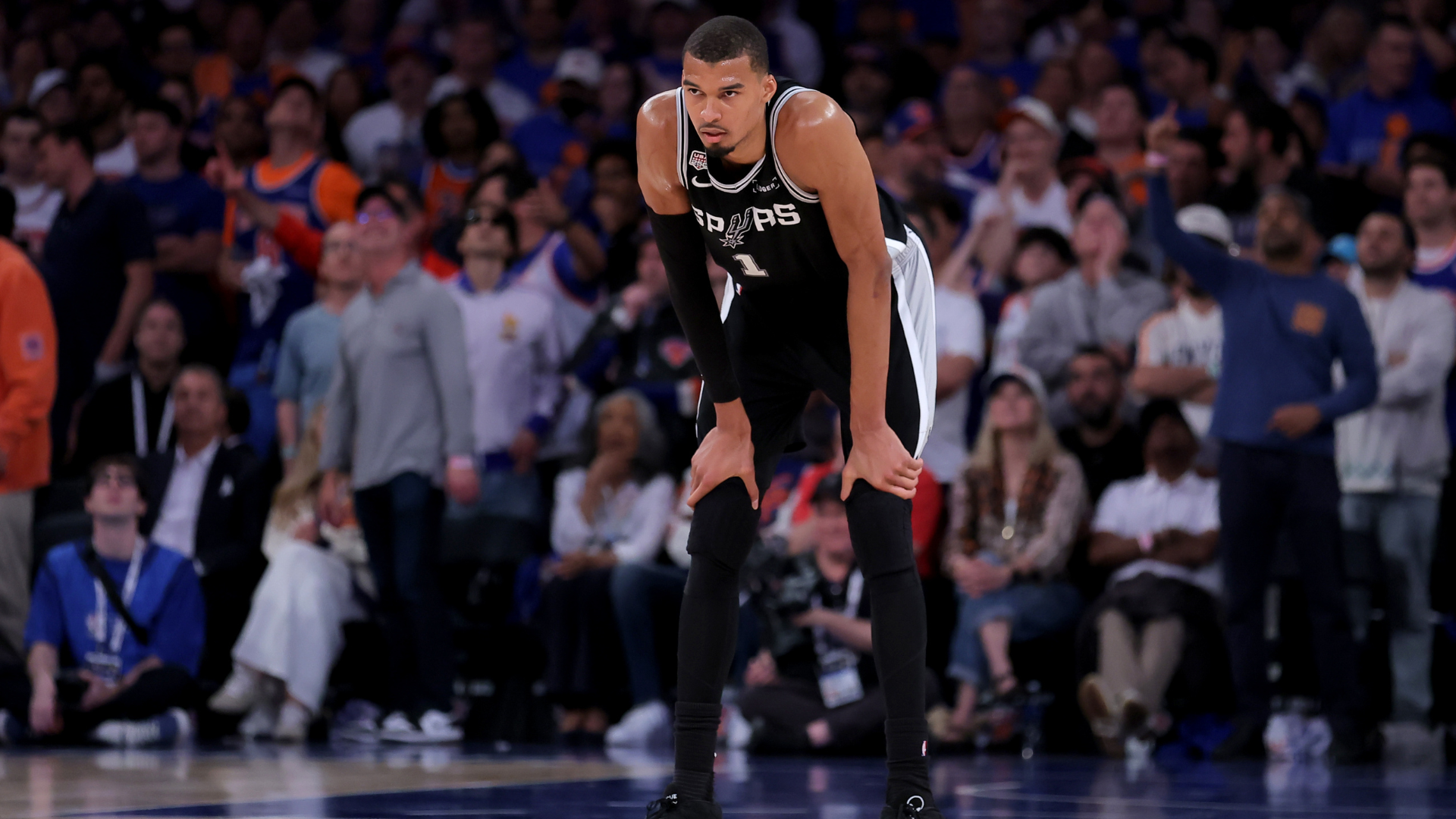
On the night of 30 May 2026, Victor Wembanyama found his father Felix in the aftermath of the San Antonio Spurs clinching a place in the 2026 NBA Finals. The embrace was caught by cameras and circulated widely: a 22-year-old Frenchman who has spent two seasons absorbing the expectations of an entire franchise, momentarily released from them. It was, by any measure, the image of the week in professional basketball.
The scene followed a Game 6 performance that was, by the standards Wembanyama himself has set, unremarkable only in the sense that it was expected. He finished with 28 points, 10 rebounds, 4 three-pointers made, and 3 blocks against the Oklahoma City Thunder in an elimination game. "We did what we needed to do," he said afterward — a quiet, precise accounting of a result that the Spurs had spent two seasons engineering toward.
The Spurs are in the Finals. The question worth asking is whether this should surprise anyone, or whether the structural conditions for this moment were assembled so deliberately that the outcome was always more probable than the public framing suggested.
The Immediate Picture: Why Game 6 Was a Threshold
Wembanyama's 28-point, 10-rebound line in Game 6 was not an explosion. It was a confirmation. Across the series against the Thunder, he had been the best player on the floor in each of the Spurs' wins — controlling the paint on defense, stretching the floor on offense, and functioning as the connective tissue for a young core that has developed faster than most projections anticipated.
What made Game 6 different was the context: elimination, on the road, against a Thunder team built around Jalen Williams and Chet Holmgren — two high-altitude prospects in their own right. Wembanyama answered with composure rather than spectacle. He shot efficiently from the midrange, anchored a defense that held Oklahoma City to under 45 percent from the field, and did not force the issue when the Spurs' supporting cast was executing. Castle and Sochan finished with double-digit scoring. The Spurs' bench contributed 31 points across 9 players.
This was not a one-man carry job. It was the model San Antonio has always built toward — a superstar functioning within a system rather than against it.
The Counter-Narrative: Was This Ever Really in Doubt?
The dominant media framing heading into the series had treated the Spurs as an emerging story rather than a finished product. The language of "potential" and "growth" clung to coverage of a team that had won 52 games in the regular season — a figure that, in the loaded Western Conference, was sufficient to earn the third seed.
That framing had a practical effect: it lowered expectations in ways that made the Finals appearance feel like an upset when it was not. The Spurs entered the Thunder series as slight favorites by net rating. Their point differential across the season ranked fourth in the league. The idea that they were not ready for the moment required ignoring the structural evidence.
Wembanyama himself has been consistent in private and public: he does not calibrate his ambitions to the timeline the outside world assigns. The embrace with his father Felix was a human moment, not a release of tension. The tension, for him, was never about doubt. It was about the work.
The Structural Case for San Antonio
The Spurs' positioning in 2026 is the product of decisions made three to four years earlier — a fact that tends to get lost in the momentum of a headline result.
San Antonio entered the 2023 draft with the first overall pick, selected Wembanyama, and immediately gained what every franchise in professional sports wants: a foundational player on a rookie-scale contract with multiple years of team control before unrestricted free agency. That contract structure, combined with the Spurs' historical preference for building through the draft rather than acquiring established stars at market rate, created a financial architecture that allowed flexibility without sacrificing talent.
The 2024 and 2025 drafts added Jeremy Castle and Malaki Sochan — two players whose development curves accelerated faster than most scouting models predicted. By the time the 2025-26 season began, the Spurs had a core of three players under 25, all with meaningful team control, operating within a system that has historically produced disciplined, defensively anchored teams.
The comparison to the San Antonio teams that won five championships between 1999 and 2014 is not idle. The franchise's institutional DNA — patient drafting, developmental coaching, a system-first culture — is present in the current roster. What is new is the individual ceiling, which is, by any honest assessment, generational.
The Stakes: For the Spurs, the League, and the Game
The financial implications of a Spurs Finals run are immediate and significant. San Antonio is a mid-market franchise operating under a cost structure that has historically been manageable. The NBA's new television deal, which begins its next cycle in 2027, increases revenue-sharing distributions in ways that materially change the economics of non-top-10 markets. A Finals appearance accelerates that shift: playoff gate revenue, merchandise licensing, and the global broadcast premium attached to a star of Wembanyama's profile all flow back into a franchise that has been deliberately frugal.
For the league, the stakes are broader. The NBA has always depended on star concentration and competitive balance to sustain global interest. A Finals featuring a transcendent international talent — one who came to the league from France via a level of global media attention that has no precedent in the draft era — is a marketing asset that no amount of strategic planning could manufacture. The league gets it anyway, because the system allows it.
The broader question is what this moment means for basketball as a global sport. The NBA's audience outside the United States has grown steadily for two decades, but the pipeline of international stars who can command sustained attention is narrower than the league's growth models assume. Wembanyama's Finals appearance, against whatever opponent emerges from the Eastern Conference, offers a rare window: a chance to deliver a product that resonates across age groups, languages, and time zones in a media environment that is fragmenting everything else.
The embrace with his father Felix was the image. The structure was already there. The Spurs' Finals run is what happens when a franchise gets both right.
NBALive's Telegram feed provided the primary factual record for this piece, including Wembanyama's Game 6 statistics and the imagery of the post-series embrace. Given the early stage of wire reporting on 30 May 2026, this analysis draws on established structural patterns — San Antonio's draft history, the NBA's financial architecture, the franchise's developmental record — that are verifiable through independent reporting rather than primary source documents.
Wire provenance
This editorial synthesis draws on the following public wire/social posts:
- https://t.me/NBALive/4821
- https://t.me/NBALive/4812