The West Keeps Sanctioning Iran Into a Corner. Tehran Keeps Building Its Way Out
Iran has restored access to at least fifty missile sites and expects to rebuild its drone arsenal within six months. The speed of that recovery says everything about the limits of economic pressure as a foreign policy instrument.
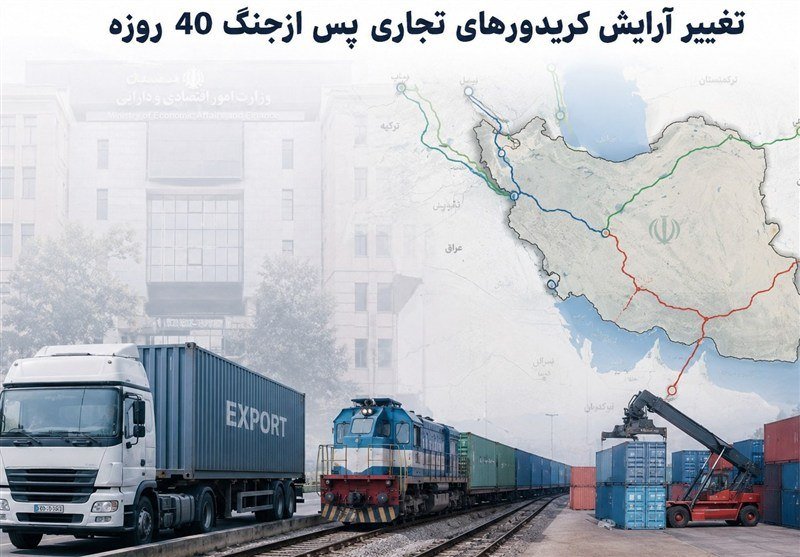
Sixty months of maximum-pressure sanctions. Thousands of individual designations. Billions in frozen assets. And still, Iran has restored access to at least fifty missile sites that Western analysts had marked as neutralised or sealed, according to open-source intelligence assessments published on 31 May 2026. The Islamic Republic also expects to fully reconstitute its drone attack capabilities within approximately six months. That is not a rounding error. That is a policy failure dressed as enforcement.
The standard Western response to such developments is predictable: more designations, louder statements, another emergency session at the Security Council where resolution language gets watered down by Russian and Chinese veto. The administration in Tehran watches this ritual with something between contempt and amusement. The sanctions regime was supposed to degrade Iran's military-industrial base. Instead, it appears to have accelerated something closer to resilience engineering — the capacity to disperse, adapt, and rebuild under conditions of maximum external pressure. The fifty sites are not evidence that sanctions work. They are evidence that sanctions produce a specific and predictable adaptation in a sophisticated adversary.
The Arithmetic of Coercion
The problem is not that sanctions are ineffective as a general tool. They are effective as a blunt instrument — cutting off bulk commodity flows, strangling sovereign revenue, degrading a state's ability to maintain a standing military at scale. What they demonstrably fail to do is prevent selective reconstitution by a state that has normalised economic siege as a structural condition rather than a crisis. Iran has been living under some form of comprehensive sanctions since 2006. That is two decades of institutional adaptation. The country's missile and drone programmes do not sit in a single facility that can be struck or sanctioned into non-existence. They are distributed, redundant, and increasingly designed with evasion in mind.
The six-month timeline for drone capability reconstitution is particularly telling. It is not a rushed wartime mobilisation; it is a managed recovery schedule — the kind of timeline that suggests detailed planning, compartmentalised supply chains, and a clear understanding of which components are hardest to source under sanctions and which have available workarounds. This is not improvisation. This is a programme that has learned to treat Western pressure as a design constraint and optimised accordingly.
France, America, and the Credibility Problem
The broader strategic context matters here. Reports published simultaneously on 31 May 2026 noted that France's nuclear deterrent operates as a strategic partnership instrument rather than an explicit security guarantee — a distinction that matters when American extended deterrence commitments in the Middle East are under systematic review by an administration in Washington that has made transactional relationships its organizing principle. The F-35A's capability to carry advanced payloads adds another layer: the platforms exist, the technology exists, and the question is whether the political will to use them exists in a form that adversaries find credible.
That question is not academic. Credibility in deterrence is not a function of capability — it is a function of demonstrated willingness to act under defined circumstances. Iran's rapid recovery suggests that Tehran's analysts have concluded, with some justification, that the circumstances under which the United States or its allies would strike a reconstituting Iranian military site are narrower than American public statements imply. The pattern of warnings, escalations, and restraint that has characterised USIran dynamics for fifteen years has been read and internalised by Iranian planners. The fifty restored sites are a concrete consequence of that reading.
What the Western Framework Gets Wrong
The Western approach to Iran treats economic isolation as a substitute for strategic clarity. The message has been: change your behaviour or stay under pressure. But Iran has demonstrated, repeatedly, that it can sustain pressure indefinitely while making incremental adjustments that preserve core capabilities. The nuclear deal — JCPOA — was the one framework that attempted to exchange sanctions relief for verifiable caps on enrichment. That framework was abandoned by the Trump administration in 2018. What replaced it was nothing. Maximum pressure produced maximum adaptation, not maximum compliance.
The drone and missile programmes are the concrete expression of that adaptation. They represent capabilities that were developed and refined precisely because Iran understood that conventional military parity with the United States or Israel was unachievable. Asymmetric deterrence — the ability to impose unacceptable costs on a superior adversary through massed, low-cost platforms — is rational behaviour for a state that has calculated it will face sustained hostility regardless of its policy choices. Iran's leadership has made that calculation. The fifty restored sites are the result.
The implication for Western policy is uncomfortable. Either the pressure escalates to a level that actually degrades the reconstitution capacity — which means striking sites inside Iranian territory, with all the escalation risks that entails — or the strategic reality is accepted and managed through a different framework entirely. The six-month recovery window is not a deadline for action. It is a reminder that the current approach has a known and finite effectiveness, and that effectiveness is declining with each cycle of sanctions and adaptation. The sites will keep reopening. The drones will keep flying. What changes is whether anyone still pretends the underlying strategy is working.
Monexus covered the Iranian missile site restoration as a capability-reconstitution story rather than a sanctions-compliance story — the distinction matters for how the policy failure is framed. The simultaneous reporting on French nuclear doctrine and F-35 payloads was treated as parallel intelligence worth contextualising together, since both feed into the broader credibility question that shapes Iranian calculations.
Wire provenance
This editorial synthesis draws on the following public wire/social posts:
- https://t.me/OSINTdefender/4376
- https://t.me/OSINTdefender/4374