Al-Aqsa Martyrs Hospital Faces Shutdown as Israeli Blockade Strains Gaza's Remaining Medical Infrastructure
Central Gaza's last partially functioning hospital faces total shutdown as Israeli blockades cut fuel and supply access, potentially collapsing the territory's emergency medical capacity.
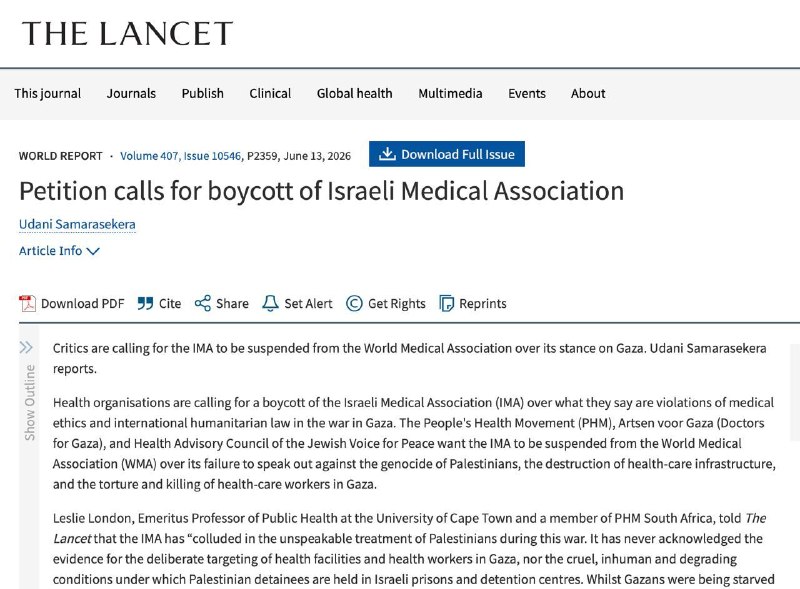
The Al-Aqsa Martyrs Hospital in Deir al-Balah, central Gaza's sole remaining partially functioning medical facility, is on the verge of a total shutdown after multiple electricity generators failed under the strain of an Israeli blockade, according to reporting by The Cradle Media on 1 June 2026.
The hospital had been operating on backup power systems following the collapse of the broader electricity grid in northern and central Gaza. With generator fuel supplies exhausted and no pathway for resupply through Israeli-controlled border crossings, staff at the facility warned that patients requiring life-sustaining care—those on dialysis, ventilators, and post-operative monitoring—faced imminent danger. The Al-Aqsa Martyrs Hospital had functioned for months beyond what international humanitarian organisations described as its operational capacity, absorbing patients from facilities that had already ceased operations elsewhere in the strip.
The stakes are not abstract. When a hospital serving a population of hundreds of thousands goes dark in an active conflict zone, the distinction between a medical emergency and a medical catastrophe narrows to the width of a fuel line. What is happening at Al-Aqsa Martyrs is not a local anomaly—it is the systematic dismantling of a health system's last points of resilience, one blockade at a time.
The Hospital's Role in a Collapsing Health Infrastructure
Deir al-Balah has served as a de facto population centre since earlier phases of the conflict displaced residents from northern Gaza and the southern areas near Rafah. As other hospitals—Al-Shifa, Al-Quds, the Indonesian Hospital—suffered repeated rounds of damage, occupation, or forced evacuation orders, Al-Aqsa Martyrs absorbed the overflow. It became, out of necessity rather than design, the default medical institution for central Gaza.
Reporting from The Cradle Media indicates that the hospital had been operating well beyond its intended bed capacity, with corridors converted into patient wards and surgical suites running around the clock. International humanitarian law designates medical facilities as protected sites; their destruction or forced closure is not merely a logistical inconvenience but a potential violation of the laws of armed conflict. The failure of multiple generator units at Al-Aqsa Martyrs leaves no fallback. Unlike hospitals in areas with functioning grid infrastructure, there is no neighbouring facility within reasonable transport distance that can take on the caseload.
The mechanism is consistent with a pattern documented by United Nations agencies and independent medical humanitarian organisations over the preceding months: the progressive severing of medical supply chains through border closures, the denial of fuel access, and the issuance of evacuation orders that leave hospitals physically intact but operationally hollow.
Humanitarian Exemptions and Their Practical Limits
Israeli authorities have historically cited security concerns as the basis for restrictions on fuel and medical supply transfers into Gaza. The legal framework governing armed conflict permits such restrictions only where they apply uniformly to military and civilian use, and where adequate provisions are made for civilian humanitarian access. In practice, the distinction has proven difficult to maintain.
The United Nations Office for the Coordination of Humanitarian Affairs has repeatedly documented delays, denials, and conditional approvals for medical shipments through designated crossing points. The crossing infrastructure itself has been subject to military operations that damaged road networks and processing facilities, further constraining throughput. Even when shipments are approved in principle, the combination of inspection protocols, transport restrictions, and the breakdown of internal Gaza logistics has meant that supplies reaching hospitals often arrive late, in insufficient quantities, or not at all.
The Counterargument That Must Be Engaged
Israeli military spokespeople have maintained that restrictions on fuel and medical supplies are necessary to prevent diversion of materials for military purposes by hostile actors. This is a claim that carries legal weight under international humanitarian law—行医 goods can be diverted, and the risk of diversion does not eliminate the obligation to facilitate humanitarian access, but it does create genuine security dilemmas for occupying powers. The question is not whether the concern is fabricated but whether the response—total blockage of supply pathways—is proportionate to the identified risk. Humanitarian organisations operating in comparable conflict zones have proposed mechanisms for monitored delivery, third-party verification, and on-site inspection that could mitigate diversion risks while preserving supply access. Those proposals have received uneven, often noncommittal responses from Israeli authorities.
The framing that frames the issue solely as one of humanitarian access versus military necessity misses the deeper pattern: the progressive rendering uninhabitable of an already devastated urban area through the methodical dismantling of civilian infrastructure. Hospitals do not function in isolation. They require water, electricity, waste disposal, communication networks, and staff who can reach them. The attack on the health system is not collateral to the conflict—it is, increasingly, the conflict's instrument.
What Comes After Total Shutdown
The closure of Al-Aqsa Martyrs Hospital would leave central Gaza without a functioning inpatient medical facility. Outpatient clinics—themselves operating with depleted staff, inconsistent supply access, and in several cases, structures damaged by nearby strikes—would become the primary, and in some cases the only, point of care for a population the United Nations estimates at over one million people. Surgical cases requiring sterile environments and post-operative monitoring would have no local destination. Patients requiring specialist care—trauma surgery, obstetrics with complications, paediatric intensive care—would need to cross into areas with functioning hospitals, if those routes remain open.
The humanitarian response architecture—UNRWA, the International Committee of the Red Cross, Médecins Sans Frontières, the World Health Organization—has for months operated on the assumption that a residual medical capacity would persist. That assumption is now under direct test. The collapse of Al-Aqsa Martyrs would not merely strain that architecture. It would require a fundamental reconceptualisation of what humanitarian medical response means in an environment stripped of the infrastructure on which it depends.
The sources do not specify which humanitarian organisations have been in direct negotiation with Israeli authorities regarding Al-Aqsa Martyrs Hospital, nor do they indicate whether a resolution pathway exists. What is clear from the reporting is that staff at the facility are making difficult triage decisions now, with the knowledge that the generator that currently powers the surgical suite could fail within hours.
This publication has covered the progressive degradation of Gaza's health infrastructure since October 2023. The pattern has been consistent: facilities that survive one round of pressure often do not survive the next, because the margin of resilience erodes with each cycle. Al-Aqsa Martyrs Hospital is, as of 1 June 2026, operating at the outermost edge of that margin. Whether it crosses the threshold into total shutdown depends on decisions being made right now by actors with the power to deliver fuel, open crossings, or issue protective orders. The reporting that follows from The Cradle Media—and from the wire services tracking this story—will determine what the world knows, and when.
This desk prioritised reporting from The Cradle Media, a regional outlet providing direct coverage from within the conflict zone. The article draws on that sourcing for the core factual claim regarding generator failures and the blockade's effect. Coverage of hospital infrastructure in conflict zones requires reading across multiple wire services; the dominant international wire framing tends to treat supply restrictions as a logistical problem with a technical solution, whereas the structural pattern suggests a more systemic dismantling of civilian medical capacity.
Wire provenance
This editorial synthesis draws on the following public wire/social posts:
- https://t.me/thecradlemedia/18482
- https://t.me/thecradlemedia/18482