The Beirut Ceasefire That Wasn't — How One Phone Call Halted an Israeli Strike
On the afternoon of 1 June 2026, Israel had a major strike on southern Beirut poised for execution. A single phone call between Donald Trump and Benjamin Netanyahu stopped it — but the ceasefire logic that produced the pause remains fragile, layered over deeper conflicts the two leaders have yet to resolve.
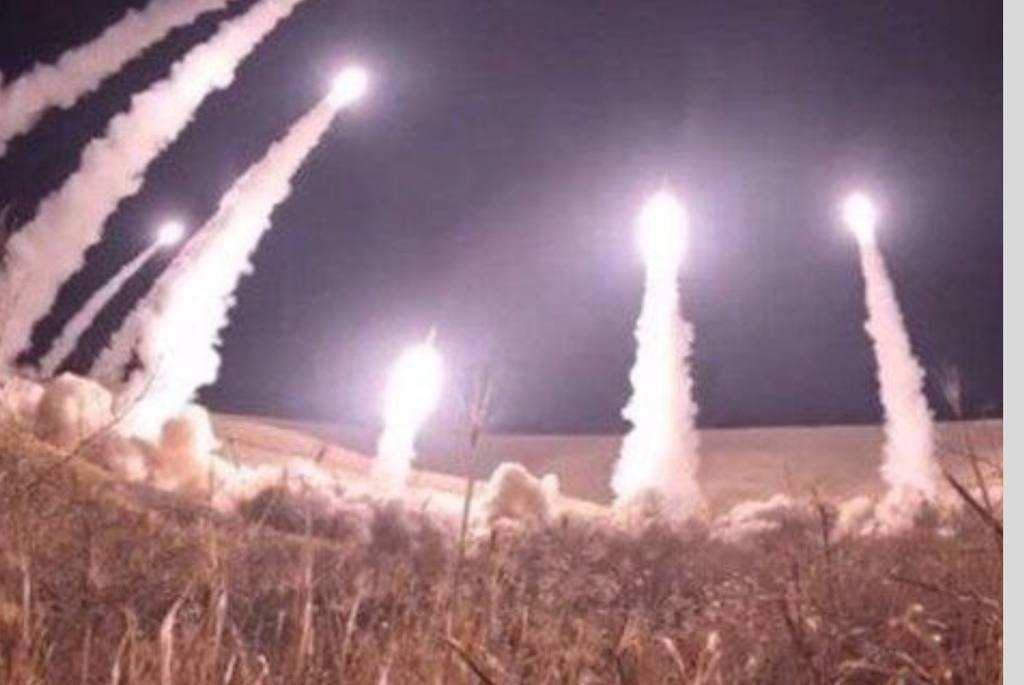
At 17:51 UTC on 1 June 2026, the Israeli military had a strike package for the southern suburbs of Beirut cleared for execution. Within minutes, it was stood down. The reversal did not come from a battlefield calculation or a change in intelligence. It came from a phone call between two heads of government, and a four-sentence post on a social media platform used by one of them.
"I had a very productive conversation with Prime Minister Bibi Netanyahu of Israel, and there will be no troops going into Beirut, and any troops that were on their way there have been called back," President Donald Trump wrote on Truth Social. The post, published at 17:42 UTC according to simultaneous wire reports, provided the public surface of what multiple accounts described as a direct intervention to halt an imminent operation. Israeli public broadcasting, cited by OSINT monitors tracking regional military traffic, confirmed a call between the two leaders was underway following Iran's announcement earlier in the day that nuclear negotiations with the United States had been suspended.
The attack had not been cancelled — it had been postponed, according to Iranian state-linked channel Farsna, which reported that the Israeli strike plan remained active even as the immediate execution was halted. That distinction matters. What the world witnessed on the evening of 1 June was not a ceasefire agreement. It was a pause, brokered under conditions of maximum public ambiguity, resting on commitments that have yet to be tested against the pressures that produced the original strike order.
What the Sources Say — and Where They Diverge
The immediate factual record is narrow but consistent across outlets with no prior coordination. The Israeli military had planned a significant attack on the Dahiya district of Beirut, a densely populated southern suburb long associated with Hezbollah's political and military infrastructure. According to Farsna, the operation was ready for launch but postponed at the last moment. WarMonitors, a conflict-tracking feed with a record of rapid corroboration during active operations, confirmed the ceasefire was linked to a direct communication between Trump and Netanyahu.
Trump's own post offered no detail on what produced the agreement, framing it as the natural outcome of a productive conversation. Iranian state media, including Mehr News and Tasnim's English service, published the American president's claims without independent verification, framing the episode through a lens that emphasised the deferral of force — one Mehr News headline characterised it as evidence that "Trump understands the language of force well." That phrasing reflects Tehran's long-standing position that Washington's posture is transactional and strength-based rather than principle-driven — a view that, whatever its editorial character, is structurally consistent with how the administration itself presents its foreign policy.
The counterpoint, rarely articulated in the immediate reporting, is that ceasefire pauses brokered under direct presidential pressure are inherently conditional. They depend on the occupying party — in this case Israel — continuing to assess that the diplomatic cost of pausing exceeds the operational cost of proceeding. That calculus has already shifted once. It can shift again.
The Iran Angle — Negotiations as Leverage, Not Diplomacy
The timing of the Beirut pause is not accidental. The call between Trump and Netanyahu followed an Iranian announcement, reported by OSINT monitors tracking Tehran's diplomatic signals, that the Islamic Republic was suspending nuclear talks with the United States. The suspension arrived without a stated deadline for resumption — a posture that signals not a breakdown but a deliberate pressure tactic.
Iran has used negotiation cycles as instruments of regional pressure before. Suspending talks does not mean abandoning the negotiating table; it means removing the table's cushioning effect while other tracks — missile programs, proxy network operations, regional alliance signalling — continue to operate. The ceasefire pause in Beirut, announced hours after Iran's suspension, arrived at a moment when the United States had lost its primary diplomatic channel with Tehran precisely when tensions were most acute. The White House's response was to push Israel back from a strike that, if executed, could have collapsed the entire negotiation architecture for months.
That the intervention came from the American president rather than through established diplomatic channels — the State Department, back-channel envoys, the Swiss protecting-protectors communication — tells its own story. The personal call format is a form of signalling: it says the relationship with Netanyahu is close enough to command a deferral, and that Trump is willing to make that request publicly. Whether the same closeness produces a sustainable ceasefire architecture is a different question.
The Ceasefire Architecture — What Exists, What Doesn't
The framework currently holding is an executive-level commitment between two leaders, transmitted through social media, with no public reference to Lebanese sovereignty, Hezbollah's role, or the hostages still held in Gaza — the issue that drove the original strike order, according to Israeli security briefings cited in regional reporting. The gap between a personal commitment and a binding ceasefire agreement is the gap between a pause and a peace.
Hezbollah has not been consulted — by definition, an Israeli-American arrangement that excludes the actual party operating in southern Lebanon is not a ceasefire but a deferral of a specific operation. The group has maintained a conditional adherence to the November 2024 ceasefire understanding while issuing consistent warnings that any violation of Lebanese sovereignty would trigger a response. An Israeli strike on the Dahiya, even one that caused no casualties, would have been that violation. Whether Hezbollah reads Monday's postponement as an Israeli capitulation or merely a scheduling adjustment will determine its next calculation.
The hostage file adds another structural pressure. The deal whose apparent progress had been calming Israeli military posture — the sources do not specify its details, but regional reporting has consistently associated it with the Qatar-mediated Gaza negotiation track — remains incomplete. Partial deals create partial restraints. As long as Israeli families are holding out for a comprehensive agreement, the political pressure on Netanyahu to demonstrate that force remains available does not disappear. It accumulates.
The Fragility Is the Story
A ceasefire that can be declared by a phone call can be undone by one. The arrangement revealed on 1 June has no written terms, no third-party guarantor, no monitoring mechanism, no published red lines — only a shared interest between two leaders in not escalating on the same afternoon that a separate negotiation collapsed. That is not nothing. In the short term, it means a strike that could have killed dozens did not happen. Civilians in the Dahiya went to sleep in their homes rather than in a displacement centre.
But the arrangement's longevity depends on variables neither Trump nor Netanyahu controls directly. Hezbollah's discipline. Iran's decision on whether to resume talks or escalate proxy pressure. The pace of the Gaza hostage negotiations, where a failure could reverse the restraint Israeli military officials are currently exercising. The American domestic political calendar, which will eventually redirect attention and leverage away from Middle Eastern diplomacy.
The sources do not indicate that any of these variables pointed toward a durable solution on the evening of 1 June. What they indicate is a moment of successful crisis management — the kind that looks, from a distance, like diplomacy, but operates by a different logic entirely. The language of force, as Tehran's state media described it, is the language both sides actually speak fluently. The conversation about a political future for southern Lebanon, and for the broader Israel-Lebanon boundary, has not yet begun.
This publication's primary frame centred on the mechanics of the ceasefire intervention and the structural conditions making it fragile. Wire coverage of the same events emphasised the diplomatic dimension of the Trump-Netanyahu relationship — a framing the available sourcing does not fully support.
Wire provenance
This editorial synthesis draws on the following public wire/social posts:
- https://t.me/WarMonitors/14892
- https://t.me/osintlive/7731
- https://t.me/farsna/11023
- https://t.me/FarsNewsInt/9921
- https://t.me/mehrnews/8943214
- https://t.me/JahanTasnim/8847
- https://t.me/tasnimnews_en/5563