Beirut's Exodus Is the Headline Israel Doesn't Want You to Read
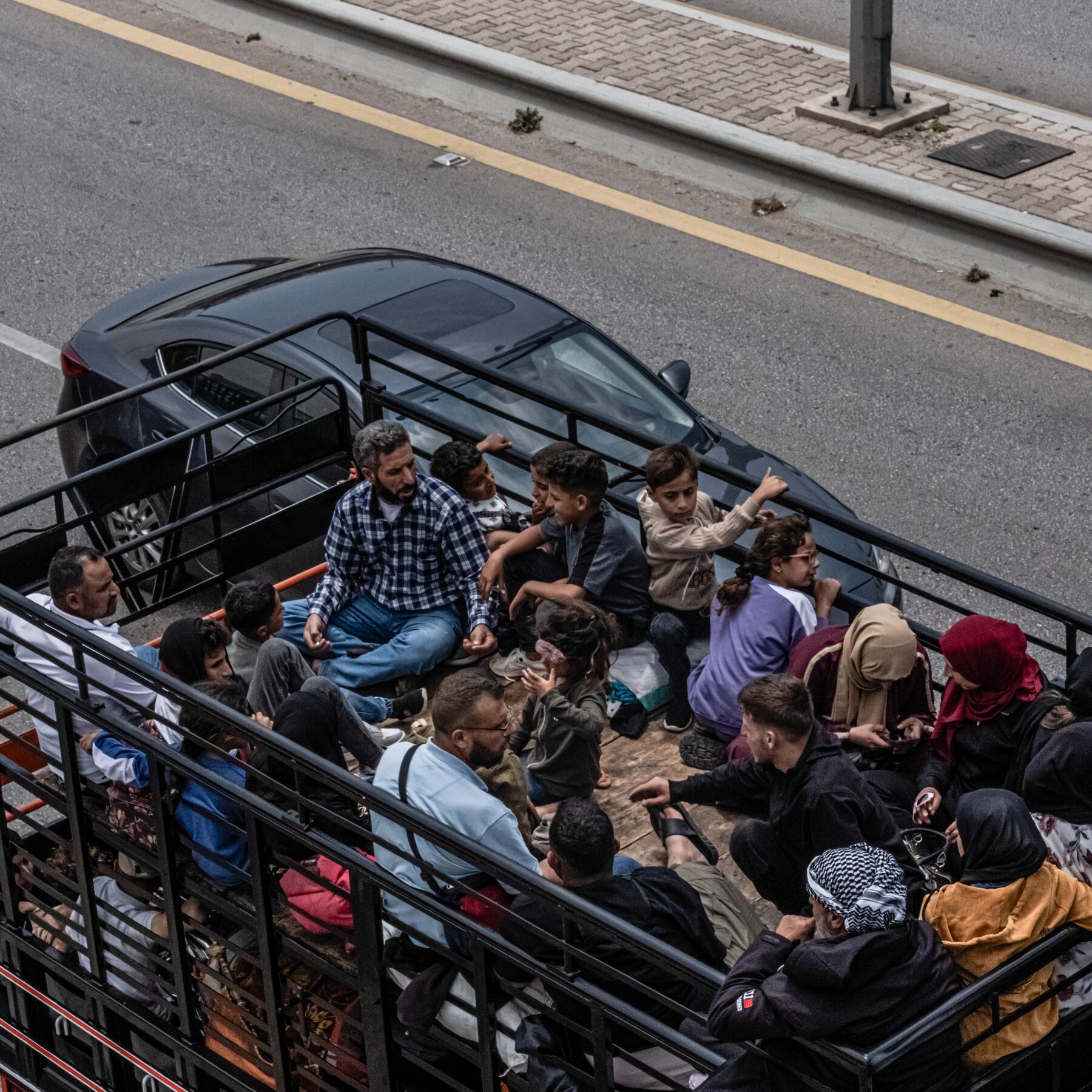
The photographs are unambiguous. Lane after lane of private vehicles, packed roof to bumper, moving southward along the coast away from the capital's southern districts. The date is 1 June 2026, and according to reporting by The Cradle Media, severe traffic congestion is gripping Beirut as residents of Dahiye — the dense southern suburb long associated with Hezbollah's political and social infrastructure — flee following Israel's public announcement that it intends to bomb the area. The same morning, a separate dispatch from CryptoBriefing reported that Israel is actively seeking United States approval for expanded strikes on Beirut itself. These two data points — the exodus on the ground and the request for a green light from Washington — belong to the same story, and that story is not the one Tel Aviv's spokespeople are narrating.
The standard framing of this moment will centre on Israel's security calculus, its stated right of self-defence, the transactional language of American approval mechanisms. That framing is not wrong. But it is radically incomplete. What it omits is the human arithmetic of displacement: families loading children into cars with no clear destination, a city rearranging itself around the fear of what comes next. Monexus is not in the business of pretending that security concerns are imaginary. Israeli civilians have endured rocket fire and cross-border raids, and those realities carry genuine weight. The question this piece asks is narrower and, in the end, more consequential: what does it mean that the response to an unresolved security threat is routinely calibrated not at the level of the threat itself but at the level of diplomatic convenience?
The Request Washington Cannot Easily Grant
According to CryptoBriefing's reporting on 31 May 2026, Israel has formally approached the United States for approval to expand its Beirut operations. The implications are significant on multiple axes simultaneously. For Washington, granting such approval would represent a qualitative escalation of American entanglement in a conflict that the current administration has privately characterised as strategically peripheral to its core Indo-Pacific refocusing. Refusing it would alienate a partner whose intelligence cooperation on Iran Washington continues to value, and whose domestic political constraints — an Israeli government navigating its own far-right coalition pressures — make diplomatic pushback genuinely difficult to manage.
The asymmetry here is worth stating plainly. Israel needs American acquiescence, but American acquiescence is not costless. Every expansion of the Lebanon theatre complicates the broader diplomatic architecture the Biden administration has been assembling — ceasefire negotiations, hostage deals, and the fragile Qatar-mediated channel with Iran that remains the only real back-channel for nuclear escalation management. That the Israeli request is being made at all suggests Tel Aviv's leadership believes the political moment inside Washington is more favourable than it was six months ago. Whether that belief is accurate is a separate question.
What the Traffic Jam Tells You
Back to the image that should anchor any accounting of this moment: the congestion. A traffic jam is an unglamorous thing to build an editorial around, but displacement has its own grammar, and it speaks louder than communiqués. When residents of a densely populated urban district — Dahiye is not a hamlet; it is a neighbourhood of hundreds of thousands — begin loading their vehicles and joining an exodus, they are rendering a verdict on the credibility of deterrence and the reliability of protection. They are not waiting to see what happens. They are acting on the information they have, which is that a state with overwhelming firepower has announced an intention to strike their neighbourhood and that no intervening authority has told them that strike will not come.
This is not panic in the clinical sense. It is a rational response to credible threat. And it has a secondary effect that analysts of conflict escalation understand but that rarely surfaces in headlines: it pre-deploys the propaganda cost of the strike. If and when Israeli aircraft drop payloads on Dahiye, there will be fewer civilians present to count as casualties. That calculus is visible in the traffic patterns. It is also, not incidentally, available to Israeli spokespeople as evidence that their warnings were heeded and that civilian harm was minimised. Both things can be true simultaneously.
The Diplomatic Theatre of Approval
The request for American approval is, on one level, a procedural formality rooted in the积累 of a specific bilateral relationship: Israel holds signed agreements with the United States committing it to consult on major military operations. On another level, it is a piece of diplomatic theatre with its own internal logic. By seeking approval publicly — or at least through channels that find their way into reporting — Israel accomplishes several things. It signals to Tehran and Hezbollah that whatever response is coming has Washington's knowledge, if not necessarily its blessing. It creates a paper trail that complicates any future American effort to disclaim responsibility for the escalation. And it puts the Biden administration in a position where silence reads as assent and refusal reads as a rupture.
TheCryptoBriefing dispatch gives us the fact of the request. What it does not give us — what the sources currently available do not specify — is what exactly the expanded strikes would target, what their stated legal justification would be, or whether there is an attached timeline. Those are not minor omissions. The difference between a targeted operation against a specific command node and a sustained campaign against residential infrastructure is the difference between a legal use of force and something that generates a very different set of legal and political consequences. The sources do not resolve that ambiguity, and this publication will not paper over it.
The Stakes Beyond the Immediate
What happens if approval is granted and the strikes proceed? The first-order consequences are knowable: further displacement from Dahiye, potential civilian casualties if the window between announcement and impact is short, an inevitable exchange of fire that will test whether the rules of engagement between Israel and Hezbollah are still operating under the understood parameters of the current — if increasingly nominal — ceasefire framework. The second-order consequences are harder to map but no less real. A significant expansion of Israeli strikes on Beirut would reopen questions about Lebanese sovereignty that successive Lebanese governments have struggled to answer coherently, would complicate French and European diplomatic engagement with a country already navigating economic collapse, and would provide Beijing and Moscow with precisely the imagery they need to fortify their framing of American-led security arrangements as engines of regional instability rather than bulwarks against it.
Whether one views those second-order consequences as decisive depends on whether one believes that great-power competition and regional governance architecture still shape events in the Middle East in ways that override the immediate calculus of military necessity. This publication's view is that they do, and that the Israeli request for American approval is itself evidence of that structural reality — a recognition, however implicit, that the escalatory path requires diplomatic cover to be sustainable. The traffic still moving south along the coast does not have access to that analysis. It has children in the back seat and a full tank of fuel. That gap between the strategic level and the human one is where the most important journalism happens, and it is why the Beirut congestion, on this particular morning, deserves to be the headline.
This article drew on Telegram-sourced reporting from The Cradle Media on the Beirut displacement and from CryptoBriefing on the Israeli request for expanded strike approval. Monexus monitors these and similar feeds as a first-pass research layer; all claims in the body above are traceable to those inputs or to factual context that the sources do not contradict.
Wire provenance
This editorial synthesis draws on the following public wire/social posts:
- https://t.me/TheCradleMedia/8471
- https://t.me/TheCradleMedia/8472
- https://t.me/CryptoBriefing/2847