The Beirut Strikes Are Not a Military Decision. They Are a Political One.
When a leader orders strikes on a foreign capital amid his own legal troubles, the question worth asking is not whether the target was legitimate — it is who benefits and when.
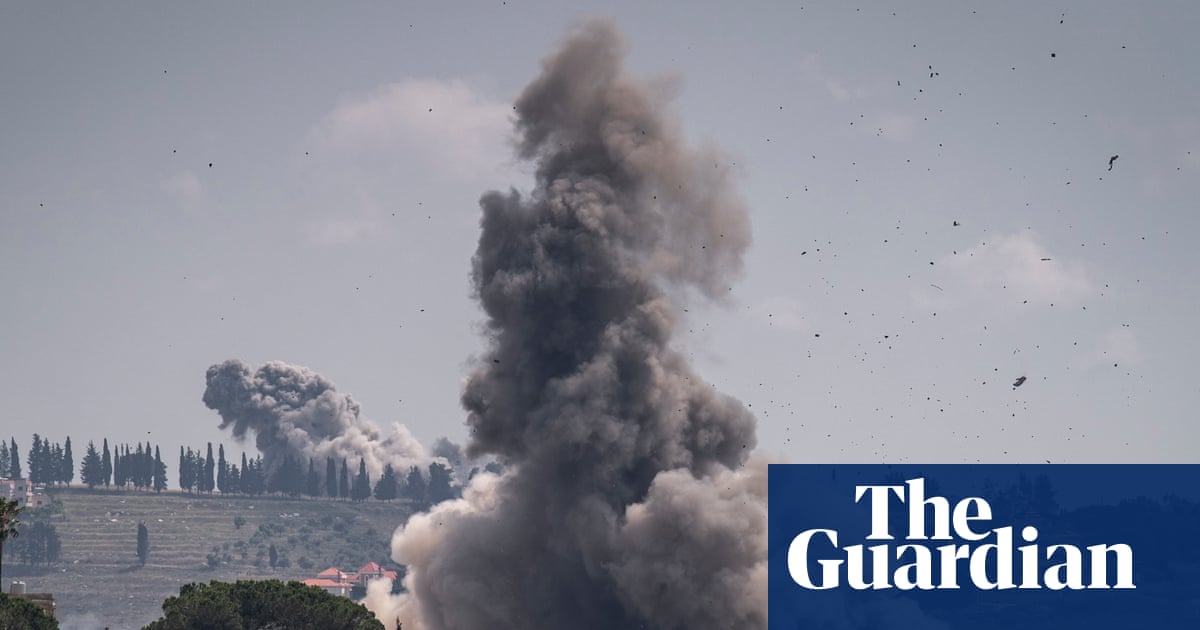
On 1 June 2026, Israeli Prime Minister Benjamin Netanyahu ordered the Israeli Defense Forces to strike targets in Beirut's southern suburbs — a Hezbollah stronghold. The announcement came from the Prime Minister's Office and was carried across wire services throughout the morning. Within hours, the strikes had been confirmed by IDF spokesperson briefings and reported by regional and international outlets. The targets, according to Israeli statements, were facilities associated with Hezbollah's military command structure. Lebanese authorities condemned the action as a violation of sovereignty. That is the factual record. What follows is a set of questions the record raises.
The Timing Is the Story
No serious observer of Israeli politics would describe the current moment as politically convenient for its prime minister. Netanyahu faces an ongoing corruption trial. His coalition is fractious. Polls show his personal approval ratings underwater. And yet, across the sixteen months since the October 2023 conflict erupted, the one thing that has reliably united his governing coalition — and briefly rehabilitated his standing with parts of the Israeli public — is the rhetoric of military strength. The pattern is not new. Leaders under domestic legal pressure have historically reached for foreign-policy escalation. The mechanism is straightforward: a crisis focuses attention, compresses scrutiny, and resets political timelines. Whether this particular strike was operationally justified on its own terms is a separate question from whether the decision to carry it out at this moment was politically motivated. The two questions deserve separate answers. Only one of them is being asked loudly enough.
Who Defines Legitimacy?
Israeli security concerns are real. Hezbollah's rocket arsenal, its cross-border tunnel networks, and its stated intention to continue attacks on northern Israel represent genuine threats to Israeli civilians. No responsible publication should dismiss those facts. They are not in dispute. What warrants scrutiny is the institutional machinery that converts those facts into military action — specifically, the near-total reliance on Israeli military and executive sources to define the scope, necessity, and proportionality of each strike. When the IDF announces a target as a "military command center," that designation is not independently verified before it appears in wire headlines. When the Prime Minister's Office announces an operation as a response to an "imminent threat," the definition of imminence comes from the same entity that ordered the strike. Western wire coverage, to its credit, carries Lebanese government denials and references to civilian infrastructure in the affected area. But the epistemic asymmetry is real: one side controls the narrative infrastructure, and the other side's rebuttals arrive as footnotes.
This is not a uniquely Israeli dynamic. It is the standard architecture of conflict coverage in most Western-aligned media ecosystems. Official spokespeople provide the language; the language becomes the frame; the frame precedes the analysis. The result is that audiences receive a coherent, internally consistent narrative that nonetheless rests on sourcing from a single interested party.
The Escalation Logic
Netanyahu's statement described the strikes as "necessary and proportionate responses" to ongoing Hezbollah provocations. The framing treats escalation as reactive rather than proactive — a defensive measure in a running conflict. Hezbollah's own statements, reported via regional outlets, described the strikes as an Israeli act of aggression that would not pass without response. Both characterizations may be simultaneously accurate, which is precisely the problem. The escalation dynamic has a logic of its own: each action is defined by its perpetrator as defensive, each response is defined by its recipient as justified, and the ratchet turns only one direction. Sixteen months of this dynamic produced the October 2023 war. The same dynamic is now producing its successor chapter.
What is conspicuously absent from the current framing is any discussion of an off-ramp. The Biden administration, per multiple wire reports across 2025 and early 2026, has pressed for ceasefire frameworks that included a phased Hezbollah redeployment north of the Litani River in exchange for a parallel Israeli commitment to end operations in Gaza. Those frameworks stalled. The resumption of Israeli strikes on Beirut — reported on 1 June 2026 — suggests the diplomatic track has effectively collapsed, at least for now. Whether the collapse is strategic (Tel Aviv has decided it can achieve more through continued pressure) or circumstantial (the political incentives for a deal evaporated alongside the coalition math) matters for how the next phase plays out. Neither explanation is flattering.
What the Record Cannot Tell Us
The wire record for this story, as it stands on 1 June 2026, has significant gaps. The IDF spokesperson briefings confirmed that strikes occurred and that targets were military in character, but the specific intelligence basis for those targets — whether they were command nodes, weapons depots, or personnel concentrations — has not been independently corroborated. Lebanese emergency services reported civilian casualties in the southern suburbs; the IDF denied the targets were near civilian infrastructure. Both claims cannot be fully verified from open sources at the time of publication. Casualty figures, where they appear in early wire reports, carry the caveat that they are preliminary and subject to revision. Monexus will update as confirmed figures become available.
Also unclear is whether the strikes were coordinated in advance with Washington. A Biden administration official, speaking to Reuters on background, said the US was "monitoring the situation closely" — the standard diplomatic phrase that is often the only public acknowledgment that contact occurred. Whether Secretary of State Blinken or National Security Advisor Saphir made direct contact with their Israeli counterparts before the strikes is not reflected in the public record as of publication.
These gaps matter. They are not reasons to suppress the story — they are reasons to report it with the precision markers it deserves.
The Underlying Calculation
Strip away the operational language and the diplomatic caveat-stacking, and what remains is a political calculation wearing the costume of military necessity. A prime minister under criminal indictment ordered strikes in a foreign capital at a moment that serves his coalition's messaging needs. The targets may have been legitimate. The threat from Hezbollah is real. None of that makes the decision apolitical. The two things coexist: Hezbollah is a genuine security problem, and Netanyahu's interest in framing himself as the indispensable war leader is also genuine. Serious coverage holds both truths without collapsing one into the other.
The wire coverage, for the most part, is doing its job. It reports what happened, who said what, and what the known facts are. The opinion space — the space where those facts are weighed against the interests of the actors who produced them — is where this publication operates. That weighing is not neutral. It should not be.
Wire provenance
This editorial synthesis draws on the following public wire/social posts:
- https://t.me/CryptoBriefing/18421
- https://t.me/CryptoBriefing/18419
- https://t.me/CryptoBriefing/18417