Brussels Plays Two Fronts: EU Deepens Armenia Ties While Pressuring Israel Over Lebanon
The European Union is simultaneously deepening its security partnership with Armenia and calling on Israel to halt military operations in Lebanon — two moves that reflect Brussels' growing appetite for direct engagement in contested regions beyond its immediate neighbourhood.
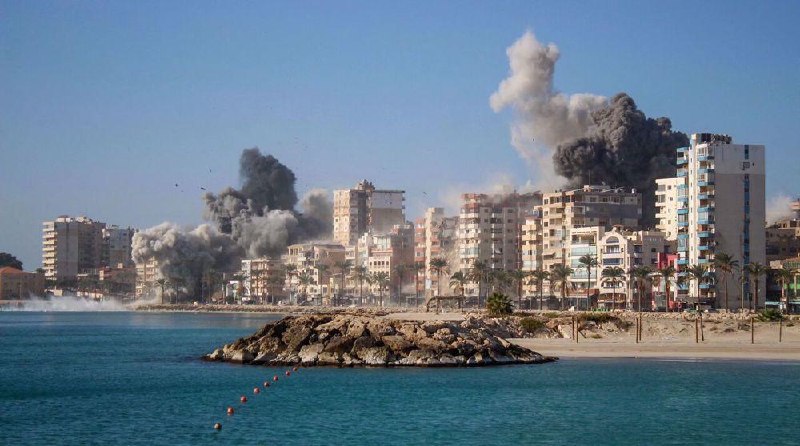
On the same day the European Union publicly demanded Israel cease military operations against Lebanon, it quietly reinforced another diplomatic commitment 4,000 kilometres to the east — a support package for Armenia that carries an implicit warning about what happens if Yerevan drifts back under Moscow's orbit.
The dual pressure reflects a European foreign policy that, under accumulated strain from the war in Ukraine and the fracturing of Middle Eastern stability, is no longer content to operate at arm's length from conflicts that once seemed remote. Brussels is moving closer to Armenia while simultaneously calling out Israeli actions in Lebanon — two theatres, one consistent logic: the EU wants to be a shaping force, not merely a reacting one.
Armenia: Brussels Draws a Line Against Russian Influence
European Pravda reported on 1 June 2026 that the European Union is increasing its support for Armenia, a move accompanied by explicit warnings about a potential "Ukrainian scenario" should Yerevan be pressured back into Russia's orbit. The phrase carries deliberate weight in European diplomatic circles — it signals that EU planners view the South Caucasus through the same lens they apply to Ukraine: as a theatre where the question of alignment is not settled and where the cost of reversal is steep.
Armenia's trajectory in recent years has been notable. The country has long maintained close security ties with Moscow through the Collective Security Treaty Organisation, hosted a Russian military base, and relied on Russian border guards. That dependence was severely tested by the 2020 Nagorno-Karabakh war, in which Turkey backed Azerbaijan and Russian peacekeepers proved unable — or unwilling — to prevent a decisive Azerbaijani advance. The defeat exposed the limits of Russia's protective posture.
Since then, Yerevan has accelerated a pivot toward the West. Armenia has deepened cooperation with the European Union, signed a civil aviation agreement that brings it closer to EU regulatory frameworks, and participated in EU-led peacekeeping exercises. The alignment is incremental but measurable — and it has provoked a sharp response from Moscow, which has made clear that Armenia's drift will not go unchallenged.
The EU's response has been to expand its engagement. Brussels is offering not just diplomatic solidarity but practical support — capacity-building, institution-building, and the kind of long-term economic integration that makes reversal costly. The "Ukrainian scenario" framing is a message to both Yerevan and Moscow: Europe is prepared to invest in keeping Armenia in its orbit, and the alternative is not a comfortable neutrality but a potential second front.
Lebanon: Brussels Demands a Ceasefire
Simultaneously, the European Union issued a direct call on 1 June 2026 for Israel to halt its military operations in Lebanon, describing the forced displacement of Beirut's southern suburb residents as incompatible with international humanitarian law. The statement was unambiguous in its language — a notable departure from the more measured formulations European officials often deploy in public on Middle Eastern questions.
"We call on Israel to stop its military aggression," the statement read, according to The Cradle Media's reporting of the EU position. The displacement of civilians from southern Beirut, an area that has served as Hezbollah's traditional base of support and operational territory, represents a significant escalation in an already volatile situation. Israeli strikes have intensified throughout 2026, and the forced evacuation of residential areas has raised the prospect of a humanitarian crisis unfolding in parallel with the military one.
European officials have found themselves navigating a familiar but sharpening tension: supporting Israel's security concerns while confronting the political and legal consequences of heavy-handed military responses that displace civilian populations. The EU's call for a halt does not represent a shift in the bloc's fundamental position on Israel's right to self-defence, but it signals that Brussels is prepared to apply public pressure when actions cross thresholds that the EU regards as non-negotiable.
A Consistent Logic Across Two Theatres
The pairing of these two moves — deeper EU engagement with Armenia and public pressure on Israel — is not coincidental. It reflects a European foreign policy that has spent the years since the 2022 Russian invasion of Ukraine recalibrating its relationship with security and sovereignty questions it once preferred to delegate to Washington. The EU's Global Gateway infrastructure initiative, its deepening ties with the Indo-Pacific, and its increasingly assertive language on the South Caucasus and the Middle East all point in the same direction: Brussels wants to be a principal actor, not a supporting one.
That ambition carries risks. In Armenia, the EU is moving into a space where Russia has long considered itself the dominant influence. The warning about a "Ukrainian scenario" is also, implicitly, a warning about the consequences of European overreach — Russia has shown it can destabilise states on its periphery, and Armenia is not a NATO member. The EU can offer support, but it cannot offer the security guarantees that would make a Russian response toothless.
In Lebanon, the EU's call for a ceasefire places Brussels in direct tension with a key ally. Israeli officials have repeatedly argued that military pressure is the only effective tool against Hezbollah, and European demands to halt operations are likely to be received with the same friction that characterises US-European disagreements on the question. The EU has influence, but it is not sufficient to compel behaviour.
What Comes Next
The two fronts are unlikely to converge, but they share a common denominator: the EU is making commitments in regions where its leverage is limited and its presence is contested. In Armenia, the contest is with Russia — a well-understood adversary whose response is predictable and whose presence in the South Caucasus is substantial. In Lebanon, the contest is more diffuse: a regional power with security concerns that European diplomats have historically struggled to address without alienating either Israel or the broader Arab world.
European officials argue that presence is itself a form of leverage — that by deepening ties with Armenia, Brussels creates facts on the ground that are difficult to reverse; that by publicly criticising Israeli actions, it raises the political cost of continued military escalation. That argument has merit. But it also has a ceiling: the EU can shape incentives and alter cost calculations, but it cannot replace the hard security guarantees that deter aggression in either theatre.
What is clear is that the era in which Brussels could sidestep these questions is ending. The war in Ukraine demonstrated that European security is not a sphere apart from the rest of the world — and the EU's increasingly proactive posture in Armenia and its direct pressure on Israel suggest that European policymakers have drawn the same conclusion. The question now is whether the political will and resources to match the ambition will follow.
This desk covered the EU's parallel engagement in the South Caucasus and the Eastern Mediterranean — two theatres that received distinct treatment in the wire, with the Armenian story framed as a containment question by European outlets and the Lebanon story as a humanitarian one. This article brings the two together to surface the underlying strategic logic.
Wire provenance
This editorial synthesis draws on the following public wire/social posts:
- https://t.me/Kyivpost_official/10415
- https://t.me/TheCradleMedia/8872
- https://t.me/thecradlemedia/8871