Ceasefire in name only: the gap between Beirut and the south Lebanon border
A US-mediated ceasefire between Israel and Hezbollah has been confirmed by both Lebanese and Israeli officials, but its geographic scope remains sharply contested — and the signals from Jerusalem and Washington are not aligned.
On the evening of 1 June 2026, the Lebanese president confirmed what had been building through the afternoon: Lebanese officials had received assurance that Hezbollah had committed to cease strikes against Israel. A ceasefire deal, mediated by the United States, was confirmed. Israeli officials acknowledged the arrangement. The announcement was treated by Washington as a breakthrough. But a closer reading of what was actually confirmed — and what was conspicuously absent from the public statements — raises immediate questions about the durability and scope of what has been agreed.
The critical gap is geographic. Lebanese authorities and the Israeli side have both indicated, in near-identical language, that the ceasefire arrangement applies to the Beirut area only. It does not extend to southern Lebanon, the zone where the heaviest exchanges have taken place since October 2023 and where Israeli ground forces have been operating intermittently since late 2024. That distinction is not a technicality. It is the arrangement itself.
The geography of the deal
According to reporting carried across open-source intelligence channels on 1 June, the Lebanese Embassy in Washington informed the US administration that a ceasefire had been agreed through US mediation. The Lebanese president's office confirmed receipt of Hezbollah's written commitment to halt attacks on Israel. Israeli officials acknowledged the parallel track. The Axios scoop on the arrangement circulated widely before any official confirmation, which itself is worth noting: the deal was partially reported before it was officially announced, a pattern that has preceded several of the earlier ceasefire frameworks in this conflict.
The scope, however, is narrow. Neither Beirut's statement nor the Israeli acknowledgment extended to the southern Lebanese border zone — the area from the Litani River south, where the United Nations Interim Force in Lebanon (UNIFIL) has been deployed and where the most sustained exchanges have occurred. Israeli forces have been operating in those areas on and off for over eighteen months. The ceasefire announcement, as currently constituted, leaves that operational reality untouched.
The distinction matters for another reason: Israeli military officials have consistently described the south Lebanon corridor as the primary threat vector. Strikes launched from villages within ten to fifteen kilometres of the Israeli border have accounted for the majority of the population displacement from northern Israel. A ceasefire that covers only the Beirut metropolitan area does not address the conditions that produced the conflict's heaviest phase.
What Washington said, what Jerusalem signalled
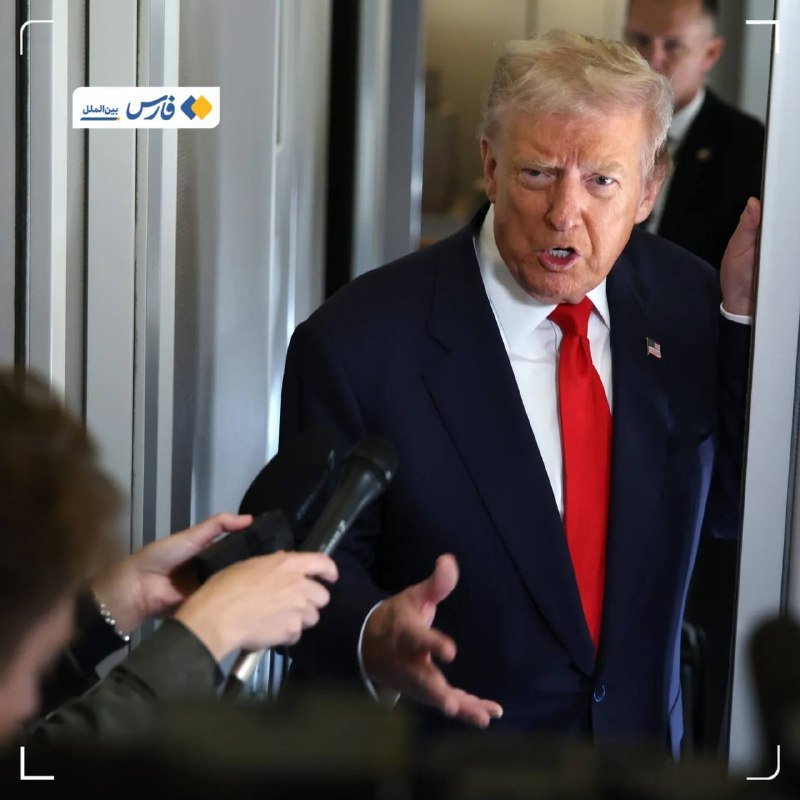
The divergence between the American read of the deal and the signals from Jerusalem is the second structural problem. Within hours of the announcement, former President Trump stated publicly that Israel would not attack Lebanon — a categorical assurance that went beyond what the deal's confirmed terms appeared to support. The framing positioned the ceasefire as a US diplomatic success and Israel as having voluntarily accepted restraint.
Israeli Prime Minister Netanyahu's own statement, released after his call with Trump, took a different register. He said he had told the US president that if Hezbollah does not stop attacking Israeli cities and citizens, Israel will strike terrorist targets. The conditional structure is deliberate: it does not promise non-attack. It reserves the right to act. Defense Minister Israel Katz was more direct. "Everything that is required will be done. There are no restrictions inside Lebanon. The equation is clear: there are no conditional attacks in Beirut," he stated. The qualifier about Beirut is notable — it implies the equation differs outside the capital.
This matters because it is not the first time a US-mediated ceasefire framework in this conflict has been announced with a scope that subsequently proved narrower than the headline suggested. The history of these arrangements — several declared and subsequently violated — provides structural context that neither the Israeli nor the American statements adequately address.
Structural frame: a managed pause, not a resolution
The pattern here is consistent with a broader dynamic in the region: ceasefire frameworks that stabilize the immediate area of announcement while leaving the underlying military situation intact. The south Lebanon corridor remains under Israeli observation. Hezbollah's military infrastructure, while degraded by sustained operations, has not been dismantled. The conditions that produced the cross-border exchanges — Hezbollah's stated mission to prevent Israeli operations in Gaza by maintaining pressure on Israel's northern front — have not changed.
What has changed, temporarily, is the immediate trigger for escalation. A ceasefire declared in relation to Beirut removes the most politically visible flashpoint — the capital city — from the immediate cycle. This serves both sides in different ways. For the Lebanese government, a ceasefire covering the capital reduces the pressure that was building domestically as civilian areas in and around Beirut were drawn into the exchange. For the Israeli government, a declaration framed as ceasefire — rather than as the suspension of operations — allows the maintenance of military posture without the political cost of appearing to have accepted terms.
The framing advantage to Washington is the clearest: a US-mediated deal, confirmed by both sides, strengthens the diplomatic record of an administration that has invested heavily in Gulf outreach and has made ceasefire progress a marker of regional influence. That this deal covers only part of the theatre is not foregrounded in the announcement language.
What comes next
The immediate question is not whether the ceasefire holds — it is whether the geographic limitation is sustainable. Israeli military doctrine, as articulated by the defence minister, treats the south Lebanon corridor as a continuous security concern. Hezbollah's own posture has historically been calibrated to the intensity of Israeli operations, not to the existence of diplomatic announcements. Neither side has offered concessions in the terms announced so far, which makes the arrangement structurally fragile in the absence of a binding enforcement mechanism.
The ceasefire announced on 1 June 2026 may hold in the near term. It may provide the region with a pause from the most acute phase of the exchange. But it does not resolve the conditions that produced the conflict, and it has been announced in terms that both parties have, through their own public statements, interpreted differently. That ambiguity — between a commitment to ceasefire and a reservation on the scope of operations — is where the risk lives. The next weeks will determine whether the gap between what was announced and what was agreed is a manageable inconsistency or the point at which the arrangement fractures.
This publication's coverage of the ceasefire announcement foregrounds the geographic limitation that the wire services subordinated to the broader diplomatic narrative. The distinction between Beirut and the south Lebanon corridor is the structural fact of this story, not a footnote.
Wire provenance
This editorial synthesis draws on the following public wire/social posts:
- https://t.me/TheCradleMedia/5841
- https://t.me/TheCradleMedia/5840
- https://t.me/osintlive/11842
- https://t.me/osintlive/11844
- https://t.me/osintlive/11841
- https://t.me/osintlive/11840