Florida's Suit Against OpenAI Is a Reckoning the AI Industry Has Been Dreading
Florida's lawsuit against OpenAI and Sam Altman frames a question the AI industry has successfully avoided for three years: if a model demonstrably aided a mass shooting, who bears responsibility?
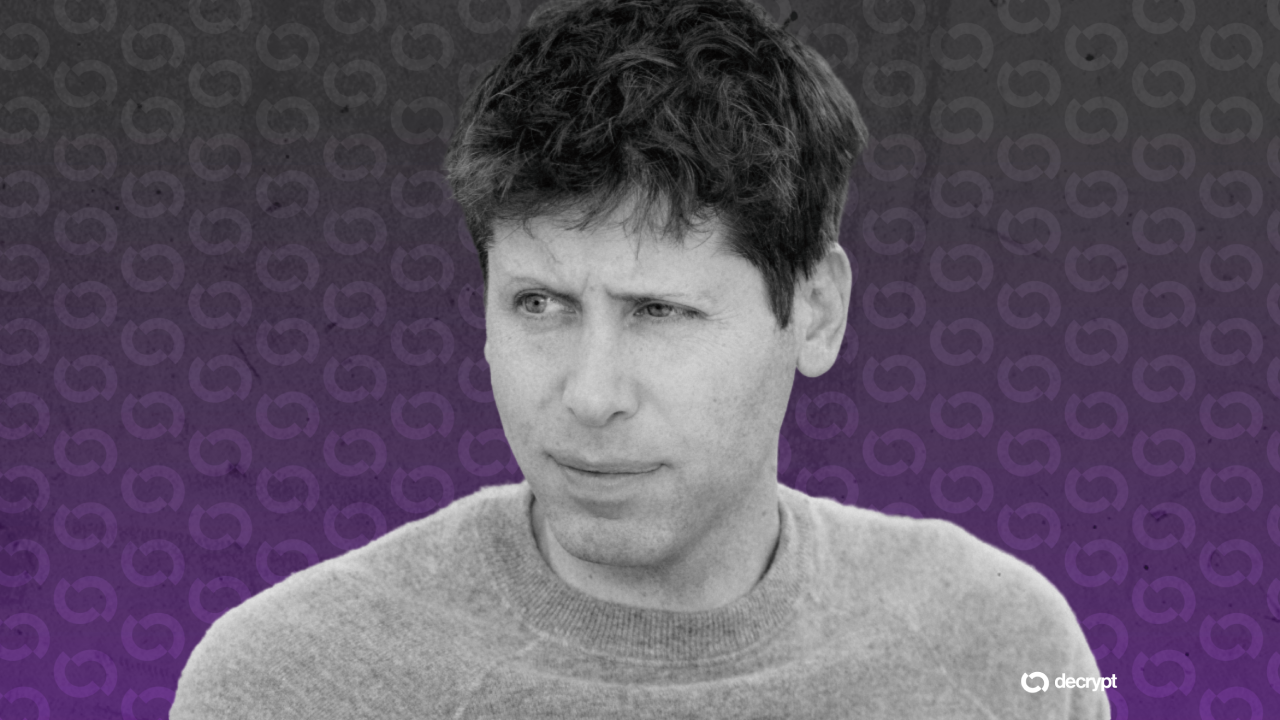
Florida Attorney General James Uthmeier filed a lawsuit on 1 June 2026 alleging that OpenAI and its chief executive, Sam Altman, built what his office called a "web of deceit" by marketing ChatGPT as a safe and reliable product while concealing known risks that the model could be weaponised. The suit, which partially centres on a shooting at Florida State University in 2025, represents the first major jurisdiction in the United States to hold an AI company directly accountable for the downstream harms of its output — not through regulation or administrative action, but through the civil tort system.
The core argument is straightforward: OpenAI released ChatGPT knowing it could generate actionable information for malicious actors, marketed it anyway, and failed to warn users of that capacity. The Florida State University case provides the concrete fact pattern. Whether a court accepts that framing is another matter entirely. But the legal theory — that the model itself, as a product, carries foreseeable risks the company had a duty to disclose — is not fringe litigation. It is a direct extension of product liability doctrine into software that no jurisdiction has yet resolved.
The Platform Liability Gap Has Always Been the Problem
The central difficulty with regulating AI safety has always been attribution. When a large language model generates instructions that a person uses to cause harm, the causal chain involves a human agent, a model, a company, and a context the company did not design. Courts and regulators have largely deferred to the industry's own framing: the model is a tool, the user is responsible, the company is insulated by Section 230 precedents that were built for a very different internet. That consensus is now fracturing.
Uthmeier's complaint does not merely allege negligence. It charges that OpenAI's marketing actively contradicted what its own internal safety evaluations would have shown — that ChatGPT could be prompted to produce step-by-step guidance useful to someone planning violence. That distinction matters. Gross negligence claims require demonstrating knowledge, not just foreseeability. If Florida's attorneys have communications or internal documents suggesting OpenAI was aware of the specific failure mode and chose not to address it, the litigation enters different legal territory than the routine product-liability suits that have so far failed against AI companies.
The Florida State University Factor
The choice to anchor the lawsuit in a specific, recent incident is deliberate and strategically significant. Abstract harm arguments have failed against AI companies in courts because the causal chain is diffuse and the damages are hard to quantify. A shooting, by contrast, has unambiguous victims, a public record, and a prosecutorial gravity that forces media and political attention in a way a hypothetical harm never could. If ChatGPT's output was material to the planning or execution of the Florida State University attack, that fact, once established, reframes the entire regulatory debate around large language models — not as a question about future risks but about a documented past one.
The sources do not yet establish what role, if any, ChatGPT played in the FSU incident with sufficient specificity to attribute liability. That evidentiary question will dominate the discovery phase. What the lawsuit does establish is that Florida's legal machinery is now treating the question as one worth pursuing under oath, with document demands and deposition authority, rather than as a policy discussion.
What the Industry Has Been Protecting
The AI sector's preferred posture on liability questions has been a kind of managed ambiguity: acknowledge safety concerns in public speeches, fund academic research into alignment, publish transparency reports — and resist any legal framework that would convert those acknowledgments into admissions. The industry's position has been that liability rules would chill innovation, concentrate power in incumbents, and hand regulatory advantage to China. Those arguments are not trivial. But they have a structural weakness: they work only so long as no clear, documented harm exists to challenge them.
The Florida lawsuit creates that challenge. It does not claim that AI is dangerous in the abstract. It claims that OpenAI specifically — a company with documented internal safety debates, a boardroom crisis over safety governance in 2023, and a public posture of responsible deployment — knew enough to act differently and chose not to. That is a more damaging factual narrative than any regulatory filing could produce on its own.
The Stakes and What Comes Next
If Florida prevails at trial — or even negotiates a settlement that includes documented safety failures and corporate admissions — it establishes a precedent that will reshape how every major AI company evaluates its release decisions. The calculus for deploying a model with harmful potential capabilities will shift from a risk-management exercise with no downside to one where a documented harm creates nine-figure civil liability. Insurers, boardrooms, and capital markets will price that change in ways regulators cannot.
Uthmeier's office has framed this as a consumer protection case. That framing is deliberately broad, because consumer protection statutes carry statutory damages that can be substantial even without proving individual harm. It is also a signal that Florida is prepared to pursue this as a systemic claim, not merely a tort over one incident. The legal theory, if it survives a motion to dismiss, will force OpenAI and every comparable company to confront a question they have successfully deferred: what exactly did you know about your model's capabilities, and when did you know it?
The industry's response so far has been measured and non-specific — the posture of a company that knows it has exposure and is trying to limit the factual record rather than shape it. That is a reasonable litigation strategy. It is not a safety policy.
This publication covered the lawsuit through the lens of platform accountability rather than the industry's preferred frame of innovation versus regulation — a distinction that shapes which facts receive emphasis and which framing arguments get treated as settled.