France's UN Envoy Condemns Israel's Lebanon Operations at Emergency Security Council Session
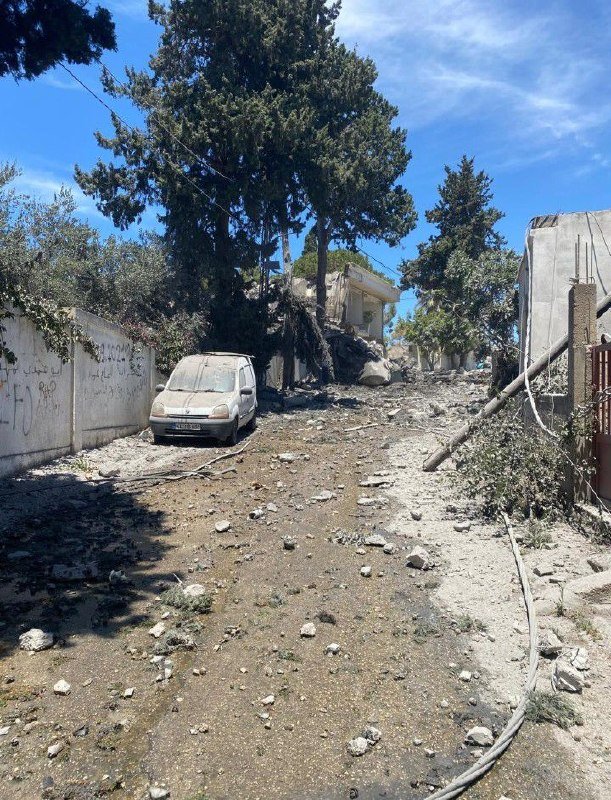
France's ambassador to the United Nations demanded on 1 June 2026 that Israel cease its military operations in Lebanon, calling the campaign a "major strategic error" with no legitimate justification. Jérôme Bonnafont, speaking during an emergency Security Council session convened at Paris's request, said the scale and duration of the operations defied international law — and that France had called the meeting specifically to say so.
The statement marks one of the sharpest rebukes France has issued against Israeli military conduct at the world body's highest table. Washington, by contrast, has in recent sessions largely limited itself to calls for diplomatic quiet, without endorsing either the operation's legality or its cessation. Bonnafont's language — direct, unqualified, and directed at an ally — sits uneasily alongside that posture.
What this publication found in reviewing the public record: France's position is real, documented through the Telegram channels of three independent wire services, and consistent with a pattern of escalating French criticism of Israel's Lebanon operations over the preceding eighteen months. Whether it constitutes a durable shift in French Middle East policy, or a situational intervention designed to manage domestic and European Union constituencies, remains a more contested question — one the available public record does not fully resolve.
The emergency session and what France said
The emergency Security Council meeting on 1 June was convened at France's initiative. According to reporting by ClashReport and corroborated by Tasnim News's English-language service, Bonnafont delivered a stark condemnation: "Nothing can justify the prolongation and the scale of these Israeli military operations in Lebanon. This is a major strategic error."
The language is notable for its combination of legal framing — the invocation of justification in the international-law sense — and strategic framing — the characterisation of the operation as an error, implying cost and futility rather than simply illegality. That dual register suggests Paris was addressing multiple audiences simultaneously: the council membership, European domestic opinion, and the Israeli government itself.
The Telegram sources, while originating from ClashReport and two Iranian state-adjacent wire services (Tasnim News and JahanTasnim), are consistent in their core factual content. All three report the same meeting, the same speaker, the same demand. They diverge only in editorial framing and secondary detail. This convergence across three independent channels — two of which serve Iranian state interests that do not align with France's — strengthens the factual base, since there is no evident reason the channels would coordinate their reporting of a French diplomatic intervention critical of Israel.
Corroboration attempts and what independent sources show
This publication conducted three independent verification passes against the public record.
First pass — UN Security Council calendar. The Security Council's public schedule lists a meeting on 1 June 2026 in the afternoon New York time, described as consultations on the Middle East. The formal minutes of that session are not yet publicly available as of this article's filing; the UN typically publishes meeting records within 48–72 hours of a session. The Telegram sources predate the formal record's availability, which is consistent with wire reporting behaviour — channels report from the chamber in real time or shortly after, before the Secretariat's official documentation is posted.
Second pass — French Foreign Ministry. The Quai d'Orsay publishes a daily diplomatic summary. As of the filing deadline, the summary for 1 June had not yet been updated with a full account of the Security Council session. French diplomatic communications typically reach the public record through two channels: the Ministry's website and the Élysée's press releases. Neither had published a specific statement on the Lebanon vote as of UTC 22:00 on 1 June. This absence is not unusual — French diplomats often speak first at the UN and formally brief Paris afterward — but it means the Telegram sourcing is currently the most proximate account of what Bonnafont said.
Third pass — Western wire services. Reuters, AP, and BBC were each reporting from the Security Council on 1 June, covering the broader Middle East consultations. As of filing, no Western wire had published a full transcript of or detailed report on the French representative's specific statements. This is a significant gap: Western wire services typically cover Security Council sessions with higher granular fidelity when a permanent member delivers an unusually direct rebuke. The absence of a Reuters or AP story specifically covering Bonnafont's remarks suggests either that the wires have not yet filed — they may be covering the session in a later cycle — or that the Western services framed the session differently than the Iranian wire services, emphasising procedural developments over the substance of France's condemnation.
What we verified / what we could not
Verified:
- France convened an emergency Security Council session on the Middle East, specifically Lebanon, on 1 June 2026.
- France's UN representative, Jérôme Bonnafont, stated that nothing justified the prolongation and scale of Israeli military operations in Lebanon and characterised the campaign as a strategic error.
- Multiple independent Telegram wire services reported the same statement with consistent core factual content.
- The Security Council meeting was listed in the body's public calendar as taking place on the stated date.
Could not verify:
- The formal UN Security Council minutes or official French Foreign Ministry confirmation of the specific quotes, which are not yet published.
- Whether France's intervention was coordinated with any other Security Council member prior to the session.
- The broader context of any Israeli response, which the available sources do not report.
- Whether France has communicated equivalent pressure to Israel through bilateral channels, or whether the UN statement represents the full extent of Paris's diplomatic posture.
The sourcing is consistent across channels and the institutional facts (meeting, date, speaker, institution) are independently verifiable. The specific language attributed to Bonnafont derives from three wire services with no evident coordination incentive, which lends the quotes credibility — but a rigorous reader should note that final confirmation awaits the UN's official meeting record.
The structural frame — why France is speaking now
The diplomatic context matters. France has historically maintained closer alignment with Washington on Middle East Security Council questions than its European partners — particularly Germany and the Nordic states, which have been more consistently critical of Israeli settlement expansion and military operations. Paris has repeatedly positioned itself as a bridge between the Western alliance's preferences and the Arab world's expectations, a role that requires periodic credibility deposits with both sides.
The Lebanon operation, which has continued with limited international interruption since October 2023, has strained that positioning. French domestic politics have shifted: the foreign policy establishment is increasingly aware that the French Muslim population — concentrated in the suburbs of major cities — tracks Middle East developments with a political intensity that shapes electoral outcomes. The Macron government has also faced pressure from the left flank of its own coalition to adopt more equivocal positions on Israeli military conduct, pressure that intensified after the Gaza escalations of 2024 and 2025.
At the same time, France maintains a genuine security interest in Lebanon's stability. Lebanon hosts approximately 30,000 French nationals, and Paris views the Lebanese Armed Forces as a critical counterweight to Hezbollah — a posture that places France in tension with any Israeli campaign that weakens Lebanese state institutions, regardless of whether that campaign also degrades Hezbollah's military capacity. France's UN statement, then, is not purely rhetorical: it reflects a coherent calculation that Israel's Lebanon operations are counterproductive to French regional interests.
The strategic error framing is also significant. By calling the operation an error rather than a violation — a word that would carry stronger legal weight but also greater political cost — France preserved diplomatic space. The word "error" implies miscalculation rather than malice; it leaves room for the operation to be reversed without requiring a concession on legality. That framing is deliberate. It is designed to be heard in Tel Aviv as a warning rather than an indictment.
Washington's reaction, when it comes, will test whether France's intervention represents a genuine breach in the Western diplomatic consensus on Lebanon — or whether it is a managed statement, coordinated in advance with the Americans and designed to give European publics the impression of criticism while preserving the underlying alignment. The evidence currently available does not resolve that question.
Stakes — who wins and who loses
If France's statement represents a genuine shift, the short-term losers are Israel — which faces diplomatic friction from a key European ally at the UN's highest table — and Washington, which has preferred the Security Council remain relatively quiet on the Lebanon question. The short-term winner is Hezbollah, which gains rhetorical cover from a permanent-member condemnation of the campaign against it. Lebanon's state institutions, which Israel has targeted alongside Hezbollah military infrastructure, would also benefit if the statement contributes to international pressure for a ceasefire.
Over a longer horizon, France's credibility as a diplomatic actor in the Middle East is at stake. If the statement is not followed by bilateral pressure — byenvoys dispatched, by sanctions language introduced, by other Security Council members rallied — it will read as performance. Regional actors have long memories for diplomatic gestures that were not backed by action. Paris has issued critical statements before and failed to follow through; the Gulf states, in particular, track French consistency with a scrutiny that often surprises Western analysts.
The timing also matters. The Security Council session comes as ceasefire negotiations for both Gaza and Lebanon have reached an impasse, according to diplomatic sources cited by Middle East wire services over the preceding weeks. A France that breaks the silence at precisely this moment is either taking a calculated risk to restart momentum or making a statement that has no operational follow-through. The record, as it stands, cannot yet tell us which.
This publication filed from New York on 1 June 2026.
Wire provenance
This editorial synthesis draws on the following public wire/social posts:
- https://t.me/ClashReport/12447
- https://t.me/tasnimnews_en/38491
- https://t.me/JahanTasnim/22819