Hezbollah Claims Merkava Strike Near Historic Castle as Border Tensions Persist
Hezbollah says it struck an Israeli Merkava tank with an Ababil attack drone near Al-Shaqif Castle in southern Lebanon on June 1, 2026, the eighth Israeli ground-advance attempt in two weeks, according to the group. Israeli military officials had not issued a statement at time of publication.
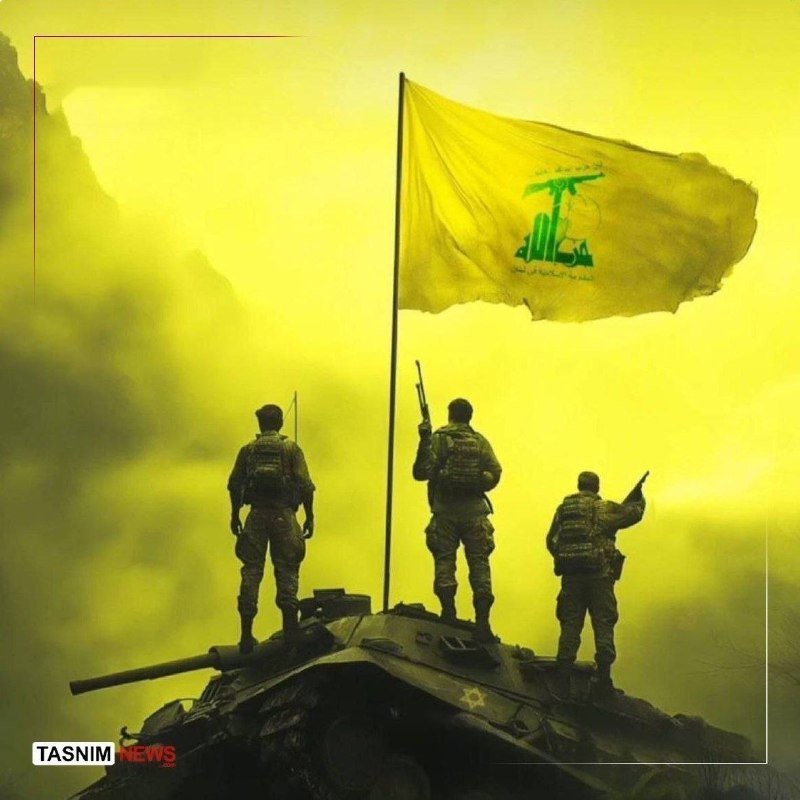
Hezbollah says it struck an Israeli Merkava tank with an Ababil attack drone near Al-Shaqif Castle in southern Lebanon on June 1, 2026. The incident marks what the Lebanese resistance described as the eighth Israeli attempt to advance toward the town of Hadda in a two-week period, according to a statement carried by Iranian state-linked channel PressTV and Arabic-language broadcaster Al Alam.
The strike occurred in the eastern outskirts of Yahmar al-Shaqif, a locality adjacent to the historic Al-Shaqif Castle, which sits along a contested stretch of the Israel-Lebanon border. The area has been a locus of sustained cross-border engagement since October 2023, when hostilities between Israel and Hezbollah escalated from sporadic exchanges into sustained contact. This article examines what the available record shows, how the incident is being framed, and what it suggests about the trajectory of a conflict that has so far resisted diplomatic resolution.
The Incident: What the Sources Say
According to a statement attributed to Hezbollah's media office and reported via PressTV at 21:59 UTC on June 1, 2026, the group's forces targeted an Israeli Merkava tank in the vicinity of Al-Shaqif Castle using an Ababil attack drone. The statement, also carried by Al Alam Arabic, described the strike as achieving a confirmed hit. Hezbollah characterised the action as a response to an Israeli attempt to advance toward the town of Hadda in southern Lebanon — described as the eighth such attempt in the preceding two weeks.
The Ababil is a loitering munition, colloquially referred to as a "suicide drone," capable of hovering over a target area before striking a designated position. It has featured in Hezbollah's documented cross-border operations since October 2023. The Merkava is Israel's primary battle tank, distinguished by its heavy frontal armour and crew-protection architecture. Whether the specific variant involved in the June 1 incident was equipped with the Trophy active protection system — designed to intercept incoming projectiles — is not addressed in the available sourcing.
Israeli military officials had not issued a public statement on the incident at the time of this publication. The sole direct account comes from Hezbollah's own media apparatus, disseminated via outlets with close institutional ties to Tehran. As with previous cross-border incidents attributed to Hezbollah, the factual record remains limited to the group's characterisation pending independent corroboration.
Hezbollah's Framing
The language in Hezbollah's statement is deliberate. By characterising the Israeli advance toward Hadda as the eighth such attempt in a two-week period, the group positions its response as reactive and proportionate rather than provocative. The emphasis on the "eighth time" signals a pattern of behaviour that Hezbollah presents as escalation by the Israeli side, consistent with a broader narrative in which resistance operations are defensive measures against ongoing incursion.
The use of the Ababil designation rather than generic terminology reflects an effort to claim sophistication and precision. Hezbollah has invested significantly in its drone and loitering-munition capabilities over the past two decades, drawing on both indigenous development and external transfers. Naming the system signals to domestic and regional audiences that the group deploys advanced weaponry capable of engaging armoured targets — a claim designed to shape both morale and deterrence calculations.
Al Alam Arabic, which carries Hezbollah's Arabic-language statements, framed the incident in the context of what it described as repeated Israeli infiltration attempts. The channel, operated by Iranian state media, has historically aligned its coverage with Hezbollah's official positions. This does not render the underlying claim false, but it means the account must be read with awareness of its source environment.
What the Sources Do Not Clarify
Several material questions remain open. Whether the Merkava was destroyed, damaged, or suffered crew casualties is not addressed in Hezbollah's statement, which claims a hit without specifying damage assessment. Israeli military sources — absent from the available record — would be required to confirm or deny loss of the vehicle or personnel.
The broader operational context also lacks specificity. The sources do not indicate whether the Israeli advance was a deliberate ground incursion, a patrol in disputed territory, or a probing operation designed to test Hezbollah's disposition along the border. All three scenarios have precedent; the available sourcing does not distinguish between them.
The timing of the incident relative to ongoing diplomatic efforts also goes unaddressed. US envoy Steve Witkoff has been engaged in mediation efforts aimed at establishing a ceasefire framework along the Israel-Lebanon border. The relationship between ground-level military activity and diplomatic signalling is rarely linear, but each verified incident adds friction to negotiations that have already produced no durable settlement.
The Strategic Pattern
The strike near Al-Shaqif Castle is consistent with a pattern that has defined the Israel-Hezbollah conflict since October 2023: Hezbollah employing precision anti-armour weapons to engage Israeli forces along the border, Israel responding with air strikes and artillery, and neither side achieving the conditions for a formal ceasefire despite sustained international mediation.
What distinguishes this phase from earlier periods is the frequency and accuracy of Hezbollah's drone-delivered strikes. The Ababil system, when combined with improved reconnaissance — sourced partly through Iranian technical assistance — allows Hezbollah to identify and engage Israeli armour with a precision that was less evident in earlier decades of confrontation. The confirmed hit claimed on June 1, if verified, represents another data point in an increasingly effective operational profile.
Al-Shaqif Castle occupies a sensitive position. The surrounding area lies within the disputed boundary zone, close enough to the Blue Line (the UN-mapped ceasefire line) that both Israeli patrols and Hezbollah surveillance operate in close proximity. A strike in this zone carries symbolic weight alongside its tactical implications. The castle itself — a centuries-old fortification — anchors the geography in a way that amplifies the resonance of incidents nearby.
Stakes and Forward View
For Israel, each confirmed strike on a Merkava reinforces the cost of maintaining ground presence near the border without a political settlement. The tank's design reflects a doctrinal emphasis on crew survival, but losses accumulate — in material, in morale, and in the political pressure that accompanies footage of destroyed armour. If Israeli forces are unable to advance without absorbing anti-armour fire, the operational options available to the IDF narrow.
For Hezbollah, successful strikes sustain the group's deterrence posture and reinforce its value as a resistance actor within Lebanon's fractured political landscape. Continued capability demonstration also strengthens the group's hand in any future diplomatic negotiation, where the question of its weapons profile will inevitably surface.
The immediate question is whether the June 1 incident triggers a significant Israeli response or is absorbed into the ongoing rhythm of exchange. The pattern since October 2023 suggests that individual strikes are typically answered — but the scale of retaliation varies. A targeted strike on a patrol contrasts with an assault on a staging area, and the responses have tracked accordingly.
Absent an Israeli statement confirming the loss or its extent, the incident remains a reported claim by one party to a conflict that continues to resist resolution. The border between Israel and Lebanon will remain active terrain for as long as the political conditions for a ceasefire remain unmet.
This publication notes that coverage of the Israel-Lebanon border conflict relies substantially on statements from Hezbollah's own media apparatus, which has institutional ties to Tehran. Independent verification from Israeli military sources, Western wire services, or UN observer missions remains outstanding. Readers should treat the operational claims in this article as Hezbollah's characterisation pending corroboration from additional sources.
Wire provenance
This editorial synthesis draws on the following public wire/social posts:
- https://t.me/presstv/789456
- https://t.me/alalamfa/456123
- https://t.me/alalamarabic/789012
- https://en.wikipedia.org/wiki/Ababil_(loitering_munition)