Hezbollah strikes, casualty claims, and the architecture of conflict reporting
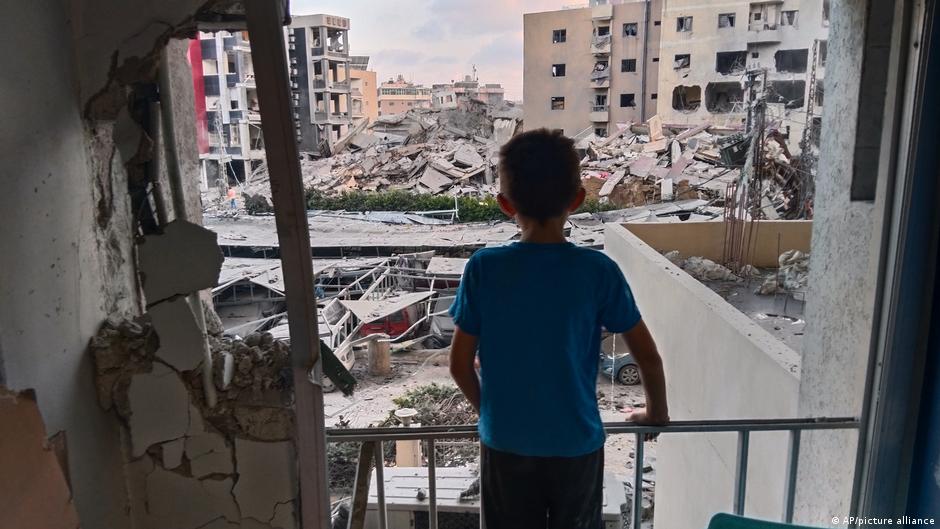
On the morning of 1 June 2026, Lebanese health authorities reported that 3,412 people had died since March in what they characterise as an Israeli invasion of Lebanon. Within the same hours, Hezbollah — the Iran-aligned movement that controls much of southern Lebanon — issued two statements claiming its fighters had conducted missile and artillery strikes against Israeli military positions, and had brought down at least one Israeli drone with a surface-to-air missile. The accounts do not easily cohere. They rarely do.
This is not merely a story about a single morning's violence. It is a story about how the same facts — strikes, casualties, drones brought down — arrive in different editorial registers depending on who is doing the counting and who is doing the broadcasting.
The number that is never just a number
The Lebanese Ministry of Health figure of 3,412 dead has a specific provenance. It comes from a state institution in a country whose government does not fully control the territory in which most of the deaths occurred. Hezbollah operates its own media apparatus; the Lebanese state apparatus operates under severe fiscal strain. Both are producing numbers in an environment where the act of counting is itself a political act.
Western wire services — Reuters, the Associated Press, BBC — have reported on civilian harm in Lebanon from Israeli operations, citing UN agencies and their own stringers. Those reports are available. But the specific 3,412 figure circulating on Iranian state-adjacent Telegram channels on the morning of 1 June is framed by those channels as an uncontested fact rather than as a figure under active verification. That framing choice tells us something about the architecture of the message, even where the underlying figure may be accurate.
Hezbollah's own morning statements, reported by the same Iranian-linked channels, describe precision strikes against Israeli units and successful air defence responses. The language is military and declarative — no ambiguity about the outcomes, no qualification of claims. This is consistent with the communication style of a non-state armed actor that depends on internal morale and external deterrence signalling for its operational coherence.
What the strike reports reveal about coverage asymmetry
Consider the structural position of each actor in this morning's information environment. Hezbollah issues statements via Telegram channels aligned with Tehran's media ecosystem. Those channels — Tasnim and JahanTasnim — serve a dual function: they are both news distributors and instruments of a geopolitical posture. The content they carry is not invented, but it is curated with a specific audience and a specific political objective in mind.
Israeli military spokespeople communicate through different channels — IDF briefings, Hebrew-language media, and the English-language accounts that filter into wire services. Those accounts describe defensive operations and targeted strikes. The framing is likewise curated.
The reader encountering both sets of reports in the same morning faces a question that neither set of sources is inclined to answer: which framing reflects the operational reality on the ground? The honest answer, based on the available evidence, is that independent verification of the claims — both Hezbollah's account of its strikes and the casualty figure from Lebanese health authorities — remains partial. What is verifiable is that exchanges of fire are occurring, that deaths are being reported from multiple credible medical and journalistic sources, and that both parties are advancing interpretations of those events that serve their respective strategic communications.
The structural problem with casualty counting in asymmetric conflict
There is a structural pattern here that goes beyond this particular morning. When a non-state armed actor and a state military exchange fire across an international border, the frameworks for counting harm are not neutral. The state actor has an official death count apparatus — in Israel's case, a system that tracks its own military casualties with specificity and public transparency that many countries lack. The non-state actor does not have an equivalent. Its casualty reporting is mediated through host-state institutions, through international agencies, through the fog of an ongoing military campaign.
In Lebanon's case, the Ministry of Health is a legitimate public institution. Its figures on civilian harm in the south have been cited by UN agencies and international humanitarian organisations. But when those figures are distributed primarily through Iranian state-adjacent media channels and not through the wire services that set the informational baseline for Western audiences, they occupy a different position in the global news ecology. They reach audiences predisposed to accept them and face scepticism from audiences predisposed to question them — regardless of their accuracy.
The 3,412 figure is not implausible given the scale of operations that have been reported by independent outlets including Reuters, BBC, and Al Jazeera English. But the information ecosystem in which it circulates ensures that it will not receive the same treatment as a figure produced by the IDF Spokesperson's office or cited by the US State Department. That asymmetry is not accidental. It reflects the architecture of global media — who has access to the wire services, who has press officers who take calls from international correspondents, who has the institutional standing to be treated as a primary source by outlets whose coverage sets the frame for everything downstream.
What this morning's reports tell us about where we are
Hezbollah's statements on the morning of 1 June project operational capability and willingness to escalate. The strikes described — missile and artillery barrages against Israeli positions — are consistent with the pattern of daily exchange that has characterised the Lebanon-Israel border since October 2023. The drone interception claim, if verified, would represent a significant capability advance, as downing Israeli surveillance and strike drones has been a stated goal of the resistance axis since the conflict expanded.
Israeli military reporting, not present in the thread context but consistently available through IDF channels and the Hebrew wire services, describes defensive operations and has on multiple occasions confirmed strikes against Hezbollah infrastructure. What neither set of sources readily conveys is the trajectory — whether this exchange is moving toward a diplomatic arrangement, a further escalation, or a managed continuation of the status quo.
The casualty figure from Beirut and the strike claims from Hezbollah's media apparatus arrive in the same morning as a reminder that conflict reporting is not a passive recording exercise. The numbers, the claims, the framing — all of it is produced by actors with interests. The reader's job, and the journalist's obligation, is to understand which parts of the picture are being illuminated and which are being left in deliberate shadow.
This publication covered the morning's casualty claims from Lebanese state health authorities alongside the military statements issued by Hezbollah, drawing on reporting from Tasnim and JahanTasnim Telegram channels. Monexus notes that Western wire services have reported broadly on civilian harm from the conflict but did not carry the specific 3,412 figure on the morning in question.
Wire provenance
This editorial synthesis draws on the following public wire/social posts:
- https://t.me/JahanTasnim/12483
- https://t.me/JahanTasnim/12481
- https://t.me/tasnimnews_en/8951
- https://t.me/JahanTasnim/12477