The Hormuz Equation: What Trump's Iran Negotiations Reveal About American Leverage
As direct US-Iran negotiations resume in Oman, both sides are posturing hard. Tehran has shelved its nuclear demands; Washington is raising the price. The gap between the two positions reveals something uncomfortable about the true distribution of leverage in the Persian Gulf.
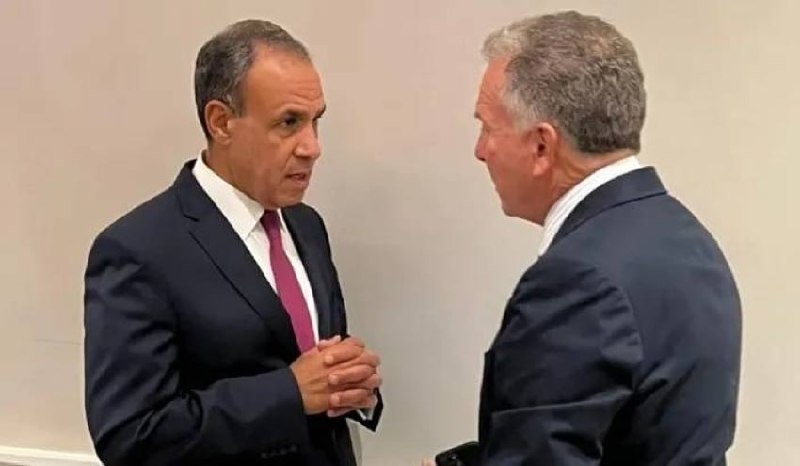
On the surface, the optics were cooperative. American and Iranian negotiators sat in the same room in Muscat in late May 2026, mediated by Omani officials long accustomed to acting as intermediary between Washington and Tehran. The White House called it a productive start. The State Department noted little substantive progress. What emerged from those sessions tells a more complicated story—one about the limits of coercive diplomacy, the resilience of Iranian negotiating doctrine, and the persistent gap between what the Trump administration claims it can extract and what the Iranians are actually willing to concede.
The most revealing signal from the talks came not from official statements but from the议事 record. According to reporting from outlets monitoring the negotiations, Iran removed the nuclear question from the initial agenda. This was not a concession. It was a strategic repositioning—one that had the effect of narrowing the scope of what Washington could claim as a win. By detaching the nuclear file from early-stage discussions, Tehran preserved its most consequential bargaining chip for later rounds while presenting a face of flexibility to international observers. The move was interpreted in some Western capitals as goodwill. In more hard-nosed assessments, it looked like the opening gambit of a regime that has survived maximum-pressure campaigns before and knows how to run out the clock.
Trump, meanwhile, arrived at the negotiating table with what his administration described as the toughest terms in decades. The president himself stated publicly that Iran "really wants to make a deal"—language that was simultaneously an assertion of leverage and, arguably, a concession. To claim your adversary wants something is to acknowledge that the adversary has agency. It is also to invite scrutiny of whether the pressure being applied is sufficient to extract terms that satisfy American objectives. Trump did not specify what those objectives were, beyond "a deal," which left considerable ambiguity about whether the administration was seeking a comprehensive nuclear agreement along the lines of the 2015 Joint Comprehensive Plan of Action, a narrower sanctions-relief-for-compliance arrangement, or something altogether different.
The ambiguity is instructive. American officials have articulated no publicly verifiable standard for what constitutes success in these talks. The 2015 JCPOA, which Trump decried as a bad deal and from which he withdrew in 2018, at least had the virtue of clarity: Iran would limit enrichment to 3.67 percent, restrict its stockpile of enriched uranium, and submit to International Atomic Energy Agency inspections in exchange for sanctions relief. The current administration's position appears less structured, more transactional, and more dependent on the personal chemistry between the president and whoever sits across from him.
That transactional instinct reveals a fundamental misapprehension about how Iranian diplomacy operates. The Islamic Republic's foreign policy apparatus is not a unitary actor responding to pressure signals from a single strongman. It is a distributed system in which the Supreme Leader's office, the Islamic Revolutionary Guard Corps, the civilian Foreign Ministry, and various semi-autonomous policy advisory bodies all have equities to protect. A deal that satisfies the IRGC's economic survival interests may not satisfy the Supreme Leader's strategic deterrence requirements. A framework that gives the Foreign Ministry a diplomatic victory may give the IRGC nothing it can sell domestically as a win. This structural tension is not Iran's weakness—it is Iran's resilience. It means Tehran can absorb pressure that would fracture a more centralized state, because the distributed nature of its decision-making allows different factions to absorb pain in different areas without any one faction having to declare the entire enterprise a failure.
The Hormuz question illustrates this dynamic with particular clarity. Roughly one-fifth of the world's oil and a significant portion of global liquefied natural gas pass through the Strait of Hormuz, the narrow waterway between Oman and Iran that has been a flashpoint for decades. Iran has repeatedly signaled over the years that it possesses the capability to close or threaten the strait, and its geographic position makes that threat structurally credible in a way that similar threats from less favorably situated states are not.
On Polymarket, the prediction market platform, the probability that Trump would allow Iran to charge tolls in Hormuz stood at approximately 3 percent as of late May 2026. Markets, in other words, assigned very low odds to the proposition that Washington would concede any form of Hormuz control to Tehran. That figure is worth examining carefully, because it captures something real about the distribution of leverage in this negotiation.
Iran cannot charge tolls in Hormuz without American acquiescence. The United States Navy's Fifth Fleet, operating from Bahrain, maintains a robust presence in and around the Persian Gulf, and the security architecture that keeps the strait open for international commerce is fundamentally a product of American military power. Iran knows this. The United States knows that Iran knows this. The question is whether the gap between what each side can actually enforce is narrowing or widening.
For decades, the answer was clear: American naval supremacy in the Gulf was effectively uncontested. Iran could make noise about closing the strait, and analysts took those threats seriously as a deterrent, but the actual capability to do so against American intervention was limited. That calculus has shifted in ways that the 3 percent Polymarket figure may not fully reflect. Iran's asymmetric naval capabilities—small boats, mines, submarine assets, shore-based anti-ship missiles—have advanced considerably. The cost of keeping the strait open in a high-end confrontation has risen. And the political will in Washington to absorb the economic disruption that a strait closure would cause has become less predictable than it was in the cold-war and early-post-cold-war eras, when American global leadership was taken as a given rather than a matter of ongoing political debate.
This creates a strange equilibrium. Iran cannot realistically expect to charge tolls in Hormuz and have that arrangement accepted by Washington. But Iran can threaten the strait's flow in ways that impose costs on global oil markets—and those costs, in turn, create pressure on Washington to reach an agreement that avoids the disruption. The toll proposal is not a serious opening position. It is a marker, a way of establishing the outer boundary of what Tehran believes it can extract. The fact that the proposal exists at all—discussed in Iranian state-adjacent channels, analyzed by Telegram channels tracking the negotiations—tells us something about the range of demands Tehran is willing to float before settling on something more modest.
The 3 percent figure on Polymarket reflects where markets think the current equilibrium sits. It does not necessarily reflect where the equilibrium will sit if the talks collapse and Iran accelerates its nuclear program, or if regional tensions spike for reasons unrelated to the direct negotiations. Prediction markets are not omniscient. They are an aggregate of available information, and they tend to underprice tail risks that have not recently materialized. A 3 percent probability of Iran charging Hormuz tolls is not the same as a 3 percent probability that Hormuz flows will remain uninterrupted for the next four years.
What the talks in Muscat exposed, above all, is the absence of a coherent American theory of the case. Maximum pressure produced neither regime collapse nor unconditional surrender in Trump's first term; it produced a regional escalation, a humanitarian crisis in Iran, and a more advanced nuclear program. The Biden administration pivoted to diplomacy and secured a deal that was never ratified by the Senate and was ultimately abandoned. Trump returned to office with the stated intent of negotiating better than his predecessors and with a team that included hardliners who had argued for military action against Iranian nuclear facilities. What that combination actually produces in practice remains unclear.
Iran's position is more coherent, even if it is less powerful. Tehran wants sanctions relief, which it needs to rescue an economy that has been strangled by American secondary sanctions targeting any third-country entity that does business with Iranian firms. Tehran wants security guarantees, which it has sought since the Iran-Iraq war demonstrated that the United States would not tolerate a dominant Persian Gulf power and would, if necessary, intervene to prevent one. Tehran also wants to preserve its nuclear program—not necessarily to build a bomb, but to retain the knowledge and infrastructure that would allow it to build one quickly if it chose to. These objectives are not unreasonable from Tehran's perspective. They are, in fact, exactly what any state in Iran's position would seek. The question is whether Washington is prepared to pay the price for an agreement that meets them.
The gap between the two positions—American maximalism and Iranian insistence on core interests—has not closed. What has changed is the framing. Both sides are now publicly committed to the proposition that a deal is possible. Trump says Iran wants one. Iranian officials, through back-channels and state media, have signaled willingness to negotiate within limits. Neither side has defined those limits in a way that allows outside observers to assess whether the gap is bridgeable.
The structural logic of the negotiation favors patience over dramatic breakthroughs. Iran has survived worse sanctions than the current ones; its economy is damaged but functional, propped up by Chinese oil purchases that the United States has been unwilling or unable to fully suppress. The Trump administration, for its part, faces pressure from Gulf allies who do not want the strait closed, from oil markets that would spike sharply if negotiations failed, and from domestic constituencies that have conflicting views on the wisdom of military intervention in the Middle East.
The most likely outcome, based on the available evidence, is a narrow, conditional agreement that falls well short of the comprehensive deal Trump has suggested he can achieve. Something that releases some Iranian oil revenues in exchange for limited nuclear concessions—perhaps a freeze on enrichment levels, a cap on stockpiles, or expanded IAEA monitoring—without resolving the deeper structural disagreements about Iran's regional role and long-term nuclear intentions. Such an agreement would be sellable to domestic audiences in both countries as a success. It would not address the underlying drivers of tension. It would leave the next crisis already seeded.
That outcome serves neither side's stated goals, but it may serve both sides' actual interests as they perceive them. Iran gets some sanctions relief and a reduction in immediate pressure. The United States gets a fig leaf of a deal it can present as a victory. The nuclear program continues. The regional competition continues. The cycle, in other words, continues—dressed in the language of diplomacy rather than the language of confrontation, but structurally unchanged.
The Polymarket odds may shift if the talks progress or collapse. The 3 percent figure for Hormuz tolls is a snapshot, not a forecast. What it captures, in the present moment, is a market judgment about American leverage in a negotiation where the leverage is real but bounded—and where the bounded nature of that leverage is something Washington has not yet fully acknowledged, publicly or privately.
This publication covered the US-Iran negotiations with particular attention to Iranian state media framing and Telegram-sourced reporting on the Muscat talks, which received more granular treatment in those channels than in the Western wire services. Reuters and Axios reporting provided the official-position layer. The Polymarket market data was included to illustrate the gap between market pricing of tail risks and the structural logic of the Hormuz question.
Wire provenance
This editorial synthesis draws on the following public wire/social posts:
- http://reut.rs/4oaumj1
- http://reut.rs/4wYul5E
- https://t.me/CryptoBriefing/0000
- https://t.me/CryptoBriefing/0000
- https://t.me/IRIran_Military/0000