The Hormuz Gambit: How a Narrow Waterway Became the Decisive Arena of US-Iran Confrontation
As US naval presence intensifies and Treasury sanctions block even non-payment transit agreements, the world's most critical oil chokepoint has become the central pressure point in a broader negotiation over Iran's nuclear programme and regional reach.
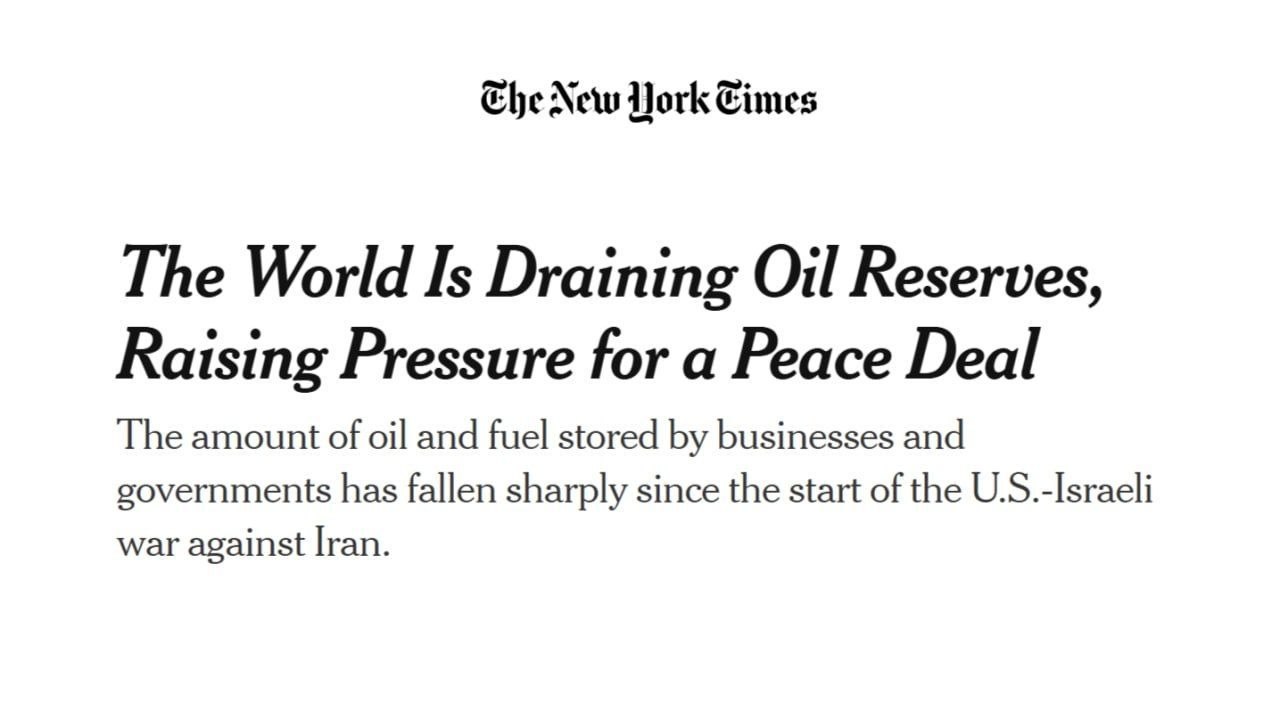
On the evening of 30 May 2026, Iranian state media confirmed what Western naval trackers had been monitoring for days: the Islamic Revolutionary Guard Corps had deployed a ship within the Strait of Hormuz with the declared intention of establishing a transit-fee regime on vessels passing through the waterway. The announcement marked the latest escalation in a confrontation that, over the preceding forty-eight hours, had pushed the world's most critical oil chokepoint to the edge of closure.
The timing was not accidental. US President Donald Trump had, over the preceding week, presented a revised nuclear framework to Tehran demanding not only strict limits on uranium enrichment but also permanent safeguards on the Strait of Hormuz — the twenty-nine-mile channel through which roughly a fifth of global oil exports pass daily. Iran rejected the conditions. The IRGC vessel deployment was Iran's answer: reassert practical control over a waterway Washington had assumed was governed by international law rather than political will.
The stakes extend well beyond the immediate military posture. What is playing out in the Persian Gulf is simultaneously a negotiating tactic, a financial-pressure campaign, and a test of whether the architecture of dollar-denominated global trade can sustain a prolonged confrontation with a state that has spent two decades preparing for exactly this scenario.
The Demand: Hormuz as Conditionality
According to reporting by BBC News on 31 May 2026, the Trump administration had sought specific amendments to the existing Iran nuclear framework, with changes focused on two areas: the legal status of the Strait of Hormuz and the removal of Iran's stockpile of highly enriched uranium. US media, citing unnamed officials, described the requests as an attempt to convert the existing Joint Comprehensive Plan of Action into a more expansive agreement that would address not merely Tehran's nuclear capabilities but its regional deterrence posture.
The framing of Hormuz as a negotiating conditionality rather than a secondary concern represents a departure from the approach taken by the Biden administration, which treated the strait's status as a matter of international law rather than bilateral negotiation. By demanding direct US-Iran agreement on transit rights, the White House has elevated the waterway from a background condition to the central object of the talks.
On the same day, the US Treasury Department issued guidance explicitly prohibiting any agreements with Iran touching Strait of Hormuz transit — including arrangements that would not involve cash payments. The move, reported by the X account sprinterpress citing Treasury communications, effectively blocks a range of potential workarounds, including barter arrangements or third-party escrow mechanisms that Tehran might have used to monetise transit rights without triggering existing sanctions.
The Treasury directive is significant because it targets the financial architecture around any Hormuz settlement, not merely the payment rails. Iranian officials had explored structures in which transit fees might be paid in commodities or routed through third-country intermediaries not subject to US secondary sanctions. The Treasury guidance closes those pathways, at least as far as the current administration is willing to go.
Iran's Counter-Position: Fees, Ships, and Sovereignty
Iranian state media, including Fars News International, characterised the IRGC vessel deployment as an exercise of national sovereignty rather than a provocation. The framing drew on a long-standing legal argument: that the strait's status under international law, particularly the 1982 United Nations Convention on the Law of the Sea, grants coastal states certain regulatory rights over navigational safety that can be exercised without constituting a blockade.
The IRGC's stated intention to impose transit fees is itself a test of that legal argument. No internationally recognised precedent exists for a coastal state levying charges on vessels exercising the right of innocent passage through an internationally used waterway. Iran has nevertheless argued that the fees are analogous to harbour dues and navigational services — a position rejected by the United States but not yet adjudicated by any international tribunal.
The practical effect of the deployment is less important than its signalling function. By positioning a ship rather than a missile system, Iran has chosen a form of presence that is harder to classify as an armed attack and easier to characterise as a civil regulatory action. The ambiguity is deliberate. An IRGC vessel demanding fee payment is not an act of war; it is a bureaucratic dispute with weapons. The ambiguity gives the United States limited legal grounds for a direct kinetic response while creating sufficient disruption to matter.
The US Navy has responded by increasing its patrol presence in the southern Persian Gulf. Reports from the same period describe a US naval blockade posture escalating tensions. The practical implication is two vessels — one Iranian, one potentially American — operating in close proximity under incompatible legal interpretations of the same waterway. The risk of an incident that either side did not intend has risen commensurately.
The Oil Market Signal
Crude markets responded within hours of the escalation. According to wire reports aggregated on 31 May, oil prices surged as traders priced in the possibility of disruption to flows through the strait. The mechanism is straightforward: even the rumour of a temporary closure or significant disruption to tanker traffic causes shipping insurers to raise premiums, which raises the effective cost of Persian Gulf crude regardless of whether any oil is physically blocked.
The economic logic of Iran's position is therefore not primarily about extracting direct revenue from transit fees. It is about raising the cost of the status quo for everyone else. A sustained increase in insurance premiums for Gulf transits adds perhaps one to three dollars per barrel to the landed cost of Saudi, Emirati, and Iraqi crude — enough to affect purchasing decisions in price-sensitive Asian markets, and enough to create political pressure on the United States from its allies in Tokyo, Seoul, and New Delhi, all of whom rely heavily on Gulf oil and all of whom have expressed concern about escalating tensions in private communications that have been partially leaked to regional press.
The timing matters here. The global oil market is already under pressure from a combination of OPEC+ production discipline and uneven demand recovery in Asia. A Hormuz premium of even five to ten dollars per barrel, if sustained, would complicate the inflation trajectories of major importing economies and constrain the Federal Reserve's room to manoeuvre on interest rates — a linkage the administration in Washington has acknowledged, but not publicly addressed.
The Diplomatic Path and Its Limits
The White House has not closed the negotiating channel. Trump stated on 31 May, per LiveMint reporting, that he was looking to finalise a peace deal with Iran on the condition of no nuclear weapons, and that the deal would involve opening the Strait of Hormuz. The framing suggests a two-stage outcome: a nuclear agreement that would be the predicate for a broader security understanding in which Hormuz transit rights are normalised.
The problem is sequencing. Iran wants sanctions relief before any nuclear concessions; the Trump administration wants verifiable nuclear steps before easing economic pressure. Both positions are understandable from each side's perspective. Iran has spent years building enrichment capacity as an insurance policy against US military action and has no intention of dismantling that capacity before the sanctions that damage its economy are lifted. The United States, conversely, has seen two rounds of nuclear negotiations collapse — once under Trump in 2018, once under Biden in 2022-23 — and is reluctant to repeat the experience of paying in advance for promises that Tehran later walked back.
The Hormuz conditionality complicates the sequencing problem further. By making the strait's status a direct item in the negotiations, the administration has expanded the scope of what a final agreement must contain. Iran is being asked not merely to limit its nuclear programme but to accept a set of navigational constraints that it views as an infringement on its sovereignty and a precommitment to a second-order status in the Gulf hierarchy — a status that, from Tehran's perspective, the IRGC vessel deployment is specifically designed to contest.
What remains genuinely unclear is whether the White House is using Hormuz as a genuine negotiating condition or as a bargaining chip it intends to trade away in exchange for nuclear concessions. Administration officials have given contradictory signals. The Treasury guidance on non-payment transit arrangements suggests a maximalist position; Trump's public statements about seeking a deal suggest a genuine interest in resolution. The ambiguity may be deliberate — a negotiating posture designed to keep all options open.
What Comes Next
The immediate risk is an incident. Two navies operating under conflicting legal frameworks in a narrow waterway during a period of elevated political tension is a scenario that has produced unintended escalation before. The 1988 Operation Praying Mantis — in which the US Navy engaged Iranian minesweepers in the Gulf — was triggered by a limited set of provocations that neither side had intended to escalate to a full naval engagement. The same dynamic remains possible.
The medium-term risk is economic. Even without a closure, a sustained period of elevated Hormuz premiums and insurance costs will accelerate the diversification strategies of Asian importers. China, which has been building strategic petroleum reserves and investing in alternative supply relationships in Central Asia and West Africa, is the most insulated from a Gulf disruption. Japan, South Korea, and the EU are more exposed. A sustained disruption would accelerate the trajectory of US LNG exports to Asia, which would in turn strengthen the US structural position in the region — a feedback loop Tehran understands perfectly well.
The longer-term risk is the further erosion of the norm that the Strait of Hormuz is an internationally open waterway governed by international law. If the current confrontation produces a precedent — even an informal one — in which the United States treats the strait as subject to US regulatory authority and Iran treats it as subject to Iranian regulatory authority, the result is a legally ambiguous space that will be contested in every subsequent episode of US-Iran friction. The costs of that ambiguity will be borne not just by the two sides but by every state that relies on the waterway for exports.
The White House has approximately six to eight weeks before the current negotiating window closes — according to officials familiar with the internal timeline, the next scheduled review of sanctions waivers falls in mid-July, and the next IAEA board meeting in late July. If a framework is not agreed before those dates, the conditions for re-escalation will be in place. Iran will interpret non-agreement as US bad faith; the administration will interpret any further enrichment activity as Iranian bad faith. The ship stays in the waterway. The premiums stay elevated. The risk of an unintended incident grows.
This publication covered the Hormuz escalation through a geopolitical lens focused on economic leverage and negotiating positionality, where wire coverage more typically foregrounded military posturing. The structural angle — how a narrow waterway functions as both a physical and a financial chokepoint — reflects the publication's longstanding interest in how infrastructure shapes great-power bargaining.
Wire provenance
This editorial synthesis draws on the following public wire/social posts:
- https://t.me/FarsNewsInt
- https://t.me/CryptoBriefing
- https://t.me/CryptoBriefing
- https://t.me/CryptoBriefing
- https://t.me/CryptoBriefing
- https://t.me/LiveMint
- https://t.me/CryptoBriefing
- https://t.me/CryptoBriefing