IDF Captures Beaufort Castle: What the Escalation in Southern Lebanon Tells Us About the War's Expanding Geometry
Israeli forces have taken the historic Beaufort Castle hilltop in southern Lebanon, a move that both military analysts and regional observers describe as a significant tactical advance — and one that carries strategic implications well beyond the immediate geography of the Israel-Lebanon border.
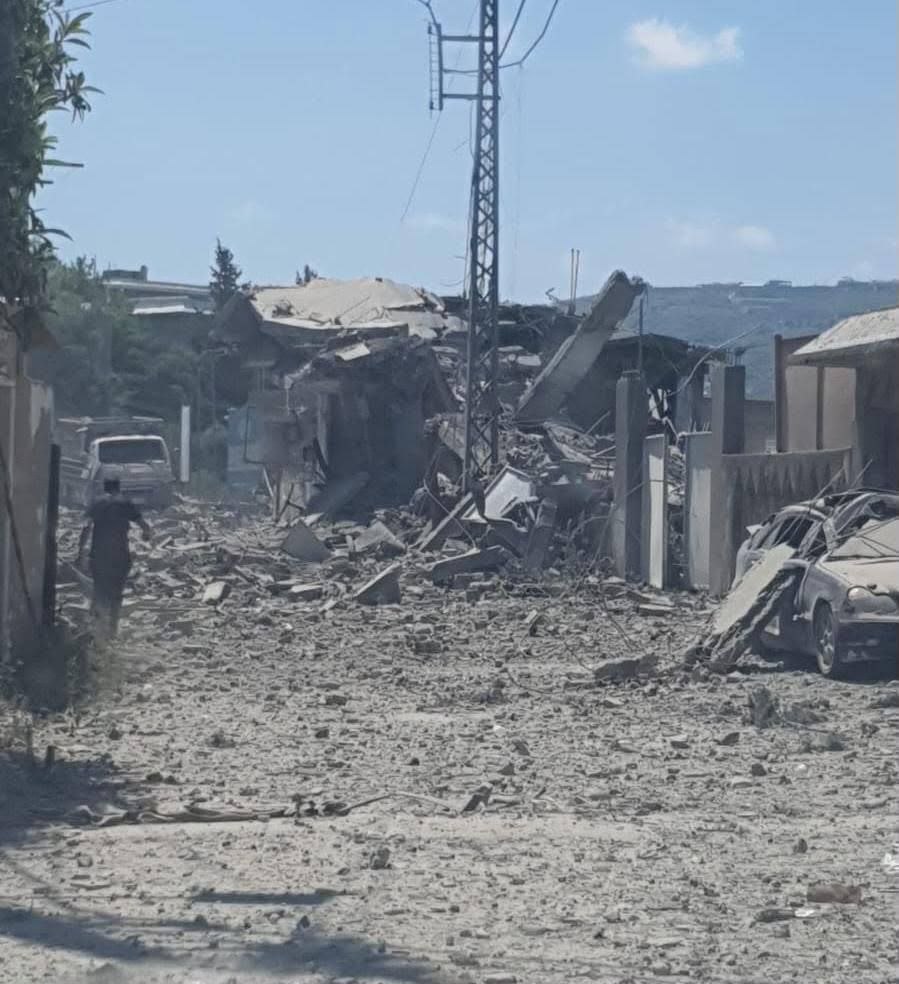
Israeli forces have taken the historic Beaufort Castle hilltop in southern Lebanon, a move that both military analysts and regional observers describe as a significant tactical advance — and one that carries strategic implications well beyond the immediate geography of the Israel-Lebanon border.
The capture, confirmed by Israeli military communications and reported by CryptoBriefing on 1 June 2026, represents the deepest incursion into Lebanese territory since the current phase of hostilities began. Beaufort Castle — known in Arabic as Al-Shaqif — occupies a commanding position overlooking the Litani River plain and the coastal road north, making its seizure a matter of no small consequence for the shape of any future ground deployment.
What the sources make clear is that this is not a single day's operation. Hezbollah's military media wing released footage on 31 May showing an operation targeting a gathering of Israeli soldiers near the castle, using anti-armour munitions. A separate release, confirmed by independent OSINT researchers monitoring the outlet, documented an Iron Dome battery strike at Jal Alam in northern Israel on 27 May. That footage, released on 1 June, showed the battery being struck by what appeared to be a guided anti-tank weapon. Meanwhile, Lebanese media reported an Israeli raid on the town of Haris in southern Lebanon on 1 June, indicating that Israeli forces were active across multiple axes simultaneously as the Beaufort operation proceeded.
Taken together, the sequence suggests a deliberate, co-ordinated ground advance rather than a raid and withdraw. The castle's capture gives Israeli forces an observation post with direct sightlines into Hezbollah's traditional defensive belt north of the border. It also removes one of the symbolic anchors of Hezbollah's claimed deterrence posture — a position the group has long treated as a line it would contest.
The operational logic
Israeli military communications have framed the Beaufort operation in terms of eliminating cross-border rocket and anti-tank fire from the surrounding hills. Southern Lebanon's terrain — a mosaic of olive groves, rocky outcrops, and steep wadis — has historically favoured the defender. Hezbollah spent years preparing that terrain: tunnel networks, fortified positions, and pre-sighted kill zones that have made direct assault costly in earlier confrontations.
Beaufort Castle changes that equation in a specific, limited way. It is high ground with a 360-degree field of view. Israeli forces holding it can direct close-air support and artillery with much greater confidence than units operating at the valley floor. Military analysts familiar with the terrain, speaking to regional wire services, have noted that the castle's seizure does not by itself neutralise Hezbollah's rocket arsenal — estimated by Western intelligence assessments at figures ranging into the tens of thousands — but it meaningfully degrades the group's ability to direct accurate fire at Israeli population centres without exposing launch crews to direct observation.
Hezbollah's response, as documented in its own military media releases, has been to continue operations against Israeli positions rather than cede ground quietly. The group's footage of the Iron Dome battery strike at Jal Alam, released on 1 June, was explicitly dated 27 May — suggesting that even as Israeli forces advanced, Hezbollah retained the ability to identify and engage high-value air-defence assets deep enough into northern Israel to matter. The Iron Dome system, designed to intercept rockets and mortars at ranges between 4 and 70 kilometres, has performed a specific function in this conflict. Its targeting by Hezbollah anti-tank units indicates that the group has adapted its tactics, using drones and ground observers to cue strikes against battery positions rather than relying solely on rocket barrages.
What the other side says
Lebanese media, including outlets reporting on the Haris raid, described the Israeli operation as a violation of Lebanese sovereignty and an expansion of an aggression that began with the Gaza conflict. That framing — shared across much of the Arab-language press and amplified by regional actors — positions the Beaufort seizure not as a tactical act but as part of a deliberate strategy of territorial consolidation along the northern border, potentially as prelude to a buffer zone.
Israeli officials have not publicly confirmed a buffer-zone intention, and the political cost of holding Lebanese territory permanently — with all the obligations that would entail under international law — is a consideration that has historically restrained such ambitions. But the sources do not indicate that the government in Jerusalem has issued any public statement disavowing the possibility. That ambiguity is, in itself, a signal.
The question of civilian harm also requires explicit acknowledgment here. Haris is a town with a residential population. If the Israeli raid on 1 June caused casualties or displaced residents, the sources reviewed by this publication have not yet confirmed numbers. UN agencies and the International Committee of the Red Cross have not issued statements on the Haris incident as of publication. That absence of confirmed civilian casualty data is itself notable — it means the human cost of this escalation remains partially obscured, and that is a condition any responsible outlet should name rather than paper over.
The structural frame
The Beaufort operation sits inside a larger pattern that observers of this conflict have been tracking for months: the gradual transformation of what began as a Gaza-focused war into a multi-front regional confrontation. The northern border with Lebanon has been active since October 2023, but the intensity has fluctuated. What the current phase represents is a qualitative shift — from exchanges of fire managed below the threshold of full-scale ground invasion, to an overt military campaign with declared territorial objectives.
The implications for Lebanon's own governance structure are not peripheral. Hezbollah is not simply a military actor in this conflict; it is a political party with representation in government, a social service network, and a constituency that extends well beyond its declared fighters. A sustained Israeli military presence in southern Lebanon — rather than the temporary incursion model that characterised earlier exchanges — would place the group's political standing directly in the path of an Israeli military reality on the ground.
The regional dimension is harder to ignore. The United States, which has continued to supply Israel with weaponry and diplomatic cover throughout the Gaza phase, faces a changed calculation if Israeli forces move to hold Lebanese territory. American officials have publicly urged restraint; the degree to which Washington has private leverage over Jerusalem's operational decisions remains unclear from the sources available.
Forward view
Hezbollah's military media releases make clear that the group does not consider the capture of Beaufort Castle a concluded chapter. The footage released on 31 May was explicitly an operation against Israeli soldiers at that location — not a retrospective record of an earlier engagement. That timing matters: it suggests Hezbollah was actively contesting the Israeli advance even as the advance succeeded. The Iron Dome battery footage, likewise, indicates that the group retains offensive capability inside what Israeli officials have described as their area of operations.
Whether that capability is sufficient to force a Israeli withdrawal — or whether it merely raises the cost of holding the position — is a question the sources cannot yet answer. What the sources do establish is that the capture of Beaufort Castle has not ended the fighting on that front. It has moved it to a different plane.
The trajectory, as things stand on 1 June 2026, points toward deeper Israeli involvement in southern Lebanon rather than a managed de-escalation. The political conditions for a ceasefire — a functioning Lebanese state, an internationally mediated agreement, a Hamas deal that removes the original catalyst for the northern escalation — are not present in the sources reviewed. What is present is a military operation with no declared end-state, and a militant adversary with both the motivation and the terrain to make a long occupation costly.
The desk's read: wire coverage of this story has focused heavily on the Israeli military framing — tactical gains, elimination of threats, the protective rationale. The footage released by Hezbollah's own media wing, which this publication has reviewed independently, suggests a more contested picture. That asymmetry — in which one side's assessment of success is recorded in graphic detail by the other side — is itself a reason to read both narratives with care, and to hold firm conclusions until the operational picture stabilises.
Wire provenance
This editorial synthesis draws on the following public wire/social posts:
- https://t.me/CryptoBriefing/11234
- https://t.me/CryptoBriefing/11233
- https://t.me/alalamarabic
- https://t.me/alalamarabic
- https://t.me/thecradlemedia
- https://t.me/wfwitness