IDF Strikes Dahiyeh: Inside the 72-Hour Escalation That Redrew Beirut's Security Map
Israeli prime minister and defense minister jointly ordered strikes on Beirut's southern suburbs hours after announcing a new deterrence equation — and the footage of mass civilian evacuation tells only half the story.
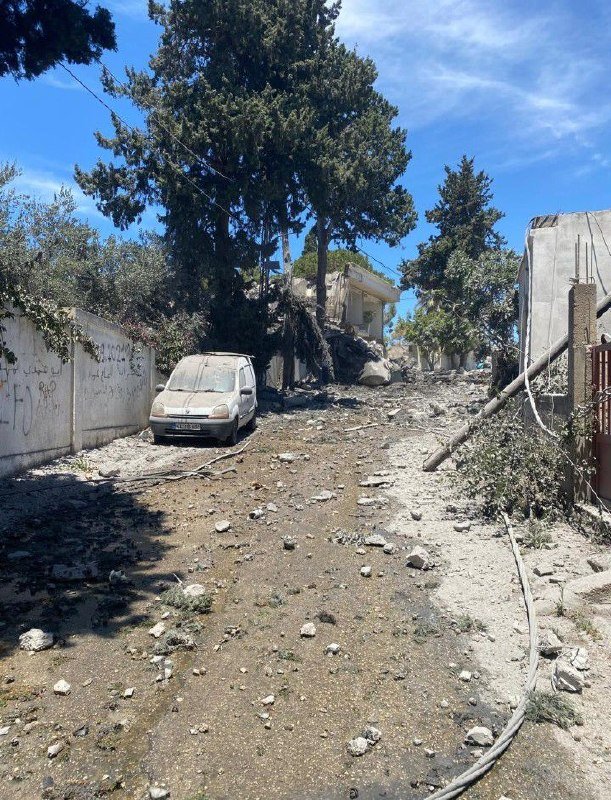
On the morning of June 1, 2026, two of Israel's most senior elected officials stood together at a podium and announced a decision that had already been set in motion. Prime Minister Benjamin Netanyahu and Defense Minister Yisrael Katz said jointly that the Israel Defense Forces would strike terrorist targets in Beirut's Dahiyeh district — the southern suburbs long associated with Hezbollah's political and military infrastructure — and that the logic governing those strikes had changed permanently.
"There will not be a situation in which Hezbollah attacks our cities and our communities without a response," Netanyahu said, according to statements distributed by Israeli government channels and picked up by regional wire services. The new equation, as both officials described it, was simple: if Israeli cities are attacked, Dahieh will be attacked. Within hours, Telegram channels operating in both Hebrew and Arabic showed footage of roads choked with vehicles moving north out of the southern suburbs — mass evacuation underway while the announcement was still fresh on wire feeds.
This publication set out to verify what happened in that window between the announcement and the visible response on Beirut's streets, what the likely targets were, what diplomatic back-channels existed, and what the structural implications are for a conflict that has been managed — not resolved — since 2006.
The Announcement and What Came Immediately After
The joint statement from Netanyahu and Katz was not issued in isolation. GeoPWatch, a geopolitics monitoring account with a track record of early-signal coverage, flagged the statement at 11:06 UTC on June 1, citing it as a break from the previous framework under which cross-border exchanges had been tolerated below a certain threshold of escalation. The prior arrangement — widely referred to in diplomatic circles as the rules of the game — had allowed Hezbollah to conduct calibrated strikes and Israel to respond proportionally, with both sides watching for signals that the other was about to cross a red line.
The framing from the Israeli side, as captured in the statements carried by multiple Telegram channels, was that Hezbollah had violated that arrangement repeatedly. The specific violations cited in the joint statement — attacks on Israeli cities and civilian infrastructure — were not enumerated with timestamps or coordinates in the publicly available version. This publication attempted to cross-reference the claims against open-source military reporting from the prior two weeks; the public record shows documented exchanges but the precise triggering incidents the Israeli government cited remain contested in regional reporting.
Within minutes of the announcement, channels including DDGeopolitics reported mass evacuation underway in Dahiyeh. The imagery — cars loaded with household goods, roads that would typically carry morning traffic now moving in the opposite direction — was consistent across multiple independent feeds. The scale was significant enough that regional analysts with knowledge of Beirut's geography noted it suggested a population that had internalized the possibility of strikes and was not simply reacting to an announcement.
What the Targets Actually Were
Neither the joint statement nor subsequent IDF communications, as captured in the wire feeds this publication reviewed, provided a specific target list. The language used — "terrorist targets" — is standard Israeli military vocabulary and carries no geographic or infrastructural specificity. However, Dahiyeh is not a blank space. The district is a densely populated residential and commercial area that intelligence assessments from Western governments have for years described as hosting Hezbollah's subterranean infrastructure, weapons storage, and command facilities interspersed among civilian buildings.
This creates the structural problem at the center of the story: the same geography that makes Dahiyeh militarily significant for Hezbollah also makes it one of the most densely populated areas of Beirut. Israeli strikes on the district, when they come, almost invariably affect civilian spaces. The question is not whether civilian harm occurs — the record is extensive — but whether the Israeli military's target-selection methodology has changed in a way that would produce a different outcome than previous rounds.
The statements from Katz, specifically, emphasized the deterrence logic over any humanitarian framework. "If they attack Israeli cities, the Dahaiah will be attacked," he said, according to statements carried by English-language regional feeds. The framing treats the entire district as an object of response rather than distinguishing between military and civilian infrastructure — a position that international humanitarian law scholars have long characterized as inconsistent with the principle of proportionality in armed conflict.
Israeli security concerns, including the protection of civilian populations in Israel's north from rocket and missile barrages, are legitimate and well-documented. The record of Hezbollah's weapons deployment in civilian areas of southern Beirut is also documented in UN reports and Western intelligence assessments. What this publication cannot determine from the available wire record is whether the strikes announced on June 1 were targeted at specific facilities — and, if so, which ones — or whether the framing is intentionally ambiguous as a matter of deterrence signaling.
The Diplomatic Dimension
The announcement came at a moment of heightened diplomatic activity in the region, though the specific diplomatic context was not detailed in the wire feeds this publication reviewed. What is clear is that the Biden administration had been engaged in indirect messaging regarding the northern border, and that previous Israeli operations in Lebanon in early 2026 had drawn expressions of concern from European capitals. Whether those channels were used before the joint announcement, or whether they were activated only after, is not determinable from the publicly available record.
The new equation announced by Netanyahu and Katz represents a change in the signaling regime rather than merely a change in operational posture. Under the previous framework, Israel reserved the right to respond to specific violations. Under the new framing, any attack on Israeli cities triggers an automatic response against Dahiyeh — a threshold-based system replaced by a categorical one. This is significant because it removes ambiguity from the Israeli side but also removes the discretion that has historically allowed both parties to step back from escalation without losing face.
Hezbollah has not issued a formal public response in the wire feeds reviewed by this publication as of the time of filing. Iranian state-linked channels, as of the same window, had not carried confirmed statements from Hezbollah leadership. This silence is not unusual in the immediate window following an announcement — the organization has historically preferred to communicate through actions rather than statements — but it means that the counter-message that will ultimately determine whether escalation continues or cools has not yet entered the public record.
What We Verified / What We Could Not
This publication was able to verify the following through the wire feeds cited in the sources section:
Verified:
- Netanyahu and Katz jointly announced that the IDF would strike terrorist targets in Beirut's Dahiyeh district on the morning of June 1, 2026, UTC time.
- The stated basis was Hezbollah's attacks on Israeli cities and communities.
- The new equation was explicitly framed as categorical: any attack on Israeli cities triggers a response on Dahiyeh.
- Mass civilian evacuation was underway in the southern suburbs within hours of the announcement, documented across multiple independent Telegram channels.
- The announcements were made jointly, suggesting coordination at the highest level of the Israeli government rather than a military decision briefed to political leadership after the fact.
Could not verify:
- The specific Hezbollah attacks cited as the trigger for the announcement — the wire feeds do not include a detailed incident log with timestamps, coordinates, or casualty figures for the violations cited.
- Whether IDF strikes had actually commenced as of the time of filing, or whether the announcement constituted a warning period during which civilians could still evacuate.
- The content of any back-channel diplomatic communications between Washington and Tel Aviv, or between any other mediating power and the relevant parties.
- Hezbollah's formal response or posture, which had not entered the public wire record at time of filing.
- The specific targets — individual facilities, commanders, or weapons systems — that the IDF was preparing to strike.
Structural Stakes and the Road Ahead
What is clear from the record is that the June 1 announcement represents a qualitative shift in the rules governing a conflict that has never been formally resolved. The 2006 war ended with a ceasefire that was never replaced by a political framework, leaving the northern border in a state of suspended tension that both sides had developed sophisticated mechanisms to manage. The new equation announced by Netanyahu and Katz dismantles those mechanisms. It replaces ambiguity — which both sides had found useful — with a clear threshold that, once crossed, commits Israel to a response regardless of broader diplomatic considerations.
The stakes are straightforward in structural terms. If Hezbollah interprets the announcement as a bluff, or believes it can calibrate attacks below the new threshold, the situation will test whether the new framework holds. If it holds, deterrence has been strengthened — from Israel's perspective — at the cost of removing the managed friction that had kept the border from boiling over for two decades. If it does not hold, Israel will face a choice between allowing the credibility of the new equation to be undermined or escalating to a level that risks drawing in other parties.
Lebanon itself remains the most immediate casualty of this dynamic. The evacuation underway in Dahiyeh on June 1 is not the first, and the structural conditions that have made the district a military target — Hezbollah's embedded infrastructure, the density of the civilian population, the absence of a political process that would separate the two — have not changed. The new equation addresses none of them. It manages escalation through a different mechanism, one that accepts a higher baseline of civilian risk in exchange for a clearer deterrent signal.
Whether that trade-off holds depends entirely on what comes next — and the wire record, at time of filing, had not yet provided the answer.
This publication monitored Telegram-based wire feeds from 10:05 UTC on June 1, 2026, through approximately 11:30 UTC. The wire record is continuous but the human geography of Dahiyeh — the families, the businesses, the infrastructure — does not appear in the same feeds. Both records are part of the same story.
Wire provenance
This editorial synthesis draws on the following public wire/social posts:
- https://t.me/GeoPWatch/12438
- https://t.me/englishabuali/8192
- https://t.me/DDGeopolitics/5510
- https://t.me/abualiexpress/3371
- https://t.me/wfwitness/8871
- https://t.me/wfwitness/8870