Iran's Bezeshkian Warns of Hormuz Showdown as Diplomatic Channel Collapses
Tehran signals it will take 'all measures' to control the Strait of Hormuz as US sanctions on sailors deadlock diplomatic efforts, with oil markets pricing in disruption risk.
Iranian President Masoud Bezeshkian warned on 1 June 2026 that Tehran would take "all measures in its power" to normalise maritime traffic through the Strait of Hormuz, the world's most critical oil transit corridor, as diplomatic channels between Iran and the United States appeared to have reached a terminal dead-end.
Speaking in statements carried by Iranian state media, Bezeshkian said Iran was "fully prepared to facilitate the crossing of maritime traffic" but blamed US-imposed restrictions on mariners as the primary obstacle. "The main problem results from the restrictions imposed by the United States against the mariner," he said, adding that Tehran had "always considered diplomacy the most effective solution to settle issues, but some parties, including the United States, have disavowed the pledges."
The remarks represent the sharpest diplomatic rupture between the two sides since the collapse of the JCPOA nuclear framework, and come amid escalating military activity in and around the strait itself.
Military Posturing and the Strike Exchange
Reports from multiple monitoring channels indicate that US and Iranian forces have exchanged air strikes in proximity to the Strait of Hormuz. According to tracking of regional security feeds on 1 June 2026, the exchange marks a qualitative escalation from the naval pressure campaign both sides have maintained for months. US naval vessels have operated an effective blockade posture in the Gulf, while Iran has deployed Islamic Revolutionary Guard Corps vessels near the shipping lane and announced plans to impose transit fees on vessels passing through.
The strike exchange follows a pattern of incremental escalation that has characterised US-Iranian interactions since the Trump administration's maximum-pressure campaign resumed. What differs now is the direct kinetic contact, which narrows the space for de-escalation language on both sides.
The Hormuz Chessboard: Why This Corridor Matters
The Strait of Hormuz is not a metaphor. Roughly 20 percent of global oil shipments pass through the 33-kilometre-wide passage between Oman and Iran, connecting the Persian Gulf to the Gulf of Oman and the open Indian Ocean. For Iran, the strait represents both an economic lifeline and a geopolitical asset: the country's oil exports—subject to US sanctions architecture—are entirely contingent on passage through these waters. For Washington, maintaining freedom of navigation is a foundational commitment, rooted in decades of Gulf security architecture built around allies Saudi Arabia, the UAE, and other Gulf Cooperation Council members.
The structural logic here is not new. Every Iranian government since 1979 has understood the strait's leverage. What has changed is the operational environment: US sanctions now target not just Iranian oil exports but the maritime workforce itself, restricting Iranian sailors and tanker crews from accessing international banking and insurance networks. Iranian officials argue this constitutes a de facto naval blockade through economic means—and Tehran's response frames its own posturing as counter-pressure, not aggression.
The Diplomatic Collapse
Bezeshkian's statement that "the United States has disavowed the pledges" signals that back-channel communications—long reported as active despite public hostility—have broken down. This matters because the conventional wisdom entering 2026 held that both sides had strong incentives to keep kinetic confrontation below a certain threshold: Iran faces economic collapse pressures from sustained sanctions; the United States faces a domestic energy landscape where elevated oil prices cut against White House political interests ahead of mid-term cycles.
Yet the structural logic pushing both sides toward confrontation appears stronger than the incentives pulling them back. For Iran, demonstrating weakness on the Hormuz question would undermine the IRGC's deterrence posture and invite further sanctions escalation. For Washington, appearing to back down in the face of Iranian threats risks emboldening Tehran across the broader region—in Iraq, in Syria, in the Gulf.
TheCryptoBriefing tracking feeds documented Iranian state assertions of "permanent control" over the strait as recently as 1 June 2026, framing the dispute as one of Iranian sovereignty rather than transient maritime posturing. That framing—and the US response—suggests both capitals are now locked into a narrative logic that makes compromise difficult to present domestically.
What Comes Next
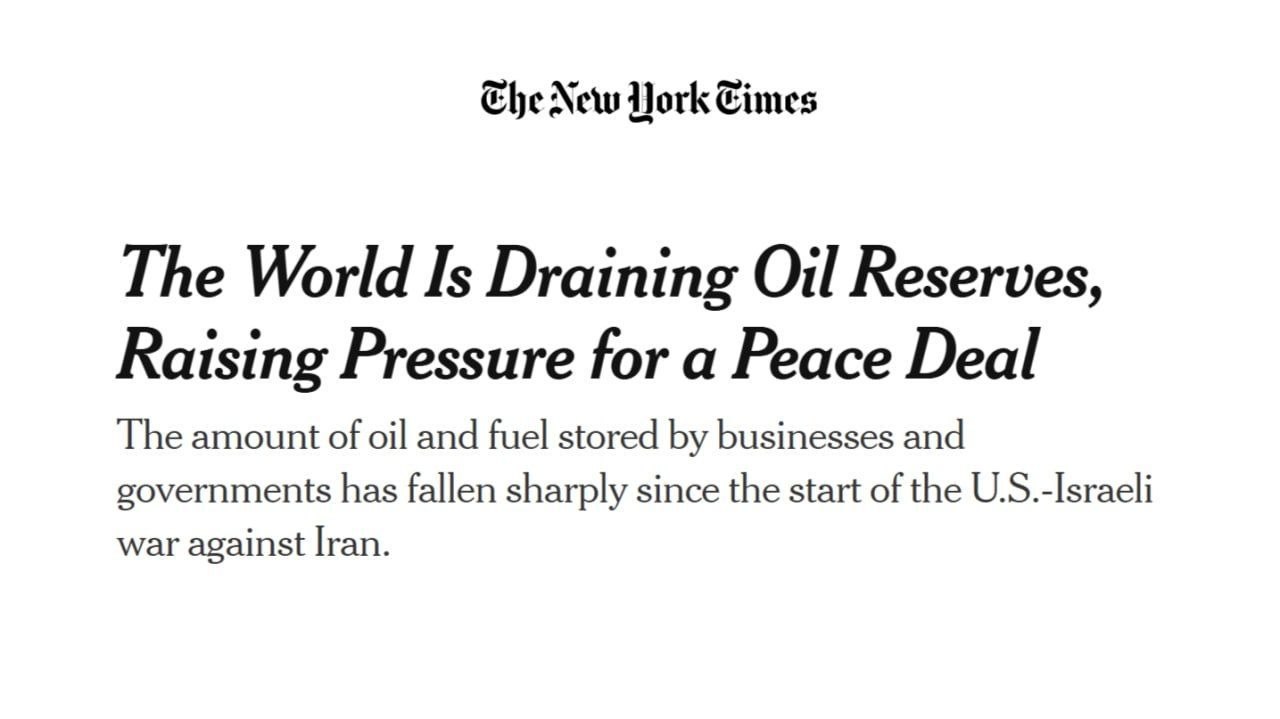
Oil markets have already moved. Tracking data from 31 May 2026 shows price surges attributed to Strait of Hormuz disruption risk, with energy traders pricing in a premium for Gulf-related uncertainty. If the current trajectory holds—a significant qualification, given the opacity of both governments' internal deliberations—the risk of further kinetic incidents is high. An incident involving a US warship and an Iranian vessel in the strait itself would likely trigger insurance market responses that would effectively choke off Gulf oil flows regardless of whether any Iranian vessel is seized.
The counter-argument to alarmism is straightforward: both sides have operated in this space for decades without direct conflict. The nuclear file remains the underlying pressure point, and there are institutional actors in Washington and Tehran who understand the costs of escalation. That channel has not yet produced a breakthrough, but it has not closed entirely.
Whether it closes in the coming weeks may determine whether the Hormuz question remains a diplomatic negotiation or becomes a military one.
This publication covered the Strait of Hormuz dispute through Iranian state media framing alongside US-and-allied reporting on naval posturing. The wire picture shows a clear divergence: Tehran frames the crisis as a US-orchestrated economic siege on maritime workers; Washington frames it as Iranian aggression against freedom of navigation. The structural logic—two powers each with compelling reasons to escalate and equally compelling reasons to pull back—suggests the next two to three weeks will be decisive.
Wire provenance
This editorial synthesis draws on the following public wire/social posts:
- https://t.me/alalamarabic/1
- https://t.me/alalamarabic/2
- https://t.me/alalamarabic/3
- https://t.me/CryptoBriefing/4
- https://t.me/CryptoBriefing/5
- https://t.me/CryptoBriefing/6
- https://t.me/CryptoBriefing/7
- https://t.me/CryptoBriefing/8
- https://t.me/CryptoBriefing/9