Iran's Foreign Ministry Dismisses EU Condemnation as Backing Aggressors
Tehran rejected the EU's statement condemning its retaliatory strike, arguing that backing a strike originating from Kuwaiti territory places European nations on the side of aggressors. The foreign ministry spokesperson also demanded consular access for four detained Iranian nationals and framed the ceasefire as contingent on reconstruction conditions.
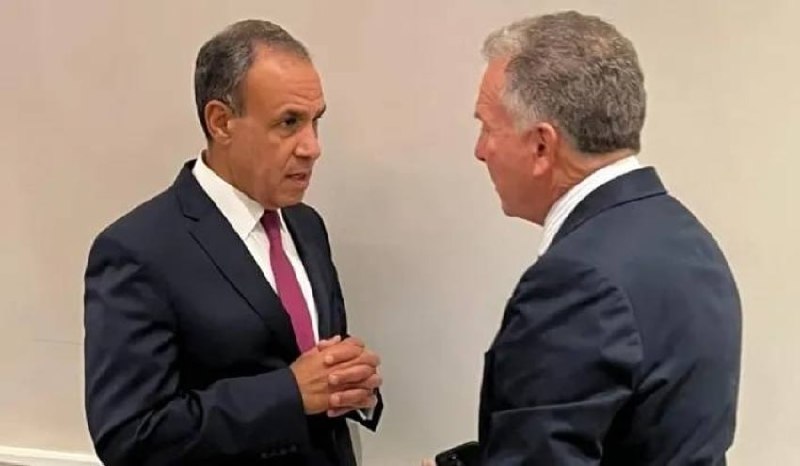
Iran's Foreign Ministry spokesperson on 1 June rejected a European Union statement condemning the Islamic Republic's retaliatory strike, arguing that the EU had placed itself on the side of aggressors by condemning Tehran's response to an attack that originated from Kuwaiti territory.
The spokesperson made the remarks in a sequence of official communications carried by the Fars News Agency, Reuters, and state media across the Persian-speaking wire services. The statements amount to the clearest articulation yet of Tehran's framing: that the original strike was the act of aggression, and that any party backing that act — whether through weapons, territory, or diplomatic cover — shares in the culpability. The EU's decision to condemn only the Iranian response, the spokesperson argued, amounts to moral endorsement of the aggressor.
The Original Strike and Iran's Response
The trigger for the exchange remains the strike that struck Iranian territory, with Iranian officials maintaining that the originating point of the attack was Kuwait. Tehran's response — the target and scope of which Iran has not publicly detailed in full — is being framed as an exercise of the right to self-defense under international law. The EU's statement, which Iran interpreted as a blanket condemnation of its military action regardless of context, drew the sharpest rebuttal from the foreign ministry in weeks.
The spokesperson also pressed a secondary grievance: four Iranian citizens arrested in connection with events surrounding the strike remain without consular access. According to the foreign ministry, the Iranian embassy in Kuwait has been unable to secure a meeting with the detainees, a failure the spokesperson characterised as a breach of standard diplomatic obligations. Kuwait's failure to provide access, the statement suggested, was itself evidence of the broader alignment against Iran that made the original strike possible.
The sources do not specify the nationalities of those arrested beyond identifying them as Iranian citizens, nor the specific charges — if any — that Kuwait has levelled against them. What is clear is that Tehran views the consular-access failure as a deliberate act of exclusion, not a bureaucratic delay.
The JCPOA Money and Europe's Historical Role
The spokesperson drew a line between the current confrontation and the longer history of Iranian-Western dispute, noting that the money Iran received under the Joint Comprehensive Plan of Action — the 2015 nuclear agreement — was in every legal sense the unfreezing of Iranian sovereign assets, not a concession or a gift. "The money that Iran received in the JCPOA was the frozen property and the right of the Iranian people," the spokesperson stated, a formulation that positions Tehran as a creditor recovering what was always owed rather than a beneficiary of Western generosity.
The framing serves a dual purpose: it undermines the narrative that Western sanctions relief was an act of grace, and it reinforces Iran's broader contention that its nuclear programme has always been a matter of sovereign development rights, not a concession extracted under duress. The EU statement, in Iran's reading, ignored this history and applied a standard of conduct to Tehran that was never applied symmetrically to those who imposed the original sanctions regime.
Kuwait's Role and the Regional Alignment Question
The crux of Iran's grievance against European states is not simply their condemnation of the Iranian response, but their implicit acceptance of the conditions that made the original strike possible. The spokesperson said explicitly that countries whose territory serves as the origin point of an attack on Iran cannot claim neutrality — they have already chosen a side. "Violation of international obligations by the countries of the region will put them on the side of the aggressors," the spokesperson stated.
What the sources do not establish is the degree to which Kuwait's involvement was active or passive — whether the originating territory was a launch site, a transit corridor, or something less direct. That ambiguity matters for how the international community might assess Iran's contention. If Kuwait's territory was used without the government's knowledge, the culpability calculus differs from a case of deliberate complicity. The sources do not illuminate what due diligence Tehran believes Kuwait should have conducted, or what specific intelligence Iranian officials believe demonstrates prior knowledge. That gap in the public record leaves Iran's sweeping assertion partly untested.
The EU's relative silence on Kuwait's role — in the statements available — reinforces Tehran's sense that European diplomacy applies different standards depending on the actor in question. Whether that perception is accurate or reflects a more complex set of calculations about regional relationships and energy security is a separate question. What is clear is that the foreign ministry is treating European criticism as evidence of alignment, not neutrality.
Ceasefire, Reconstruction, and the Diplomatic Horizon
The statements also addressed the broader framework governing the current standoff. The spokesperson said one element of the understanding — the term Tehran is using for whatever provisional arrangement governs the period following the exchange of strikes — includes conditions for the reconstruction of war damages. That language signals that Tehran views the cessation of hostilities as conditional on compensation and restoration, not as a clean resolution of the underlying dispute.
The phrasing also suggests Iran does not view the ceasefire as a normalisation of relations or a lifting of pressure — it is a pause, with the full restoration of Iran's position contingent on material remediation. That framing places the burden of the next move on the international community and the Western coalition: if they want stability, they must pay for the damage the original strike caused.
The diplomatic pathway remains narrow. The EU's condemnation isolates Iran further at a moment when Tehran is attempting to frame the conflict as one of self-defence against a coalition of aggressors. The consular-access demand creates a specific grievance that can be pressed through neutral intermediaries if not directly. And the reconstruction language keeps the issue of compensation alive as a long-term lever. Whether any of these threads lead somewhere depends on whether European capitals are willing to entertain a dialogue that does not begin with the premise that Iran is the sole party that acted wrongly.
This publication framed Iran's position as a counter-framing challenge — examining how Tehran constructs its self-defence narrative — rather than treating the EU statement as a settled moral judgment on the episode.
Wire provenance
This editorial synthesis draws on the following public wire/social posts:
- https://t.me/FarsNewsInt/12457
- https://t.me/farsna/89421
- https://t.me/farsna/89420
- https://t.me/farsna/89418