Iran's Technical Minister Makes the Case for Industrial Sovereignty
As Western sanctions squeeze Tehran's conventional financial channels, the Islamic Republic's labor minister articulates a doctrine of technical self-reliance — one that its partners in the Global South are watching closely.
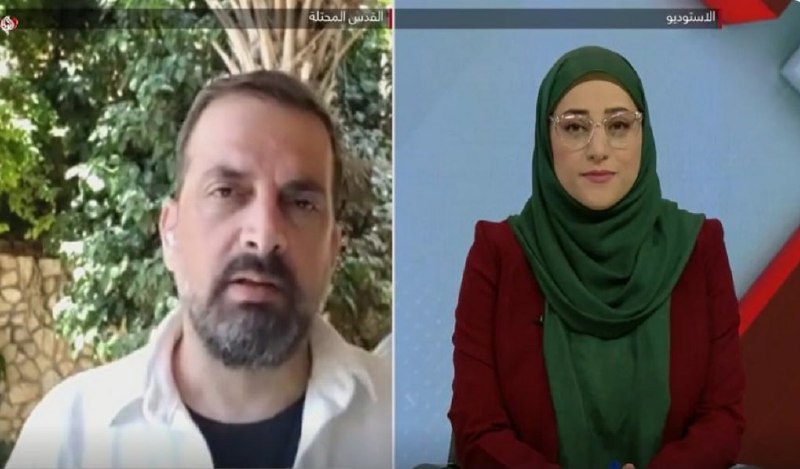
The doctrine of technical forces
On 1 June 2026, Iran's Minister of Cooperation, Labor and Social Welfare delivered a formulation that has circulated in Tehran's policy circles for years but is gaining new urgency: technical forces are the primary drivers of major developments in the world, and fundamental industrial and technological progress cannot be deferred to foreign supply chains. The statement, carried by Al Alam, the Arabic-language service of Iranian state media, arrives at a moment when the Islamic Republic is navigating its most intensive sanctions pressure in a decade while simultaneously expanding industrial cooperation with Belt and Road partner states.
The framing is not merely rhetorical. Iran's domestic economic data — opaque by Western analytical standards but publicly available through Iranian state statistical bodies — shows a deliberate shift toward import substitution in sectors including petrochemicals, automotive components, and basic pharmaceuticals. The labor ministry's portfolio, which encompasses vocational training and cooperative enterprise development, places the minister at the intersection of industrial policy and human-capital formation.
Sanctions as accelerant
The conventional Western analysis treats Iranian sanctions as a coercive instrument designed to alter behavior. What that analysis often underweights is the degree to which sustained external pressure has reinforced internal constituencies that favor accelerated domestic technical capacity. The minister's statement functions in part as validation for those constituencies — an assertion that the path forward runs through national industrial capability rather than through reintegration into a Western-dominated trading architecture.
This is not a fringe position inside Tehran. Iran's Supreme Leader has consistently framed scientific and technological self-reliance as a religious and national duty. The fatwa against luxury imports — long discussed in Tehran's policy circles — is one expression of that doctrine. The labor minister's formulation extends it: not just consumer restraint but active investment in technical human capital as a strategic asset.
Western interlocutors who have engaged with Iranian officials over the past decade report a consistent theme: Tehran does not merely seek sanctions relief as a temporary reprieve. It seeks the legal and financial architecture to operate independently of dollar-denominated clearing systems permanently. The technical-forces doctrine is the ideological dressing on that structural ambition.
A doctrine the Global South is taking notes on
What makes the labor minister's formulation analytically significant extends beyond Iranian domestic politics. Across the Global South, governments that have chafed under conditionality attached to IMF programs, World Bank lending, or bilateral trade agreements are reassessing the assumption that technological development requires integration into existing Western supply chains. Iran's experience — brutalized by sanctions, yes, but also demonstrating a degree of industrial survival that its GDP per capita would not predict — offers a data point.
The numbers are contested and the methodology open to challenge, but Iran's domestic pharmaceutical industry, for example, now produces a substantial share of the country's generic medicines — a sector that global pharmaceutical companies largely abandoned in favor of higher-margin markets. That capability, developed under necessity, is now a source of genuine national pride and, increasingly, a diplomatic instrument. Tehran has supplied pharmaceutical products and, reportedly, medical expertise to partners in Syria, Lebanon, and parts of East Africa.
This does not amount to a refutation of international trade theory. Iran's per capita GDP remains well below its pre-1979 trajectory, and the human cost of sanctions — borne disproportionately by ordinary citizens, not the political class — is real and well-documented by UN special rapporteurs. But the experience complicates the simple narrative that economic isolation is functionally equivalent to economic failure.
Stakes and structural context
The stakes of this discourse are not abstract. If Iran's technical-forces doctrine represents a durable strategic orientation rather than propaganda, it means Tehran will continue to prioritize industrial self-sufficiency over the trade and investment benefits of a sanctions settlement — or at least will seek both simultaneously rather than trading one for the other. That dual-track approach has characterized Iranian foreign policy for fifteen years: negotiating where possible, building alternative infrastructure where necessary.
For Western policymakers, the implication is uncomfortable: maximum-pressure campaigns may not produce capitulation but rather accelerated autarky. For Global South governments weighing their own industrial policy options, the Iranian model is one of several they are studying — alongside China's state-directed development, Vietnam's export-manufacturing pivot, and India's selective decoupling from Chinese supply chains.
The Al Alam statement does not reveal anything about the specific mechanisms Tehran intends to deploy. Vocational training expansion, cooperative enterprise support, and technical higher education are the labor ministry's conventional portfolio items. Whether those instruments, in the current sanctions environment, can generate the kind of leapfrogging industrial development the minister invokes remains genuinely uncertain. The sources do not specify what timelines or investment figures the ministry is working with.
What is clear is that the doctrine has a constituency inside the Iranian system that will outlast any particular negotiation cycle. Technical forces, in this framing, are not a policy option — they are an identity. The question is whether identity, without the materials of a modern industrial economy, is sufficient.
Desk note: The wire services carried substantial coverage of IAEA inspections and uranium enrichment levels throughout May 2026. Monexus chose to focus on the technical-forces framing rather than the enrichment story because it represents a more distinctive window into how Tehran's policy elite conceptualizes geopolitical competition — and because that framing has genuine resonance across a bloc of states that the Western wire services tend to address mainly as sanctions counterparty rather than as an ideological actor in its own right.
Wire provenance
This editorial synthesis draws on the following public wire/social posts:
- https://t.me/alalamfa/18432