Iran's top advisor to Supreme Leader reaffirms backing for Lebanon as ceasefire tensions simmer
On June 1, 2026, Tehran's most senior foreign policy voice publicly renewed Iran's commitment to the Lebanese people, warning Israel against what Iran describes as ceasefire violations targeting the Dahieh district of southern Beirut.
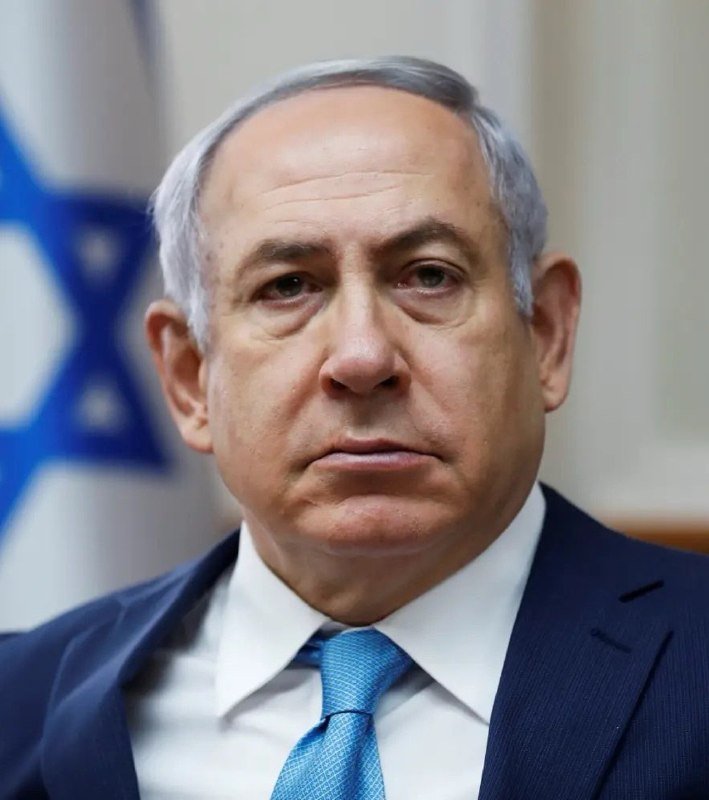
Ali Akbar Velayati, the most senior foreign policy adviser to Iran's Supreme Leader, appeared on state-linked Telegram channels on the afternoon of June 1, 2026, delivering the clearest official statement from Tehran in weeks on the subject of Lebanon. Iran and the Resistance Front, Velayati said, would stand by the Lebanese people of all sects until the end. The framing — sectarian-inclusive, historically-rooted — was deliberate. It was also a direct response to what Tehran characterizes as Israeli military action inside the ceasefire line.
What Tehran said and why it matters
The statement, carried simultaneously by alalamarabic, Tasnim News in English, and Jahan Tasnim, identified a specific flashpoint: the bombing of Dahieh, the dense southern Beirut suburb that houses a significant Hezbollah civilian and semi-military presence. Velayati described the strikes as a violation of the ceasefire architecture and accused what Iranian state media terms "the fake regime" — Israel — of acting from a position of weakness rather than strength. "You started it," the statement read in the account published by the Iran-aligned monitoring channel GeoPWatch. The formulation is consistent with how Tehran has framed previous rounds of escalation: Israel initiates, the resistance endures.
What distinguishes this particular statement from the routine rhetoric that flows from both sides of the Israel–Lebanon frontier is its specificity of commitment. Velayati is not a spokesperson. He is the man briefed to articulate Khamenei's framework on matters of war and alliance. When he says the Resistance Front will stand by the Lebanese people until the end, the word "end" is left deliberately undefined — but its resonance inside the language of revolutionary commitment is unmistakable. It means that whatever diplomatic architecture Western mediators are attempting to construct around a lasting ceasefire, Tehran is signaling that its own commitments to Hezbollah and its broader axis are not conditional on that architecture surviving.
The ceasefire that is holding and not holding
The ceasefire between Israel and Hezbollah, brokered with heavy American and French involvement in late 2024, has been described by both sides as operational but fragile. Israel's military has conducted periodic strikes it characterizes as enforcement actions against what it describes as Hezbollah weapons violations — a designation that regularly encompasses facilities inside the Dahieh district. Hezbollah and its Iranian backers have consistently maintained that such strikes constitute breach of the agreement's letter and spirit.
The tension is not new, but it has acquired additional texture in 2026 as both Israel and Hezbollah navigate domestic political pressure that makes flexibility politically costly. In Tel Aviv, the far-right coalition has pushed for a more assertive posture along the northern border, arguing that the current ceasefire cedes too much initiative to a Hezbollah that has used the intervening months to reconstitute its command structure in the Dahieh and surrounding areas. In Beirut, the Lebanese state — exhausted, indebted, and structurally dependent on the international donor community — has limited ability to enforce any arrangement against the wishes of Hezbollah's leadership. That structural tension is the backdrop against which Velayati's statement was delivered.
The Western wire consensus — Reuters and AP have reported extensively on ceasefire monitoring mechanisms — frames the current situation as one of managed instability: neither party has withdrawn from the agreement, but both have tested its edges repeatedly. That consensus is accurate as far as it goes, but it tends to understate the significance of statements like Velayati's, which are aimed less at Tel Aviv than at Beirut's political class and, crucially, at Washington's calculation of whether a wider conflict remains useful.
The resistance axis as strategic architecture
The phrase "Resistance Front" is a specific term of art in Iranian strategic language. It refers not to a single organization but to a network of aligned non-state actors — Hezbollah in Lebanon, Hamas-affiliated networks in the West Bank and Gaza, Kata'ib Hezbollah and Asa'ib Ahl al-Haq in Iraq, Houthi-aligned structures in Yemen — coordinated, to varying degrees, under Tehran's strategic umbrella. The architecture is not monolithic; internal disagreements, competing interests, and divergent risk tolerances are constants. But the frame is real, and it matters.
When Velayati speaks of the Resistance Front standing by Lebanon, he is not merely affirming bilateral commitment to Hezbollah. He is signaling that the network remains cohesive enough to respond collectively to what Tehran frames as Israeli aggression. The message is directed at multiple audiences simultaneously: the Lebanese Shiite community, whose tolerance for Hezbollah's military presence has been under pressure from economic hardship and the 2020 Beirut port explosion's lingering political fallout; the Iraqi and Yemeni partners whose own conflicts with American and Gulf interests give them stakes in the broader dynamic; and the Western capitals whose sanctions regime Iran has spent two decades learning to route around.
There is a structural logic to this that Western coverage often misses. Iran does not sustain the Resistance Front because of ideological sentiment, though sentiment is real. It sustains it because the network provides Tehran with strategic depth that its conventional military capabilities cannot match. Hezbollah's rocket arsenal, distributed across southern Lebanon in patterns that make precision targeting difficult without significant civilian harm, is a deterrent that Iran itself does not need to deploy. When Velayati says the Front will stand by Lebanon until the end, he is reinforcing that deterrent logic — reminding Washington and Tel Aviv that the cost calculus of any operation that threatens Hezbollah's core capabilities includes Iranian participation at a time and place of Tehran's choosing.
What comes next
The immediate stakes are ceasefire architecture and who controls its interpretation. Israel has, by most accounts, maintained the formal ceasefire while conducting enforcement operations that Hezbollah and Iran interpret as violations. That gap between formal compliance and operational pressure is where the next crisis, if one comes, will originate.
The broader stakes are the shape of the Middle East's regional order. The Biden-era diplomatic normalization process — Saudi–Israeli, Gulf–Iran — stalled under the weight of the Gaza war and has not resumed in any meaningful form under the current administration. In that vacuum, the Resistance Front's cohesion matters more, because it is the primary vehicle through which Iran maintains regional leverage without direct military confrontation with the United States. Every statement like Velayati's reinforces that cohesion, even if it does nothing more than repeat a commitment that already exists.
What remains uncertain is whether the ceasefire's formal architecture can absorb the pressure that both sides are applying to it without fracturing. The monitoring mechanisms — a joint commission with American, French, and Lebanese participation — have so far preserved the agreement's basic structure. But the Dahieh is not a generic location. It is where Hezbollah's political and military leadership overlaps most directly with civilian density, and any Israeli operation targeting it will be read by Tehran as an existential provocation regardless of the legal framing. Velayati's statement, in that context, is not rhetoric. It is a warning about the consequences of a miscalculation that Tehran does not believe Israel fully appreciates.
This publication framed the story through the lens of Tehran's strategic signaling rather than treating the statement as mere propaganda. The wire consensus placed the focus on ceasefire mechanics and enforcement; the Monexus read foregrounds what the statement reveals about Iranian calculations on the durability and meaning of the resistance axis itself.
Wire provenance
This editorial synthesis draws on the following public wire/social posts:
- https://t.me/alalamarabic
- https://t.me/GeoPWatch
- https://t.me/tasnimnews_en
- https://t.me/JahanTasnim