Israel Authorizes Strikes on Beirut's Dahieh — And the Threshold Crosses
On 1 June 2026, Prime Minister Benjamin Netanyahu authorized the IDF to strike Beirut's Dahieh district, a Hezbollah stronghold. The formal order marks a qualitative shift in the 20-month cross-border exchange — and raises the question of whether a wider conflict can still be contained.
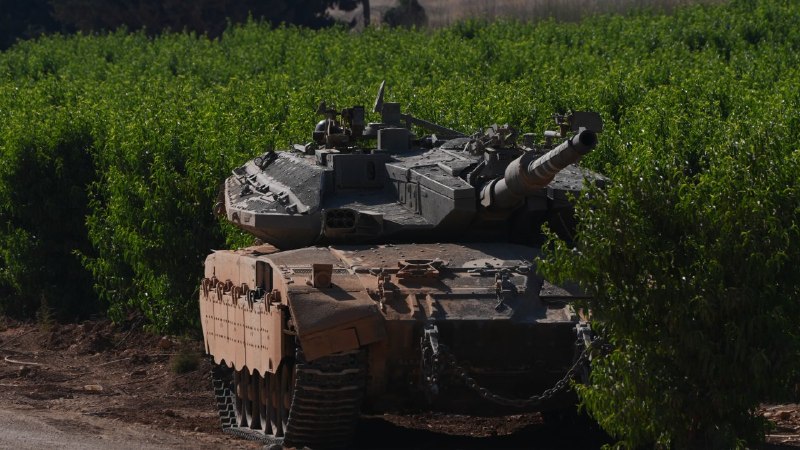
The formal authorization arrived without ceremony, in a government statement and a pair of cabinet-level statements on the morning of 1 June 2026. Prime Minister Benjamin Netanyahu had given the Israel Defense Forces approval to strike Dahieh — the densely populated southern suburbs of Beirut that serve as Hezbollah's political and military nerve centre. Defense Minister Israel Katz echoed the Prime Minister's office within the hour, framing the calculus plainly: if northern Israeli communities cannot be quiet, neither will Beirut's southern suburbs be quiet.
The language carried weight precisely because it was not new. For twenty months, since the outbreak of the Gaza conflict, Israel and Hezbollah have been conducting what both sides describe as a controlled exchange — cross-border strikes calibrated to signal resolve without triggering the full动员 that would precede a ground invasion or a bombing campaign that devastated Beirut the last time this trajectory ran to its conclusion, in the summer of 2006. The authorization of strikes on the Lebanese capital itself is not a new chapter in that exchange. It is, by the language of the officials authorizing it, a change of category.
What Dahieh Is, and Why It Matters
Dahieh — formally Dahiyeh, the Shiite suburbs stretching south from the Beirut city centre — is not a military base with a perimeter. It is a neighbourhood of approximately one million people, carved into low-rise residential blocks, market streets, and religious institutions. Hezbollah maintains offices there, controls significant social services, and has historically positioned its military infrastructure within the civilian fabric in ways that have made precision targeting difficult and civilian casualties inevitable whenever full-scale strikes have been ordered.
That geography is not incidental. It is the same configuration that complicated Israeli operations in 2006 and that has governed every assessment of what a strike campaign against Hezbollah would cost. The group's leadership, including Secretary-General Hassan Nasrallah, has historically operated from positions within this area. Its tunnel networks, weapons depots, and command-and-control facilities are embedded in a way that makes separation between military and civilian infrastructure a persistent operational and ethical problem — one that successive Israeli governments have acknowledged in private even as public statements frame every target as unambiguously military.
The authorization to strike Dahieh therefore means something more specific than a new set of coordinates cleared for targeting. It means that the Israeli government has decided, at cabinet level, that the civilian infrastructure question is secondary to the military objective. That decision was made on 1 June 2026, as confirmed by reporting shared across regional channels.
Twenty Months of Controlled Exchange
The cross-border confrontation between Israel and Hezbollah began in earnest in October 2023, coinciding with the ground offensive in Gaza. The exchange began with relatively limited strikes — Hezbollah targeting Israeli military positions in the disputed Shebaa Farms area, Israel responding with artillery and precision strikes on launch sites. Both sides maintained a common rhetorical posture: they were deterring the other from further escalation, not preparing for a broader war.
That posture held, in name, through the better part of two years. But the underlying dynamics shifted. Hezbollah sustained its rocket and drone fire at a tempo that steadily degraded the Israeli northern border economy — communities evacuated, agricultural land fallow, towns hollowed out. Israel responded with a campaign of targeted assassinations that eliminated several of Hezbollah's senior military commanders, most notably Fuad Shukr in July 2024. Each assassination raised the ceiling of what Hezbollah considered a retaliatory threshold.
The result is a ratchet that has moved in one direction. The exchanges have grown in scale, in payload, and in the frequency with which they approach population centres on both sides. The formal authorization to strike Beirut is not an aberration — it is the latest point on a line that has been climbing since October 2023. What changes on 1 June 2026 is that the target set has expanded to include a sovereign capital, with all the diplomatic and humanitarian consequences that entails.
The Regional Geometry
Hezbollah does not operate in isolation. It is the most capable component of what regional analysts describe as the Iran-aligned resistance axis — a constellation of state and non-state actors whose coordination with Tehran has been a defining feature of Middle Eastern geopolitics since the Islamic Revolution. A strike campaign against Beirut that inflicts significant civilian casualties will not be received in Tehran, in Baghdad, in Sanaa, or in the refugee camps of Damascus as a bilateral Israeli-Lebanese matter. It will be received as an attack on a node in a network that Iran has spent four decades constructing.
The question of how Iran responds — directly, through proxies, through cyber, or through the slow-drip leverage of its regional assets — is the variable that has made every previous Israeli government cautious about the Dahieh option. That caution appears to have eroded. The statements from the Prime Minister's office and the Defence Ministry on 1 June contain no diplomatic carve-outs, no pre-announcement offers of de-escalation. They describe a military decision.
Lebanon itself is a state in advanced institutional collapse. The presidency has been vacant for over two years. The Lebanese Armed Forces, chronically underfunded and politically fragmented, are not positioned to enforce a ceasefire or to contest Israeli overflights. The country that would absorb the consequences of this authorization is already broken — which is both a factor that reduces the probability of a coherent Lebanese response and a humanitarian condition that makes the consequences of full-scale strikes graver than they would otherwise be.
What Comes Next
The authorization is not the same as execution. The order has been given; the timing, scale, and targets of any actual strikes remain within the IDF's operational discretion. It is possible that the authorization functions as a threat designed to strengthen Israel's negotiating position in ongoing ceasefire discussions — a signal to Hezbollah that the terms of any deal must include a significant northern border buffer, or else. It is possible that strikes are imminent.
What the statements of 1 June make clear is that the threshold has been formally crossed in Israeli political discourse. The question of whether to strike Beirut is no longer being debated inside the cabinet. The question now is how, when, and at what scale. That shift — from whether to if — is the substance of what happened on the morning of 1 June 2026.
The civilian population of Dahieh, approximately one million people, did not receive notice. There is no mechanism by which precision strikes on a densely populated urban neighbourhood can be executed without significant collateral harm — a fact that Israeli military doctrine acknowledges in its own operational assessments, even as public communications frame each potential target as a discrete military asset. The gap between that framing and the reality of the target set is where the human consequences of this authorization will be counted.
Hezbollah, for its part, has not issued a formal statement responding to the authorization as of the morning of 1 June 2026, according to regional reporting. The group has historically responded to existential-level threats with significant retaliation. Whether it does so in this case — and whether that response itself triggers another authorization cycle — is the mechanism by which controlled exchanges become uncontrolled wars. That mechanism is now, for the first time in twenty months, actively engaged.
—
This publication's reporting on the Middle East draws primarily on Israeli and Western wire sources, with regional channels used to corroborate statement attribution and timeline sequencing. Hezbollah-affiliated and Iranian state media have been consulted for counter-framing and are noted as such where their claims enter the record.
Wire provenance
This editorial synthesis draws on the following public wire/social posts:
- https://t.me/BBCWorldoffl/8923
- https://t.me/rnintel/4567
- https://t.me/ClashReport/3341
- https://t.me/CryptoBriefing/2891