Israel Captures Beaufort Castle in Escalating Lebanon Incursion
Israeli forces confirmed the capture of Beaufort Castle in south Lebanon on 1 June 2026, marking the most significant territorial gain in the current phase of the Israel-Hezbollah conflict. Hezbollah's military wing acknowledged the battle was ongoing, releasing footage from recent operations as both sides frame the moment differently.
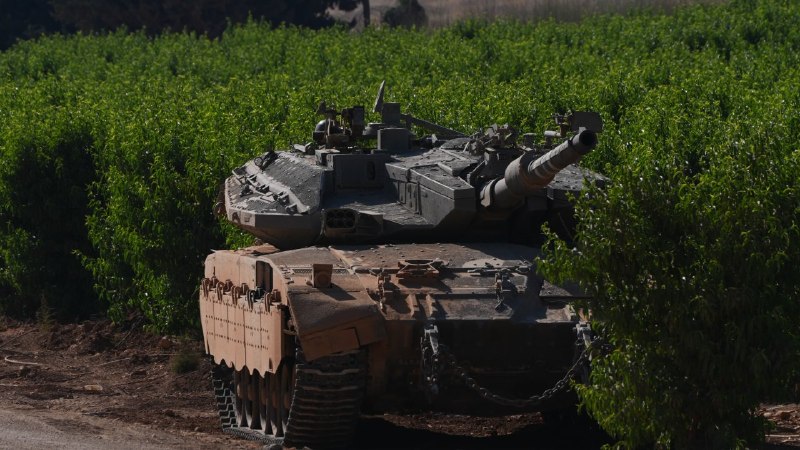
Israeli forces confirmed the capture of Beaufort Castle — also known as Al-Shaqif — in south Lebanon on 1 June 2026, in what the Israel Defense Forces described as a significant military operation deepening their incursion into Lebanese territory. The IDF Spokesperson Unit stated that forces had taken control of the historic hilltop fortress, calling it a strategic milestone in ongoing operations against Hezbollah infrastructure along the northern border. Hezbollah's military media acknowledged the fighting near the site was ongoing as of Monday, publishing footage from recent operations it said targeted Israeli forces in the vicinity of the castle. The capture represents the most concrete territorial gain in what has been an escalating exchange between the two sides, with both framing the moment through the lens of their own strategic narratives.
The IDF's framing
Israeli military officials presented the capture of Beaufort Castle as a turning point in the campaign against Hezbollah in southern Lebanon. According to the IDF statement, forces operating in the sector successfully secured the stronghold, which military planners had identified as a key node in Hezbollah's defensive network in the border region. The fortress, perched on a strategic elevation overlooking the surrounding terrain, had long served as an observation and staging point, with the IDF identifying it as a location from which Hezbollah monitored Israeli positions and coordinated activity. Israeli ground forces entered Lebanese territory in recent weeks as part of an intensified campaign that has included airstrikes, artillery support, and ground maneuver operations across multiple sectors of the border. Military commentators in Israel described the capture as a message that the IDF's ground presence would not be reversed easily — and that Hezbollah's ability to operate freely in the area had been materially degraded. The IDF has not announced a permanent garrison posture for the castle, and it remains unclear whether Israeli forces intend to hold the position or use it as a pivot point before redeploying further south.
Hezbollah's pushback
Hezbollah's military wing released footage on 1 June from an operation conducted on 31 May that it said targeted a gathering of Israeli soldiers near Beaufort Castle. A separate video released the same day showed an operation from 27 May that Hezbollah said targeted an Iron Dome battery at the Jal Alam site in northern Israel. Together, the footage paints a picture of an organized fighting force that has not retreated into irrelevance, even as Israeli forces claim significant ground. The group acknowledged that fighting was ongoing in the vicinity of the castle as of Monday — a direct contradiction of the Israeli framing of a concluded operation. This dual-track approach — acknowledging the battle while releasing footage of recent attacks — is consistent with Hezbollah's broader strategy of narrative management during active conflict. The group has historically treated symbolic locations as markers of resistance rather than purely military assets; losing Beaufort Castle is a setback, but Hezbollah's media apparatus is constructed to frame even contested ground as evidence of ongoing capability. The fortress holds cultural and historical weight for the group and its constituency, making its capture more than a tactical question. Hezbollah's leadership will need to demonstrate that the battle is not over, even if the immediate military picture has shifted against them.
What the capture does — and does not — settle
The footage released by Hezbollah's military media raises immediate questions about the framing of the IDF's announcement. If fighters were still engaged near the castle on Monday, the capture is better understood as an active operation in a phase of transition rather than a settled outcome. Israel has achieved a significant operational result — taking a landmark that Hezbollah had used for years — but the footage from 27 May and 31 May suggests the group retains the ability to launch coordinated strikes even as Israeli forces advance. The IDF's characterization emphasizes what has been lost: Hezbollah's position in southern Lebanon, its observation capacity, its staging infrastructure. The Hezbollah framing emphasizes what remains: the ability to fight, to project footage of attacks, to claim that the battle is ongoing. The truth likely sits in both accounts. Military analysts who study the Israel-Hezbollah dynamic note that territorial capture in this context does not automatically translate to enduring control. Hezbollah has demonstrated before that it can absorb losses and continue operating from secondary positions. Whether this specific capture changes the longer-term dynamic depends on whether the IDF can hold the ground, sustain logistics in the area, and prevent Hezbollah from re-establishing capability in the immediate sector. Those questions are not answered by the announcement itself. The castle is in Israeli hands. What happens next is the more consequential question.
Regional stakes
The capture of Beaufort Castle sharpens several fault lines simultaneously. For Israel, the immediate military result is real. The IDF has demonstrated it can move ground forces forward against significant opposition, and it has taken a position that Hezbollah had occupied for an extended period. Prime Minister Benjamin Netanyahu's government has framed the northern campaign as necessary to allow the return of displaced residents from communities along the border. Securing the castle is consistent with that framing — it is a tangible achievement that can be presented to a domestic audience under pressure. For Hezbollah, the setback is significant, but the group retains a degree of flexibility in how it responds. Iran's calculus is also in play: Tehran watches how Hezbollah performs, and a prolonged Israeli presence in southern Lebanon without a political resolution may create pressure on Iran to recalibrate its support posture. The broader international response — from Washington, from European capitals, from Arab governments watching the conflict expand — remains fractured, with no unified pressure on either side to stop. The longer Israeli forces remain in Lebanese territory, the more the conflict resembles a grinding operation rather than a decisive campaign. The capture of a castle does not settle the trajectory. What it does is raise the stakes for what comes next: can the IDF hold and defend the ground it has taken, can Hezbollah sustain its fighting posture in the south, and does any party have an interest in stopping before the costs climb further? The fog over south Lebanon makes confident answers impossible at this stage. Both sides are presenting the moment in terms favorable to their own narrative, and the gap between those narratives is itself a measure of how far the conflict remains from any settled outcome.
The sources available for this report include Telegram posts from CryptoBriefing citing IDF statements, Middle East Eye reporting Hezbollah's acknowledgment of ongoing fighting, and Hezbollah's own military media releases documenting recent operations. The picture is fragmentary — major wire services had not published detailed coverage at time of writing — and the fog of active conflict limits what can be verified independently. Both the Israeli framing of a concluded operation and Hezbollah's framing of an ongoing battle have documentary support in the available sources, suggesting the reality is more complicated than either side's headline claim.
Monexus led with IDF confirmation of the capture and Hezbollah's counter-claim that fighting was still active — a tension the wire services covered but often resolved in favor of the Israeli operational frame. The Telegram-sourced footage from Hezbollah's military wing provides ground-level documentation that does not entirely align with that resolution.
Wire provenance
This editorial synthesis draws on the following public wire/social posts:
- https://t.me/cryptobriefing/28409
- https://t.me/cryptobriefing/28408
- https://t.me/wfwitness/4823
- https://t.me/TheCradleMedia/11847
- https://t.me/TheCradleMedia/11846
- https://x.com/middleeasteye/status/1938912345678901234