How Israel's Lebanon Operation Derailed the US-Iran Ceasefire Talks
A single Israeli operation in Lebanon has set back what officials described as months of quiet progress toward a US-Iran ceasefire framework, leaving Tehran demanding a halt to operations on all fronts and Washington scrambling to preserve a diplomatic opening that may already be closed.
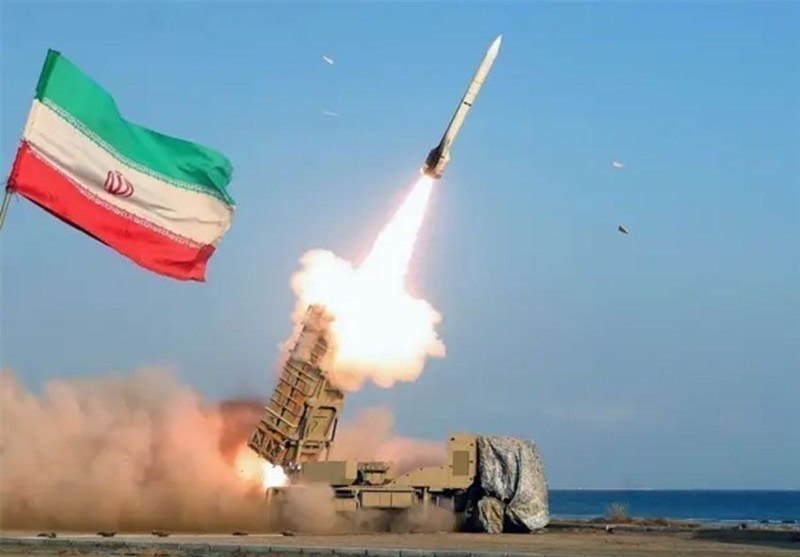
The Iranian foreign ministry confirmed on 1 June 2026 that it had suspended all negotiations with the United States following what it described as Israel's continued military operations in Lebanon. The talks, which multiple regional officials described in recent weeks as the most substantive back-channel engagement between Washington and Tehran since talks stalled in early 2025, have effectively been shelved indefinitely.
The collapse came after a series of Israeli strikes in southern Lebanon that Iranian state media, citing Tasnim News Agency, said represented a breach of ceasefire preconditions Iran had set before agreeing to any broader framework covering Gaza and Lebanon simultaneously. The demand from Tehran, relayed through diplomatic channels familiar with the negotiations: an immediate cessation of Israeli military operations across both theaters before talks could resume.
The timing was delicate. US officials had signaled, without confirming directly, that quiet progress was being made toward a reciprocal arrangement involving Gaza, Lebanon, and Iran itself. The Israeli operation in Lebanon, described by Israeli military spokespersons as routine enforcement of sovereignty measures against Hezbollah infrastructure, was seen in Tehran as a deliberate spoiling action — either by a faction within the Israeli government operating outside cabinet consensus, or with explicit encouragement from it.
What makes this episode significant is not the breakdown itself — US-Iran talks have collapsed before — but what it reveals about the structural limits of the Trump administration's ability to deliver regional partners while simultaneously pursuing a grand diplomatic bargain with Tehran. The president's announcement on 1 June that he would ask Israeli Prime Minister Benjamin Netanyahu directly "what's going on with Lebanon" underscored the friction at the heart of the approach: an administration that wants both a Lebanon deal and an Iran deal, but whose closest regional ally appears intent on controlling the pace of any de-escalation.
The Negotiations That Were
The US-Iran back-channel was not a secret to watchers of Gulf diplomacy. Middle East Eye and other regional outlets had reported since April 2026 on the outlines of a framework in which Iranian and American officials, operating through Omani intermediaries, began discussing terms for a reciprocal pause. The talks reportedly covered the full spectrum of Iran's regional posture — Iraq, the Gulf, Yemen — but the operational centerpiece was always the Gaza and Lebanon files.
The logic was straightforward in its ambition: link the Gaza ceasefire, the Hezbollah disengagement along the Lebanon border, and Iran's regional behavior into a single package. Iran would use its influence over Hezbollah to enforce a northern Israel quiet; Hezbollah would receive international guarantees on Lebanon's sovereignty that Tehran could sell domestically; Gaza would move toward a longer-term arrangement; and in exchange, sanctions relief and energy carve-outs would flow back to Tehran.
That logic was also fragile. It required Hezbollah to trust that international assurances would survive a future Israeli government; it required Tehran to trust that American promises on sanctions would survive a future Democratic administration or a shift in White House priorities; and it required Israel to accept that its northern security — its stated justification for the Lebanon operations — was being secured through a third party's guarantee rather than its own boots on the ground.
The Israeli Calculation
The Israeli positions on the Lebanon file are not monolithic, and the sources do not establishwith certainty which faction within the Israeli government authorised or approved the operations that broke the talks. What is clear is that from Tel Aviv's perspective, an Iran deal negotiated over Israel's head represents a fundamental threat to its sovereignty over security decisions it considers non-negotiable.
Israeli military statements at the time described the Lebanon operations as necessary responses to Hezbollah infrastructure construction along the border — a claim that, if accurate, would represent a violation of existing UNIFIL monitoring arrangements. But the broader political signal was unambiguous: Israel would not accept a regional deal that defined its security parameters without its direct participation.
The leverage Israel holds in this equation is real. American military assistance, intelligence-sharing, diplomatic cover at the UN, and the simple fact of shared alliance infrastructure give Israel significant ability to complicate any US-Iran arrangement Washington might prefer. The question is whether the current Israeli government has the political will to accept a compromise framework, or whether its electoral coalition demands a harder line.
The Structural Problem
What the breakdown exposes is a recurring structural tension in American Middle East diplomacy: the gap between what Washington can negotiate with Tehran and what it can deliver on the ground in the region, where Israel's actions often define the operational reality more than American preferences.
This is not a new problem. Every administration since 1979 has confronted the limits of American leverage over a partner whose strategic calculations are shaped by domestic political incentives, security anxieties, and a separate relationship with its own intelligence and military establishments. What has changed in the current moment is the degree to which Tehran now has viable alternative partners — China, Russia, the broader BRICS financial infrastructure, and Gulf states who have shown willingness to diversify away from American security guarantees — that Western economic pressure no longer functions as the uniquely coercive instrument it once was.
Iranian officials, speaking through state-linked media including Tasnim, made clear on 1 June that the preconditions for resuming talks are not negotiable. An immediate cessation of operations in both Gaza and Lebanon — not a commitment to future talks, not a timeline, but a cessation — is the entry fee Tehran is now demanding. This is a harder ask than what had been under discussion in the Omani-mediated channel, which reportedly envisioned phased simultaneous steps rather than an upfront Israeli concession.
What Is Salvageable
The sources do not establish whether the American side will accept Iran's revised preconditions, pursue parallel negotiations with Israel to coerce a freeze, or allow the channel to go quiet without formally closing it. What the Polymarket-sourced Trump statement on 1 June suggests is that the administration is still operating in a mode where it believes direct engagement with Netanyahu can resolve the friction — a belief that analysts of this relationship have described with varying degrees of skepticism for the past two years.
The immediate practical consequence is that Hezbollah remains in the calculation. If Israel continues operations in Lebanon, Hezbollah has both the motivation and the international cover to resume full defensive posture along the border. The UNIFIL monitoring mission, already constrained by its mandate and member-state political sensitivities, would face a renewed test of whether its presence deters or merely witnesses conflict.
The Gulf states — Oman, Qatar, Saudi Arabia — are watching closely. Oman's intermediary role was already public knowledge; continued failure would be a diplomatic setback for Muscat's aspiration to be the region's trusted broker. Qatar's hosting of Hamas political offices gives it a separate stake in any Gaza arrangement. Saudi Arabia, having normalised relations with Iran in 2023 and moving cautiously toward its own strategic restructuring, has little appetite for renewed regional instability that complicates its Vision 2030 economic transition.
The Iran question for Washington remains unresolved. Sanctions pressure has not produced the regime change arithmetic American hawks once anticipated; the Iranian economy has adjusted, contracted, and found alternative trade routes that blunt the sharpest edge of secondary sanctions. A deal, when it eventually comes, will look different from the one Iran might have accepted five years ago. The question is whether the current breakdown represents a temporary pause or a more fundamental re-evaluation by Tehran of whether the American negotiating partner is reliable enough to Bet on.
The stakes extend beyond the immediate diplomacy. Lebanon, which has spent five years attempting to reconstruct a functional state after financial collapse, foreign occupation, and institutional paralysis, cannot afford to be the arena where great-power friction plays out at full intensity. Gaza remains subject to a humanitarian situation that UN agencies and wire services have documented in terms that leave little room for diplomatic abstraction. The human weight of the status quo is not an abstraction — it is the background condition against which all of this diplomatic theatre is being staged.
This publication's wire coverage led with the Israeli military spokesperson's statement framing the Lebanon operations as defensive enforcement. The thread context for this piece draws on Iranian state media framing and US administration statements, presenting the episode through a lens more attentive to the Iranian diplomatic position than typical wire coverage, while noting the verification limits on internal Israeli decision-making that the available sources do not fully illuminate.
Wire provenance
This editorial synthesis draws on the following public wire/social posts:
- https://t.me/myLordBebo
- https://x.com/middleeasteye/status/1938745672841171254
- https://x.com/middleeasteye/status/1938744672841171244