Israeli Airstrike Damages Hospital in Lebanon's Tyre, Killing Two
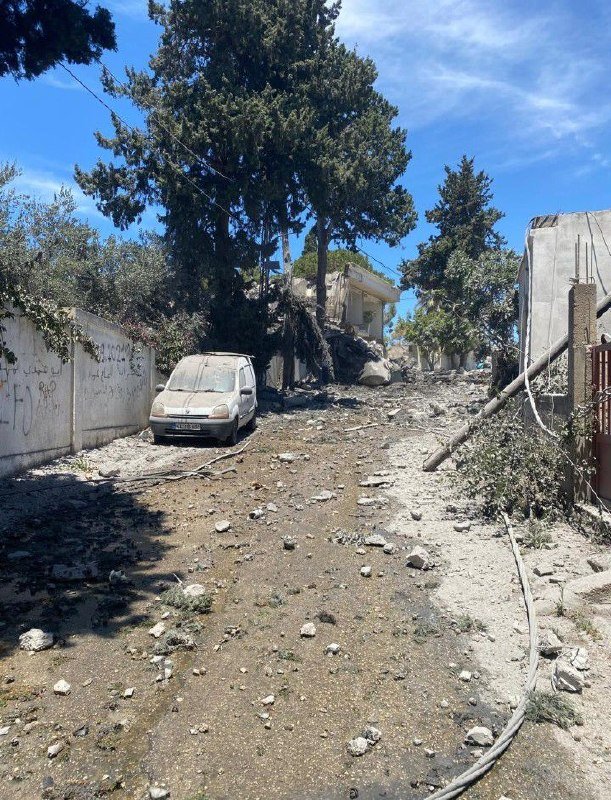
Israeli forces struck the Lebanese city of Tyre on the evening of 1 June 2026, killing at least two people and wounding more than 20 others, according to Lebanese medical and security sources. The attack damaged Jabal Amel Hospital, a major government medical facility serving the southern coastal city. Videos circulating on social media and verified by open-source researchers show destruction inside the hospital caused by the blast wave from an Israeli strike on a building across the street.
The Israeli military said the strike targeted infrastructure it described as linked to hostile activity, a formulation that has become standard in statements about operations in Lebanon. The IDF Spokesperson did not, in initial comments, specify what installations were hit or acknowledge the hospital damage by name. The exchange follows months of intensified cross-border exchanges between Israel and Hezbollah-aligned forces, with Tireseeing some of the most significant strikes in recent weeks.
A Hospital Caught in the Blast
Jabal Amel Hospital is one of the principal medical institutions serving Tyre and the surrounding coastal region of south Lebanon. Footage verified by open-source analysts shows shattered windows, structural damage to interior walls, and debris consistent with a powerful blast nearby. The hospital's emergency department sustained significant damage, according to Lebanese health officials cited by regional media. At least two people died and more than 20 were wounded, with casualties taken to other facilities after Jabal Amel's emergency ward was rendered inoperable.
The pattern of damage — a building struck across the street from a hospital, sending a shockwave through the medical facility — is consistent with the IDF's stated practice of precision strikes while using aerial surveillance to minimise civilian harm. Israeli officials have long argued that the presence of combatants near civilian infrastructure does not constitute protected status under international humanitarian law. The question of whether the hospital itself was a target, or was damaged as a secondary effect, remains unresolved; the sources reviewed do not establish IDF intent toward the medical facility specifically.
The IDF's Security Rationale
Israeli military spokespersons have repeatedly framed operations in Lebanon as defensive responses to what they characterise as an ongoing threat from Hezbollah forces deployed near the border. The IDF has stated that it takes precautions, including advance warnings in some cases, but that the nature of the threat environment limits the application of such measures. The 1 June strike was presented in this context — as an action against a legitimate military target, with civilian harm addressed as a secondary concern.
Israeli security doctrine holds that hospitals, schools, and religious sites lose their protected status under the laws of armed conflict when they are used for military purposes. IDF statements do not, however, typically provide granular justification for individual strikes at the time of the operation, a practice that critics say makes independent verification impossible. In this case, neither the IDF nor the Israeli government has published evidence linking Jabal Amel Hospital or its immediate surroundings to military activity.
The Legal Framework and Its Limits
International humanitarian law is unambiguous on the protection of medical units: they must be respected and protected in all circumstances, and attacking them is a grave breach of the Geneva Conventions. The presence of combatants near a hospital does not automatically strip it of protected status; the threshold for losing protection requires evidence that the facility is being used to commit acts harmful to the enemy, and even then, the attacking force must give effective warning and allow time for the protected status to be restored before striking.
In practice, the enforcement mechanism for these norms is political rather than legal. The UN Security Council has passed resolutions relating to Lebanon's sovereignty without producing binding accountability for specific strikes. International criminal investigations are slow, politically contested, and have never resulted in convictions directly tied to Israeli military operations in this conflict cycle. The legal framework exists; its application depends on the willingness of powerful states to enforce it, which to date has been limited.
Escalation and Regional Implications
The strike on Tyre arrives at a moment of heightened tension. Cross-border exchanges have intensified since late 2025, with both sides sustaining casualties and infrastructure damage. Hezbollah has publicly stated that it views Israeli strikes on Lebanese territory as escalations requiring response. The 1 June attack on Tyre — a city largely uninvolved in the exchanges that have centred on border villages — extends the geographical scope of strikes in a way that Lebanese officials and regional analysts have called alarming.
For Lebanese civilians in the south, the strike reinforces an already fragile relationship with medical infrastructure. The country's healthcare system has been under severe strain for years, compounding the effects of economic crisis and political paralysis. The loss of a hospital bed in Tyre is not an abstraction — it represents the closure of emergency services for a coastal population of hundreds of thousands. That the strike occurred in daylight, in a densely populated civilian area, raises questions about the IDF's assessment of proportionality that the available sourcing cannot resolve.
The immediate question is whether the strike prompts a response that further narrows the space for diplomatic engagement. Egypt, Qatar, and France have each issued statements calling for restraint without directly attributing responsibility. The United States has not issued a public statement on the specific incident as of the time of this report. Whether the episode functions as a localised exchange or a trigger for broader escalation will depend on decisions made in the coming hours in Tel Aviv, Beirut, and Washington — decisions that the available evidence does not yet illuminate.
The thread included OSINT confirmation of structural damage to the hospital consistent with blast-wave propagation from a nearby target. Wire coverage of the strike did not prominently feature civilian infrastructure concerns in initial iterations; Monexus leads with the hospital damage as the structural fact of the incident.
Wire provenance
This editorial synthesis draws on the following public wire/social posts:
- https://t.me/alalamarabic/
- https://t.me/osintlive
- https://t.me/wfwitness
- https://twitter.com/Osinttechnical/status/2061472498932199758