Israeli Airstrikes Hit Southern Lebanon Town of Marwaniya
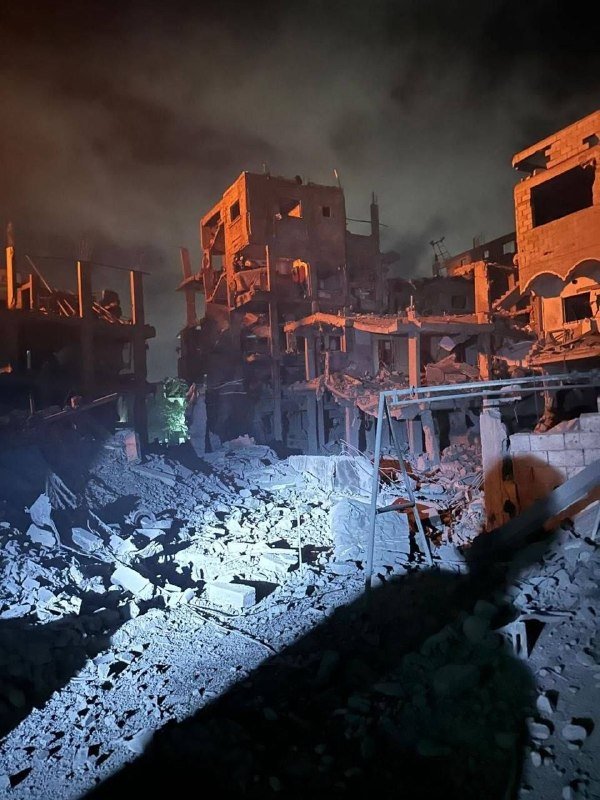
Lebanese media outlets reported on June 1, 2026, that Israeli aircraft carried out two airstrikes targeting the town of Marwaniya in southern Lebanon. According to initial accounts from Lebanese channels, one of the strikes destroyed a residential house. The attacks occurred as part of what Israeli military officials have characterised as ongoing operations against Hezbollah infrastructure in southern Lebanon, a pattern of strikes that has accelerated since November 2024 when the Israel-Hezbollah ceasefire took effect.
The strikes on Marwaniya — a town located several kilometres north of the Lebanon-Israel demarcation line — add to a series of incidents that have tested the fragile ceasefire framework. Lebanese sources identified the target specifically as a civilian residential structure, a claim that could not be independently verified against Israeli military statements, as no Israeli spokesperson had issued a public on-the-record confirmation at the time of reporting. The timing of the strikes, occurring in the evening hours of June 1, was confirmed across multiple Lebanese media channels within minutes of each other.
A Ceasefire Under Pressure
The November 2024 ceasefire agreement, brokered after months of intensive hostilities between Israel and Hezbollah, established a framework for a 60-day cessation of combat operations and the gradual withdrawal of armed groups from areas near the Israeli border. The deal included mechanisms for monitoring violations and provisions requiring Hezbollah to move its heavy weaponry north of the Litani River. In practice, compliance has been partial and contested. Israeli officials have repeatedly asserted that Hezbollah has not fully disarmed or withdrawn as required, while Hezbollah and Lebanese government representatives have argued that Israeli overflights and strikes themselves constitute violations of the agreed terms.
Marwaniya sits outside the immediate border zone but has been named in previous Lebanese media reports as an area where Israeli surveillance and occasional strikes have occurred. The selection of the town as a target — rather than a known Hezbollah military position closer to the line — raises questions about the precise nature of the intelligence underpinning the strike. Whether the residential structure was inhabited, whether it housed weapons storage, or whether it served a dual-use purpose remains unclear from the available reporting. Israeli military doctrine treats residential structures suspected of harbouring militant activity as legitimate targets, a position that has generated sustained legal and humanitarian debate.
What the Sources Do and Do Not Establish
The available reporting on the Marwaniya strikes is confined to Lebanese regional media and state-adjacent outlets, primarily Al-Alam Arabic and The Cradle Media, both of which operate with editorial perspectives aligned toward opposition to Israeli military action. Neither the Israel Defense Forces spokesperson's office nor the United Nations Interim Force in Lebanon had issued formal statements as of the reporting cutoff for this article. The absence of Israeli confirmation means the specific military justification for the strikes — what intelligence indicated the target held, what threat assessment prompted action — is not yet on the public record.
This is a familiar epistemic gap in reporting from the Israel-Lebanon theatre. Israeli military operations are frequently announced after the fact, with statements that provide strategic context but sparse operational detail, while Lebanese media and resistance-adjacent outlets report immediately from the ground with their own interpretive framing. A responsible account of events such as these must acknowledge both the immediacy of the Lebanese reporting and the absence of a corroborating Israeli statement. Readers should understand that the casualty figures, property damage descriptions, and characterisation of the strikes as unprovoked or defensive, respectively, reflect the perspectives of the reporting outlets rather than independently verified facts.
The strikes were not isolated. Lebanese channels — citing the same set of air activity reports — identified multiple villages in southern Lebanon as having come under surveillance or attack on June 1, suggesting a broader pattern of Israeli air operations rather than a single targeted action. The full scope of these operations across southern Lebanon could not be determined from the available sources.
Structural Dynamics: Air Power and the Limits of Ceasefire Architecture
The Israel-Hezbollah ceasefire, like most negotiated ends to asymmetric conflicts, was designed around assumptions that have proven difficult to operationalise on the ground. Israel retains overwhelming air superiority over Lebanese territory and has used it consistently to enforce what it characterises as its right to self-defence under the ceasefire terms. Hezbollah, for its part, has continued to maintain a presence in southern Lebanon that Israel regards as non-compliant. The result is a ceasefire that functions not as a genuine cessation of hostilities but as a managed continuum of conflict below the threshold of full-scale war.
This dynamic is structurally predictable. When a ceasefire agreement does not include a credible third-party enforcement mechanism with the capacity to penalise violations by either side, the stronger party tends to enforce its interpretation of the terms unilaterally. Israel has chosen to do so through air operations that strike assets it assesses as threats, accepting the diplomatic and reputational cost of entering Lebanese airspace and targeting infrastructure that civilian observers characterise as non-military. Hezbollah, unable to match Israeli air power, relies on cross-border incidents and political messaging to signal continued resistance.
The structural problem is that neither side has an incentive to de-escalate fully, and the ceasefire framework provides no mechanism to compel them. The United States, which played a central role in brokering the November 2024 agreement, and France, which co-sponsored the deal, have limited leverage to enforce compliance from either Jerusalem or Beirut when both governments face domestic political pressures that reward military assertiveness. The result is a pattern of strikes, counter-strikes, and tit-for-tat violations that degrades the ceasefire incrementally until some triggering event — a significant casualty incident, an attack inside Israel proper, a perceived breach of red lines — threatens to unravel it entirely.
Regional Stakes and the Road Ahead
The targeting of Marwaniya, if confirmed as described by Lebanese sources, carries risks beyond the immediate humanitarian impact on the affected families. Each strike that produces civilian casualties or property destruction reinforces Lebanese public opinion's opposition to the ceasefire terms and strengthens the hand of factions within Lebanon that argue the agreement serves Israeli rather than Lebanese interests. This is precisely the dynamic that the ceasefire was meant to arrest — the slide toward a wider conflict that neither side formally desires but that neither side's calculations have effectively prevented.
For Israel, the strikes signal continued willingness to use air power to enforce ceasefire terms unilaterally, a posture that maintains military deterrence but at the cost of diplomatic friction with Beirut and with the international mediators who have invested significant political capital in the agreement. For Hezbollah, the inability to prevent Israeli operations in Lebanese airspace — or to respond in kind — underlines the asymmetry that defines the relationship, an asymmetry that the ceasefire acknowledged but did not resolve.
The immediate question is whether the June 1 strikes represent a calibrated response to a specific intelligence trigger or the opening phase of a renewed Israeli campaign against Hezbollah infrastructure. The answer will depend on whether additional strikes follow, whether Hezbollah responds, and whether the ceasefire monitoring mechanisms — dormant in practice for months — are reactivated in response. The sources reporting on Marwaniya do not provide that forward-looking assessment. What they confirm is that the ceasefire is under continued stress, that Israeli air operations in southern Lebanon have not ceased, and that Lebanese civilian infrastructure remains in the blast radius.
This publication relied on Lebanese regional media reporting for operational details of the strikes, as no Israeli military statement or Western wire service confirmation was available at time of publication. The IDF spokesperson had not issued a public statement as of 21:00 UTC June 1, 2026.
Wire provenance
This editorial synthesis draws on the following public wire/social posts:
- https://t.me/alalamarabic
- https://t.me/TheCradleMedia
- https://t.me/abualiexpress
- https://t.me/thecradlemedia