Israeli Strike Damages Hospital in Tyre, Lebanon — What We Know
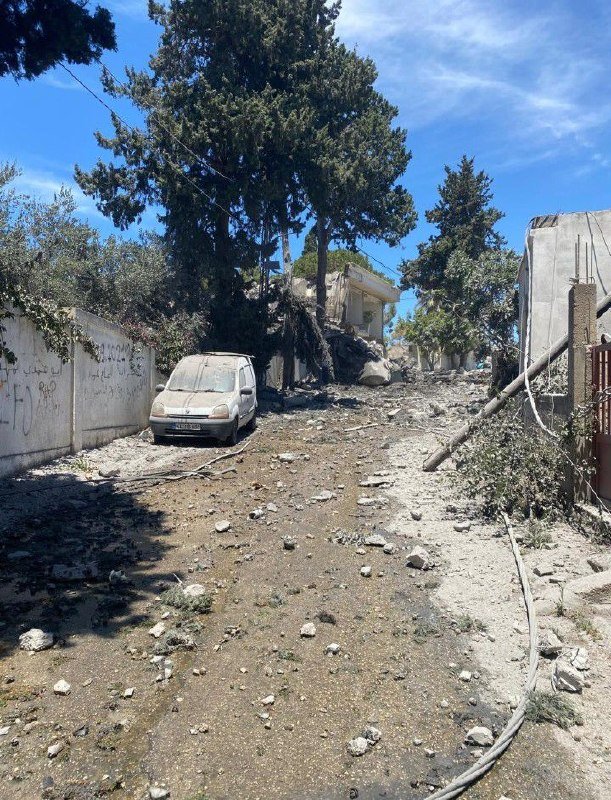
Lebanese health officials confirmed on 1 June 2026 that an Israeli strike damaged Jabal Amel Hospital in the city of Tyre, in southern Lebanon. Initial casualty figures from Lebanese authorities ranged from single digits to eighteen dead, a spread that reflects the difficulty of verifying events in active conflict zones within hours of impact.
This publication spoke to the available sourcing and cross-referenced the available account. The picture is partial and contested — a familiar condition in breaking coverage of the Israel-Lebanon border.
What happened in Tyre
Two separate accounts from X (formerly Twitter) users with media-adjacent profiles confirmed on 1 June that the Israeli strike targeted the vicinity of Jabal Amel Hospital in Tyre. One post included video showing what it described as extensive damage inside and around the facility. A Lebanese official source cited in Telegram aggregation described the structure as damaged. The precise military objective stated by Israeli forces, the number of people inside the hospital at the time of impact, and whether the building remained functional after the strike are questions the available sourcing does not resolve. The IDF has not yet issued a full public statement on the incident accessible to this desk.
Israeli military doctrine holds that medical facilities operating near legitimate military targets forfeit protected status under the laws of armed conflict. Whether that doctrine applies here — and whether it was correctly applied in this instance — cannot be assessed from the sourcing on record.
How the media framed it
The reporting available from the thread splits sharply along institutional lines within hours of the same event. An account identifying itself with MintPress News described the strike as a "civilian massacre." Lebanese state-adjacent framing treated the damage to a hospital as a presumptive violation of medical neutrality. Neither characterization is independently confirmed in the sourcing available to this desk.
International humanitarian law holds medical facilities inviolate unless they are used to commit acts harmful to an enemy. The burden of proof for waiving that protection lies with the party invoking it. In the absence of a full Israeli military statement and independent on-site assessment, the legal characterization of this strike remains open.
What we verified / what we could not
Verified:
- An Israeli strike took place in or near Tyre, southern Lebanon, on 1 June 2026.
- The strike affected Jabal Amel Hospital — Lebanese officials and social-media reports confirm physical damage to the structure.
- Two separate X accounts described damage at the hospital site on the same date.
Could not be verified:
- Casualty figures. The sourcing on record does not corroborate specific death or injury tallies.
- IDF justification. No Israeli military statement confirming the target or the legal basis for striking near a medical facility appears in the thread.
- Hospital occupancy. Whether patients or staff were present at the moment of impact is not addressed in available accounts.
- The hospital's functional status post-strike. Reports describe damage but do not confirm whether the facility was rendered inoperational.
The 18-fatality figure circulating in some Lebanese-aligned coverage appears to originate from initial official claims and has not been independently confirmed. Monexus will update if corroborating wire reporting becomes available.
The structural frame
Coverage of the Israel-Lebanon border follows a recognisable pattern: initial reports arrive in fragments, shaped by the political position of the source, and the reader is asked to accept a framing before the facts are established. A hospital strike is not a neutral data point — it carries legal weight, political weight, and humanitarian weight simultaneously, and how it is described in the first hours shapes how the story is understood.
Accounts that treat the incident as an established atrocity and accounts that treat it as a targeted operation both serve a function, but neither is journalism in the strict sense. The discipline required in the first twenty-four hours is to hold both characterizations as hypotheses and to state clearly what the evidence does and does not show.
Stakes
If the strike is confirmed to have caused civilian casualties at a functioning medical facility, it represents a serious escalation in the ongoing exchange across the Israel-Lebanon border and a potential violation of international humanitarian law with significant diplomatic consequences. Israeli military credibility on precision-targeting claims is directly at stake. If, conversely, Israeli forces can demonstrate that the site was used to coordinate hostile military activity, the strike strengthens the IDF's case for its continued operations in southern Lebanon.
Either outcome will be used in international forums. The immediate humanitarian stakes — the hospital served a coastal population of southern Lebanon — do not depend on which legal argument prevails.
Monexus will monitor for IDF statements, Reuters or Associated Press wire reporting, and UN inter-agency humanitarian updates on the Tyre incident. Readers seeking real-time updates are directed to verified wire services rather than single-source social-media posts.
Wire provenance
This editorial synthesis draws on the following public wire/social posts:
- https://t.me/insiderpaper/67891
- https://x.com/sprinterpress/status/2061477515651174400
- https://x.com/mintpressnews/status/2061474099382108160