Japan Goes Direct to Tehran: Why Tokyo Is Cutting Its Own Channel Through Hormuz
Tokyo's direct outreach to Iranian President Pezeshkian on maritime security this week marks a notable departure from the pattern of coordinating Gulf diplomacy through Washington — and signals how quickly America's Pacific allies are recalibrating their exposure to Middle East volatility.
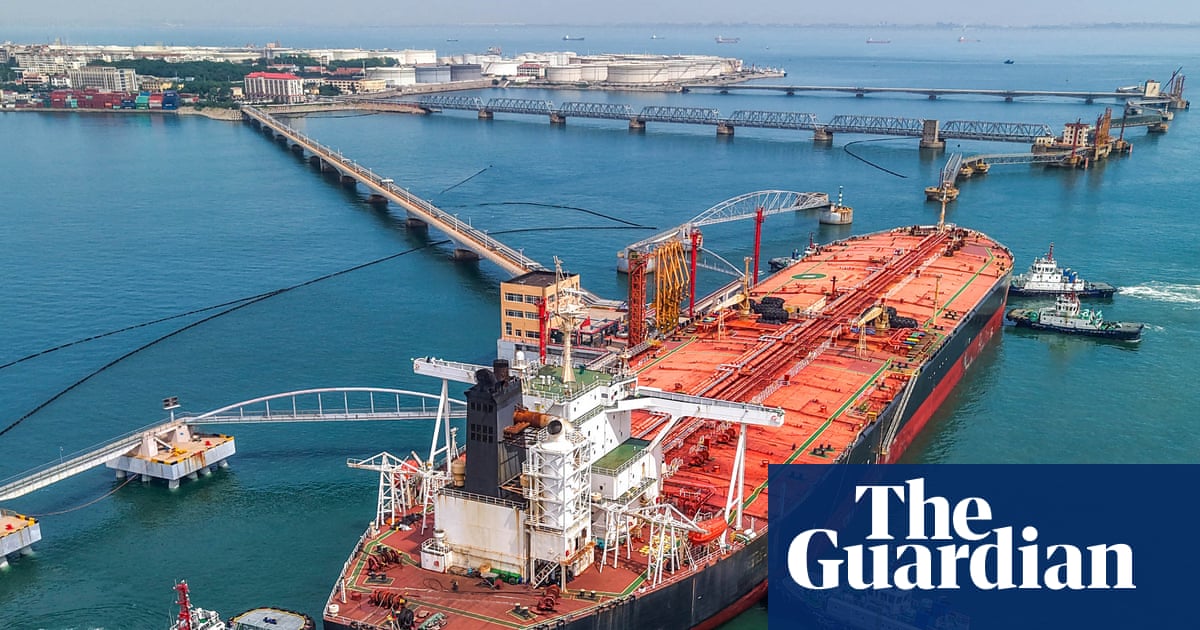
On the first day of June 2026, Japanese Prime Minister Isshū Shinshū placed a call to Tehran. The subject line, as relayed through official Iranian channels, was shipping: Japan wanted assurance that its vessels could transit the Strait of Hormuz safely, and wanted it directly from the source. President Masoud Pezeshkian, according to the Iranian readout, obliged. The Islamic Republic, his office said, was ready to facilitate maritime traffic and ensure the security of vessels passing through the world's most contested oil chokepoint. Japan's ships, the Iranian side indicated, had already crossed successfully.
The exchange, brief in public form, is significant in what it reveals about the informal architecture of Gulf diplomacy in 2026. Japan — a treaty ally of the United States, a country whose Self-Defense Forces have participated in US-led regional security architectures, and whose energy imports depend heavily on Gulf crude — chose to negotiate passage with Tehran directly, rather than through any multilateral or American intermediary. That choice is a signal.
A Channel Tokyo Needs Independently
The Strait of Hormuz processes roughly 20 to 25 percent of the world's oil shipments on any given day. For Japan, which imports the majority of its crude from the Middle East, a sustained disruption at that chokepoint is not an abstract scenario — it is an existential logistics risk. Earthquake, tsunami, and an energy-poor home archipelago have conditioned Japanese strategic planners to think in terms of supply-chain contingencies that allies cannot always cover.
The call between Shinshū and Pezeshkian was not the first time Japan has sought bilateral assurances from Iran. But its timing and tenor — Japan calling, Iran responding with immediate facilitation — suggest a diplomatic posture that Tokyo's government is increasingly willing to own publicly. The Iranian readout, distributed through Tasnim and Mehr News on 1 June 2026, made no mention of any American role in clearing or brokering the arrangement. It framed the relationship as a direct two-country understanding.
What Tehran Gets From the Arrangement
For Iran, Japan's direct approach is a geopolitical asset in its own right. The Pezeshkian administration has spent the better part of two years navigating a sanctions regime that US policy has kept maximally restrictive, while also managing flare-ups across multiple regional fronts — Lebanon, the Red Sea corridor, and ongoing tensions with Israel. A direct channel to a G7 economy, even one constrained by sanctions architecture, offers Tehran something the Islamic Republic has consistently sought: a wedge between Western allied states and the US positioning.
Iranian state media's framing of the call leaned into this dynamic explicitly. According to the Tasnim readout, President Pezeshkian told Shinshū that America and "the Zionist regime" had "challenged diplomatic processes" — language that positioned Washington and Tel Aviv as obstacles to the kind of quiet, functional state-to-state cooperation Japan was now seeking. The message, calibrated for domestic and regional audiences inside Iran, also reached the Japanese government in unfiltered form. Tokyo received the substantive assurance it needed; Tehran received a diplomatic validation it wanted.
The American Frame and Its Limits
US policy toward Iran in 2026 has been, by any public measure, one of sustained pressure. The maximum-pressure architecture of the previous administration was modified but not dismantled; secondary sanctions regimes have continued to complicate third-country economic engagement with Tehran. Japan, as a US treaty ally, operates within those constraints — and Japanese corporations have historically been cautious about runs afoul of US financial regulations.
That Japan called Tehran directly nonetheless reflects a growing divergence between US strategic priorities in the Middle East and the priorities of allies who still depend on Gulf energy flows. Washington's focus has shifted progressively toward the Pacific, toward China containment, toward NATO's European flank. For Tokyo, that shift means more autonomy in a relationship Washington has less bandwidth to manage — and, by extension, more incentive to maintain channels that do not require US facilitation.
This is not necessarily anti-American diplomacy. It is, rather, a quiet assertion that Japan's interests in the Gulf cannot be held in permanent escrow behind an American authorization process that may not always align with Tokyo's energy security timeline. The call to Pezeshkian signals that Japan intends to keep that channel warm regardless of the broader state of US-Iranian relations.
The Stakes, and What Comes Next
If the Shinshū-Pezeshkian channel holds, Japan secures a degree of Hormuz transit insurance it cannot obtain through any alliance mechanism. If it unravels — through a renewed Iranian provocation, a US clampdown on secondary sanctions affecting Japanese firms, or a deterioration of the Pezeshkian government's internal position — Tokyo has no fallback arrangement that does not run through Washington. That asymmetry is the structural vulnerability Japan is trying to reduce.
For Iran, the arrangement offers a precedent. A successful bilateral accommodation with a G7 economy — even on a narrow issue like shipping transit — establishes a template for similar dealings with the European signatories of the remaining nuclear agreement fragments, or with India, or with Southeast Asian economies that have shown willingness to engage Tehran despite US displeasure. The more such arrangements multiply, the more the sanctions regime loses its cohesive force.
What remains uncertain is whether the call's optics — a Japanese prime minister publicly thanking Iran for safe passage — will generate friction inside the US-Japan alliance relationship. The sources reviewed do not include any American response. That silence, for now, is the story's most significant gap.
This publication covered the Shinshū-Pezeshkian call as a bilateral diplomatic development. Wire framing from Reuters and AP, where it appeared, led with the Strait of Hormuz security dimension and treated Japan's outreach as a reaction to regional instability. This article foregrounds the directness of the channel and what its directness implies about the changing terms of Gulf diplomacy for non-Western stakeholders.
Wire provenance
This editorial synthesis draws on the following public wire/social posts:
- https://t.me/alalamarabic/
- https://t.me/mehrnews/
- https://t.me/tasnimplus/
- https://t.me/tasnimnews_en/