Macron pushes for Iran-US deal as Tehran flags deep mistrust in diplomatic back-channel
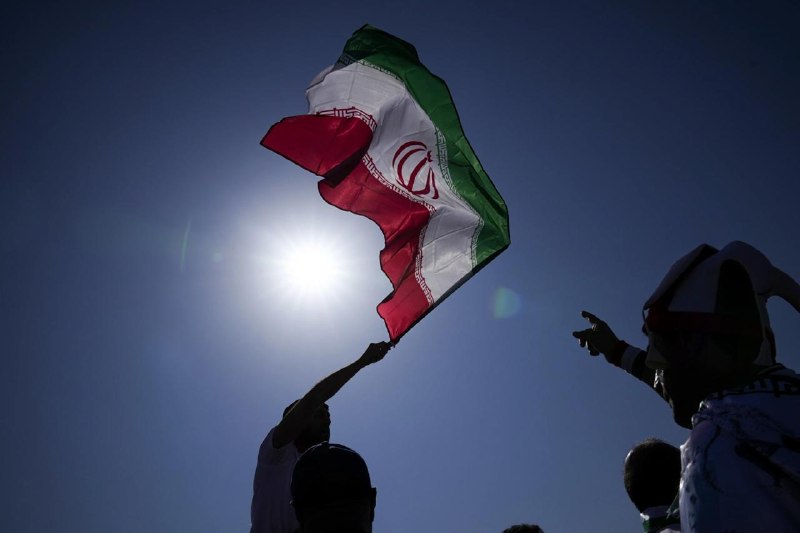
French President Emmanuel Macron called on 1 June for an urgent agreement between Iran and the United States, as Tehran confirmed that diplomatic messaging continues between the two sides — but described the American posture as one of persistent inconsistency and bad faith.
The twin statements, released within hours of each other on the first day of June 2026, crystallised the central tension in the revived back-channel over Iran's nuclear programme. Western capitals are projecting urgency; Iran is describing a pattern of behaviour it says makes durable agreement structurally impossible.
Iran's Foreign Ministry spokesman Esmail Baghaei confirmed on 1 June that message exchanges with Washington are ongoing, and used language that simultaneously acknowledged the channel and shut down expectations of imminent progress. "The exchanges are taking place amid deep mistrust," Baghaei said, according to The Cradle Media. "The opposing party constantly changes its stance, raises new or contradictory demands, and issues different, contradictory, and inconsistent messages in the media."
Macron, speaking the same day, was blunt in the opposite direction. "It is essential that an agreement between the United States and Iran be reached as soon as possible," the French president said, without elaborating on the specific terms Paris was pushing. His statement, posted to the Sprint Press wire feed, gave no timeline and named no intermediary, but its placement — on the same day as Baghaei's briefing — reflected a conscious European effort to shape the narrative around urgency.
Western urgency versus Iranian pattern-reading
The gap between Macron's framing and Baghaei's response illustrates a recurring structural problem in US-Iran diplomatic history: Washington and its European partners tend to approach negotiations as questions of offer and counteroffer, with the obstacle being insufficient concession on one side. Iran, by contrast, reads the pattern of American behaviour across negotiations — the additions of demands after initial agreements, the public hardening simultaneous with private softening — as evidence that the problem is not the content of any single offer but the reliability of the counterparty.
Baghaei's statement was notable for its specificity. He did not merely say negotiations were difficult or that gaps remained large. He described a transactional opponent that issues contradictory signals through different channels simultaneously. That language maps closely to what Iranian officials have said in previous rounds of nuclear diplomacy — including the Joint Comprehensive Plan of Action negotiations that produced the 2015 agreement — where Tehran consistently argued that the US could not sustain a position across domestic political cycles.
France's intermediary role and European leverage
Macron's decision to issue a public call on 1 June rather than simply working the channels quietly suggests Paris believes the moment carries political weight that requires visible stewardship. France has historically positioned itself as the European power most willing to engage directly with Iran, partly because of its commercial interests and partly because of a diplomatic tradition that predates the current nuclear crisis.
European capitals have a concrete interest in avoiding breakdown. A collapsed negotiation hands Iran justification to accelerate its enrichment programme while giving Washington a narrative of Iranian bad faith that aligns with the Trump administration's maximum-pressure posture. France, alongside Germany and the UK, has invested significant diplomatic capital in presenting itself as a credible interlocutor to both sides — a role that becomes untenable if the US is seen as the party that derailed talks by re-raising demands that had supposedly been provisionally resolved.
It remains unclear from the available reporting what specific leverage Macron is prepared to deploy, or whether France has communicated any conditionality to Washington about its approach in the back-channel. The French president did not specify whether his call was coordinated with the United States or represented an independent European initiative.
What the sources do not clarify
Baghaei's statement confirms that communication is active, but it does not disclose the content of the messages being exchanged, the level at which they are being conducted, or whether any specific offer is on the table. The Iranian foreign ministry spokesman's language was carefully calibrated to demonstrate that Tehran was engaged without suggesting optimism — a posture that serves domestic audiences sensitive to any perception of concession, while also managing expectations among European partners who have been pressing for a face-saving outcome.
The sources do not indicate whether Macron's statement was prompted by a specific development in the back-channel — a new demand from Washington, a stalling in the exchange, or a European assessment that the window is closing — or whether it was a proactive intervention designed to test whether the other parties shared Paris's sense of urgency.
Stakes
The structural stakes are not new, but they carry sharper weight in 2026. Iran's nuclear programme has advanced significantly since the US withdrew from the JCPOA in 2018. The enrichment levels Iran has reached, and the time required to produce weapons-grade material if a decision were made to do so, have compressed the timelines that Western intelligence agencies consider operationally manageable. A diplomatic agreement — if it can be reached and verified — would be the primary mechanism to restore constraints that the 2015 deal had provided and that its absence has progressively eroded.
For Washington, the calculus is complicated by domestic political dynamics and by relationships with regional partners — notably Israel and Saudi Arabia — whose preferences on Iran are not identical and not always aligned with a negotiated outcome. For Tehran, the calculation includes not only the nuclear question but the broader architecture of sanctions and the legal status of Iranian assets frozen abroad.
The 1 June statements tell us that the channel exists, that the French president believes speed matters, and that Iran has described its experience of the American side in terms that suggest structural rather than tactical disagreement. What they do not tell us is whether that gap is bridgeable — or whether the back-channel is active because both sides see value in the appearance of negotiation without the substance of it.
This publication's approach: Monexus gave substantive weight to Baghaei's description of American inconsistency alongside Macron's public call for urgency, rather than foregrounding the Western framing as the natural default. The Iranian foreign ministry statement, as reported by The Cradle Media and corroborated by ClashReport, was treated as a first-order account of Tehran's position rather than a reactive counter-statement.
Wire provenance
This editorial synthesis draws on the following public wire/social posts:
- https://telegram.me/sprinterpress
- https://telegram.me/TheCradleMedia
- https://telegram.me/ClashReport
- https://telegram.me/TheCradleMedia