Myanmar's Retail Sector Strains as Middle East Oil Disruption Bites
Fuel shortages linked to the Middle East crisis are compounding economic pressures in Myanmar, where a new government already faces the challenge of stabilising a fragile recovery.
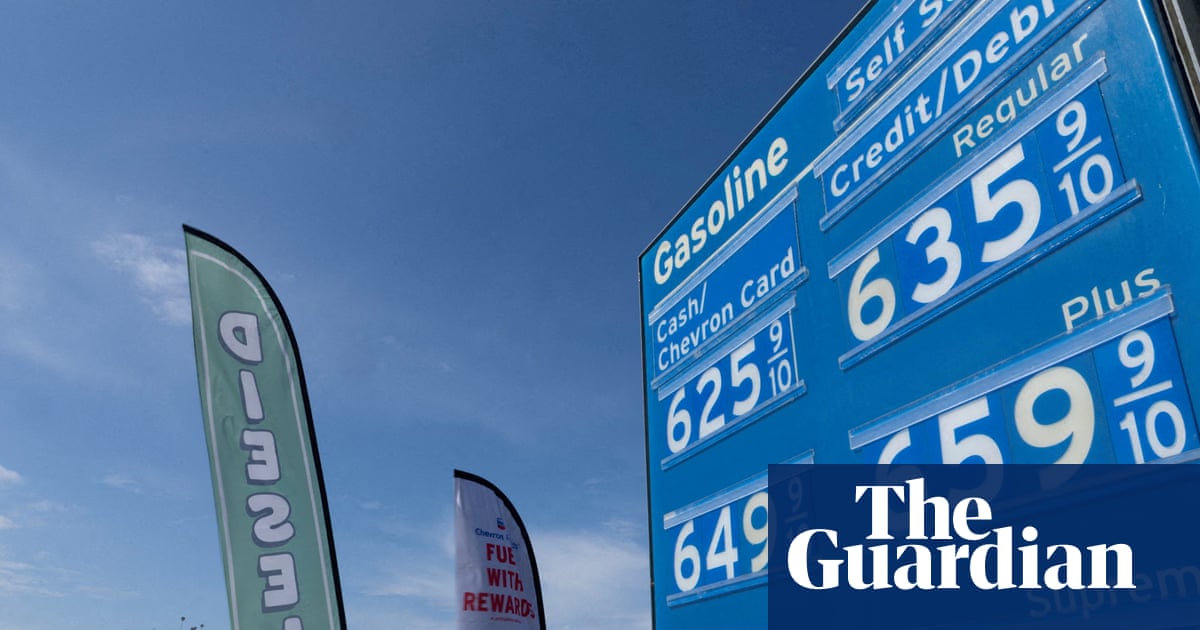
On 31 May 2026, Nikkei Asia reported that Myanmar's retail industry faces mounting pressure as fuel supplies dwindle. The oil shock emanating from the Middle East crisis is cascading into Southeast Asia's economy, where consumers and businesses alike are feeling the squeeze. The new government in Naypyidaw is confronting an energy shortfall that threatens economic recovery at a moment when political stability is still taking root. The blockade of the Strait of Hormuz — the world's most critical oil transit corridor — has sent shockwaves through Asian energy markets, and Myanmar, heavily dependent on imported fuels, is among the most exposed.
The episode illustrates a structural vulnerability that has long shadowed Southeast Asian energy security: nations whose economies run on imported oil have limited levers to pull when supply routes are disrupted. Myanmar's experience this northern summer is not merely a local hardship story. It is a case study in how Middle Eastern geopolitical flashpoints translate, with little friction, into retail queues and business closures thousands of miles away.
The Fuel Squeeze on Myanmar's Retailers
Nikkei Asia's reporting on 31 May 2026 described a retail sector under acute stress. Fuel shortages are curtailing business hours, forcing operators to ration sales, and raising operating costs across logistics-dependent industries. For a retail sector still rebuilding from years of internal conflict and the economic aftermath of the 2021 coup, the timing could scarcely be worse.
Myanmar possesses limited domestic refining capacity. The country has historically relied on imports — predominantly from Singapore and Middle Eastern producers — to meet domestic fuel demand. That import dependency means any sustained disruption to tanker traffic through the Strait of Hormuz, or to tanker traffic more broadly, transmits rapidly into domestic pump prices and availability. The sources do not provide specific tonnage or price-increase figures, but the pattern of disruption is clear: supply is down, costs are up, and retailers are absorbing what they can before passing costs to consumers.
The Strait of Hormuz as Force Multiplier
The scale of the Hormuz disruption is measurable. Japan's Middle East oil imports have plunged 67 percent, per reporting from CryptoBriefing on 31 May 2026. Japan — a G7 economy with sophisticated energy-diplomacy infrastructure and multiple supply relationships — is struggling to replace that volume. Myanmar has far fewer options. Where Tokyo can draw on strategic reserves, accelerate liquefied natural gas procurement, or negotiate alternative crude contracts with Gulf-state partners through diplomatic channels, Naypyidaw's negotiating position is considerably weaker.
The Strait of Hormuz handles roughly one-fifth of global oil trade. Any disruption to transit — whether through military action, naval interdiction, or the broader risk premium introduced by the current Middle East crisis — does not distribute evenly across importing nations. States with shallow energy-diplomacy relationships, limited strategic reserves, and constrained fiscal space absorb a disproportionate share of the cost. Myanmar fits that description. A country that has not completed a coherent energy transition strategy, that lacks the foreign-exchange reserves to outbid competitors for spot cargoes, and whose state fuel-distribution infrastructure has been degraded by years of conflict, is structurally ill-equipped to absorb a supply shock of this magnitude.
The New Government's Test
The challenge arrives at an awkward moment for Myanmar's new administration. Whatever the political composition of the government that emerged from the 2023–2024 transition, it inherited an economy scarred by coup-related upheaval, Western sanctions pressure, and disrupted regional trade links. Economic normalisation was always going to be a multi-year project. The fuel crisis compresses that timeline and narrows the policy space available.
Governments facing energy shortfalls typically deploy a short list of tools: release strategic reserves, cap retail prices (with or without subsidies), ration supply, or pursue emergency diplomatic channels to secure alternative cargoes. Each carries costs. Price caps and subsidies drain fiscal reserves; rationing angers consumers and businesses; diplomatic outreach requires counterparties willing to supply a sanctioned or semi-sanctioned economy. The sources do not detail what specific measures Naypyidaw has announced, but the broader pressure is unambiguous.
There is an uncomfortable parallel here with the pandemic-era fuel squeezes that hit several South and Southeast Asian economies when global supply chains seized. Governments that managed those crises most effectively were those with existing relationships with diverse suppliers, functioning regulatory infrastructure, and credible subsidy frameworks. Myanmar's starting position on all three metrics is weaker than most of its neighbours.
Regional Contagion and the Long View
Myanmar is not alone in feeling the Hormuz effect, but it is among the most vulnerable. Thailand, Cambodia, and Laos — all of which rely on imported fuels — are also experiencing cost pressure, though to varying degrees depending on their reserve levels and supplier relationships. The Association of Southeast Asian Nations as a bloc has limited collective energy-security infrastructure; the ASEAN Emergency Oil Sharing Mechanism exists on paper but has never been stress-tested at scale.
The longer-term implication is a likely acceleration of efforts to reduce Hormuz dependency. Southeast Asian governments — and East Asian ones — have discussed alternative supply routes and energy-transition investment for years without urgency. A sustained disruption of the kind now underway forces that conversation into the present tense. Whether it translates into concrete pipeline or port investment, nuclear-energy programmes, or expanded LNG infrastructure depends on fiscal capacity and political will — both in short supply across the region.
What remains uncertain, and what the sources do not resolve, is the duration of the current Hormuz disruption and whether diplomatic or military pressure will ease tanker transit in the coming months. If the blockage persists into the latter half of 2026, Myanmar's fuel situation will deteriorate further. Retail closures will spread. Agricultural logistics — which depend on diesel for irrigation pumps and harvest machinery — will be impaired ahead of the planting season. The economic costs of inaction will compound.
The new government in Naypyidaw faces a narrow window to demonstrate administrative competence under pressure. Whether it has the diplomatic relationships, the fiscal tools, and the institutional capacity to navigate a sustained fuel shortfall remains the central open question.
This publication's coverage prioritises retail-sector and consumer-impact reporting drawn from Nikkei Asia's regional correspondent, supplemented by energy-sector data from CryptoBriefing's market monitoring. Monexus has not independently verified tonnage figures cited in external reporting and notes that official Myanmar government energy statistics are not currently publicly accessible in reliable form.
Wire provenance
This editorial synthesis draws on the following public wire/social posts:
- https://t.me/nikkeiasia/1842
- https://t.me/nikkeiasia/1843
- https://t.me/CryptoBriefing/8921
- https://t.me/nikkeiasia/1844
- https://t.me/CryptoBriefing/8922