Netanyahu Warns of Beirut Strikes as Israeli Cabinet Splits Over Trump Ceasefire Claim
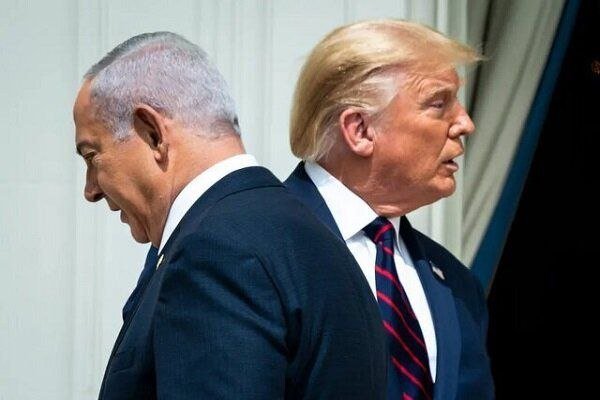
On the evening of 1 June 2026, Israeli Prime Minister Benjamin Netanyahu spoke with President Donald Trump and delivered a direct warning: if Hezbollah did not cease attacking Israeli cities and citizens, Israel would strike targets in Beirut. The IDF, Netanyahu said, would continue operating as planned in southern Lebanon. The statement, confirmed across multiple Israeli and international feeds, landed within hours of Trump claiming on Truth Social that he had stopped Israeli attacks on Lebanon following what he described as a productive call with the Israeli premier — and immediately raised questions about whether Washington and Jerusalem were describing the same situation.
What the two governments are calling a ceasefire looks, from Jerusalem, like a hold order rather than a settlement. The dissonance between Trump's declaration and the Israeli government's declared intent to keep the military option open is not a communications problem. It is a substantive disagreement about what the United States has actually secured — and about how much leverage Washington can exercise over a coalition government whose far-right flank is already in open revolt against the terms reportedly being offered.
The President's Account vs. the Prime Minister's
Trump's post on Truth Social, published Monday, presented the phone call as conclusive. "I had a very productive phone conversation with Prime Minister Benjamin Netanyahu," the President wrote, adding that Israeli attacks on Lebanon had been halted after, in his telling, Iranian officials issued a warning. Iranian state media — framing the same events from Tehran's perspective — reported that Iran had communicated a response capability to Washington, and that Trump's post reflected the outcome of that signal. Israeli officials have not publicly disputed the phone call took place. What they have disputed, repeatedly and in unusually blunt terms, is the premise that a ceasefire has been agreed.
The gap matters. A ceasefire implies mutual acceptance of a political framework. What Netanyahu described on 1 June is a pause conditioned on Hezbollah's behaviour — one that Israel reserves the right to break unilaterally if cross-border attacks resume. Those are not the same thing, and the distinction carries legal, military, and diplomatic consequences for every actor with a stake in the outcome.
The Cabinet Revolt
The public fracture came from an unexpected quarter. Itamar Ben-Gvir, Israel's National Security Minister and leader of the Otzma Yehudit party, issued a sharp condemnation of what he characterised as Netanyahu's capitulation to US pressure. According to reporting from Israeli and regional Telegram feeds, Ben-Gvir told cabinet colleagues that Israel should say "no" to Trump's terms — an extraordinary rebuff from a coalition partner whose party depends on his vote for the government's majority. The reporting does not indicate whether Ben-Gvir has formally withdrawn his support, but the language used is consistent with a minister who considers the current diplomatic track incompatible with his political red lines.
The dissent exposes a fault line that has quietly run through this government since the start of the Lebanon hostilities. The far-right flank of the coalition has consistently argued that any ceasefire that leaves Hezbollah militarily intact in the south is a temporary arrangement that merely buys time for the next round. A cabinet that cannot agree on whether to accept the terms Washington is offering is a cabinet that has not agreed to peace — only to a pause in hostilities that it may end on its own schedule.
Regional Context and Escalation Geometry
Israel has maintained a sustained military posture in southern Lebanon for months. IDF ground and aerial operations have targeted Hezbollah infrastructure, command nodes, and weapons depots across a wide area. Hezbollah has responded with rocket and drone fire directed at Israeli communities in the north — attacks that have not ceased, and which Netanyahu's statement of 1 June explicitly cited as the trigger for the Beirut warning.
Hezbollah is not acting alone. The group's military and political alignment with Iran is structural, not transactional. Any Israeli strike on Beirut — a sovereign state's capital, not a militia stronghold in the south — would represent a significant escalation from the current level of conflict. It would also be a direct signal to Tehran. Iranian state media framed Trump's Truth Social post as a consequence of Iranian deterrence; Israeli officials, by contrast, presented the continued IDF presence in southern Lebanon as evidence that Israel retains the initiative regardless of what Washington announces. These are not consistent positions, and the gap between them defines the escalation geometry the region is now navigating.
What Comes Next
The immediate question is not whether a ceasefire exists on paper. It is whether Israel strikes Beirut before Hezbollah scales back its attacks on northern Israel — and whether Trump, having publicly claimed credit for stopping Israeli operations, treats a strike as a diplomatic rebuke as well as a military one. That second question has no comfortable answer for either side. The President's credibility is now tied to a ceasefire whose survival depends on actors over whom Washington has limited leverage: a Hezbollah leadership that has survived sustained military pressure before, and an Israeli government whose own cabinet members are publicly disputing the terms.
The structural picture is simpler than the diplomatic noise suggests. The Gaza war created a two-front reality Israel never fully resolved — one the Trump administration inherited and has been trying to manage with the limited tools of personal diplomacy and threat communication. What Washington calls a ceasefire, Jerusalem treats as a conditional suspension. That distinction will hold until one side or the other decides the arrangement no longer serves its interests — which, on the evidence of 1 June 2026, may not be long.
This publication's coverage of the Lebanon ceasefire dispute prioritises statements from Israeli government officials and the US President's public communications. Iranian state media framing of the same events is noted where the thread context required cross-reference; it does not appear as a dominant frame.
Wire provenance
This editorial synthesis draws on the following public wire/social posts:
- https://t.me/wfwitness/
- https://t.me/GeoPWatch/
- https://t.me/abualiexpress/
- https://t.me/FarsNewsInt/
- https://t.me/FarsNewsInt/
- https://t.me/JahanTasnim/