Drone Strikes on Odesa Expose Gaps in Ukraine Air Defense as U.S. Sanctuary-City Flight Policy Circulates
Four civilians were injured in an overnight drone attack on Odesa as Russian UAV activity surged along the Black Sea coast, while the Trump administration quietly considers restricting international flights to sanctuary cities — a policy that would reframe U.S. immigration enforcement as an air-traffic question.
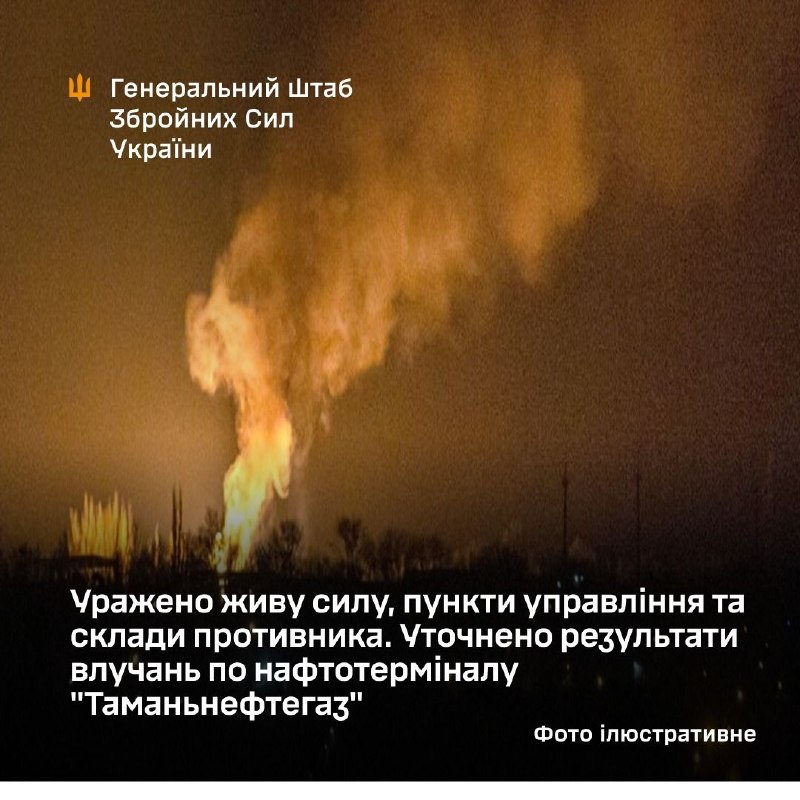
At least four people were injured in Odesa on the night of 31 May when an unidentified aerial vehicle struck the city, according to a Telegram post by Ukrainian broadcaster TSN at 01:14 UTC on 1 June. The attack, which came amid heightened UAV activity along the Black Sea coast, underscored the persistent vulnerability of southern Ukrainian population centers to loitering munitions and mid-altitude drones launched from Russian-held territory or the Black Sea fleet's expanded operations in the western corridor.
Separately, but within the same 48-hour window, reporting from Unusual Whales indicated that the Trump administration is "drawing up plans" to restrict international flights to sanctuary cities — jurisdictions that limit local law-enforcement cooperation with federal immigration authorities. Representative Mullin, speaking on background to Unusual Whales, said the administration had not yet put anything concrete in place. The juxtaposition is not incidental. Two distinct enforcement pressures — one kinetic and front-line, one bureaucratic and domestic — are converging on the same question: who controls access to a city's airspace, and under what legal framework?
The Odesa Attack and the Drone War's Southern Flank
The 31 May strike on Odesa fits a pattern that Ukrainian military bloggers have tracked since early 2026: Russia's integration of maritime-launched drones into its strike package against coastal infrastructure. War Monitor, a Telegram channel covering the conflict, flagged three UAVs approaching the city from the Black Sea direction simultaneously with the single strike confirmed by TSN. The four injured represent a lower casualty figure than the strikes on Odesa in February and March, which killed 12 and 7 respectively — but the persistence of attacks, week after week, with consistent navigation of Ukrainian air defense gaps, remains a structural vulnerability rather than a temporary lapse.
Ukrainian forces have positioned additional mobile air-defense units around Odesa and Mykolaiv since the March attacks, but the mix of slow-flying Lancet-type loitering munitions and faster Iranian-origin Shahed drones continues to challenge the layered interceptor model. Western-provided systems — NASAMS and Patriot batteries — have proven effective against higher-altitude strikes but are stretched thin covering Kyiv, Kharkiv, and critical infrastructure along the Dnipro front. The southern sector, including the port city, operates on a less robust coverage schedule, and Russian targeting doctrine has adapted accordingly.
The Odesa port complex itself handles a significant portion of Ukraine's grain and container exports that survive the informal Black Sea corridor agreement. Disruption to the port — through kinetic strikes or the more diffuse threat of drone activity — carries secondary effects beyond civilian casualties: it erodes the economics of the corridor that Western mediators have fought to maintain since the 2024 Black Sea Initiative collapsed.
Sanctuary Cities and the Air-Traffic Enforcement Lever
The domestic U.S. dimension would, at first glance, seem unrelated. Sanctuary city policies govern the conditions under which local police hold or release individuals flagged by federal immigration agents. They do not, on their face, concern airports. But the administration appears to be exploring whether air-traffic access — the ability of foreign nationals to land in U.S. cities — can serve as a leverage point where ground-level jurisdiction has proved resistant to federal override.
The legal theory is untested. Federal immigration authority derives from the Immigration and Nationality Act, not from FAA regulation of routes. A DOT-level restriction on flights to cities that decline to honor ICE detainer requests would almost certainly face immediate litigation on both preemption and equal-protection grounds. A federal court injunction — which sanctuary-city litigation historically produces within weeks of any aggressive enforcement move — could ground the policy before it affects a single flight.
What makes the proposal notable is not its immediate legal viability but its signal about administrative priorities. The administration is signaling that it views aviation access as a negotiable variable in its broader posture toward jurisdictions that resist federal enforcement cooperation. That framing — treating airspace as a policy instrument — carries uncomfortable echoes of how Russian command has treated Ukrainian air corridors: not as civilian infrastructure but as contested space subject to ongoing pressure.
Airspace Sovereignty as a Parallel Framework
The parallel is imperfect but not trivial. Ukraine has spent three years fighting for recognition that its airspace — and the infrastructure beneath it — is sovereign Ukrainian territory, not a gray zone subject to de facto Russian control. The U.S. sanctuary-city flight proposal reframes a domestic political disagreement as a question of access control, with the implied threat that cities which resist federal enforcement mandates lose the privilege of receiving direct international arrivals. Neither framework is identical to the other, but both treat airspace and transport access as instruments of sovereignty assertion rather than as neutral infrastructure.
The Odesa attack, in this framing, is not merely a military event. It is a data point in a global argument about who controls the approaches to cities — whether the city is Odesa defending its port against Russian drone corridors or Washington considering whether to bar direct flights to cities that decline to serve as immigration enforcement auxiliaries. The medium differs; the underlying logic of access-as-leverage is consistent.
That logic has limits. Ukraine's air defense gaps are a resource constraint, correctable with sustained Western materiel transfers. The sanctuary-city flight policy, if pursued, would hit a constitutional constraint rather than a materiel one — and the courts have historically been faster than the supply chain. The administration may be genuinely building a legal case for preemption, or it may be laying groundwork for a symbolic executive action that it knows will be enjoined but hopes will alter the political calculus of cities currently in noncompliance.
What Remains Uncertain
The sources do not specify the type of drone used in the Odesa attack, the unit or base from which it was launched, or whether Ukrainian air defense was active at the time of the strike. Ukrainian military briefings have not yet published a casualty breakdown or confirmed the target type. The four injuries, per TSN, are the confirmed figure as of publication; the condition of those injured is not specified in the available reporting.
On the U.S. policy side, Mullin's description of "drawing up plans" is the entire available evidentiary base. No draft order, no regulatory filing, no congressional testimony has been cited in the available thread material. The scope of the proposed restriction — which airlines, which routes, which cities — is entirely unspecified. Monexus will update as additional documentation surfaces.
The structural tension this article identifies — between kinetic airspace control in Ukraine and bureaucratic airspace control in the United States — is a pattern rather than a prediction. Neither the Odesa drone war nor the sanctuary-city flight proposal is likely to resolve quickly. The more durable question is what it means, across both cases, to treat the air above a city as a policy variable rather than a shared resource.
Wire provenance
This editorial synthesis draws on the following public wire/social posts:
- https://t.me/tsn_ua
- https://t.me/war_monitor
- https://t.me/war_monitor