The Partial Ceasefire: What Israel's Agreement with Hezbollah Actually Means
Lebanon's Embassy in Washington confirmed on 1 June 2026 that Hezbollah has accepted a US-backed reciprocal cessation of attacks. The announcement, however, conceals more than it reveals about the limits of the agreement and the forces that produced it.
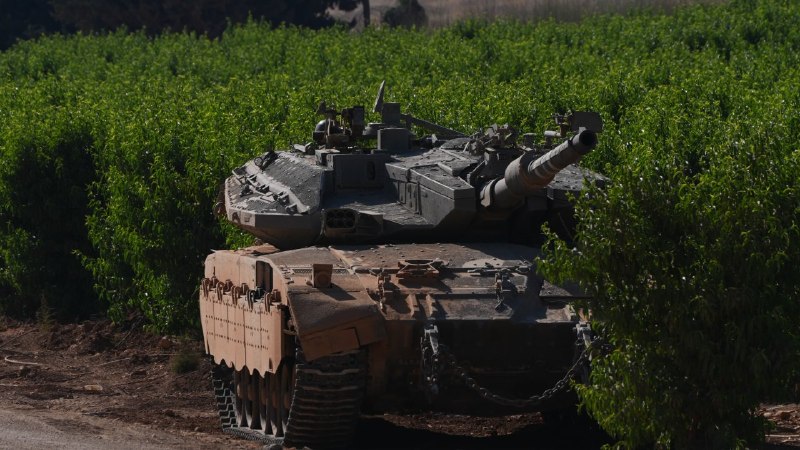
On the evening of 1 June 2026, the Lebanese Embassy in Washington announced that Hezbollah had agreed to a United States-backed proposal for a reciprocal cessation of attacks. According to a statement from the Lebanese president's office, cited by open-source intelligence monitors, officials received confirmation of Hezbollah's commitment to halt strikes on Israel. The announcement arrived hours after President Donald Trump said on his Truth Social platform that he had spoken with Israeli Prime Minister Benjamin Netanyahu and that Israeli attacks on Lebanon would stop. Israel, for its part, pledged not to strike targets in Beirut. The ceasefire, such as it is, appeared to be holding — at least on paper.
The Lebanese Embassy statement, carried by the WF Witness wire service at 19:00 UTC, described the agreement as the product of contacts between Lebanese President Joseph Aoun and American officials. The Lebanese president's office separately confirmed to open-source monitors that it had received binding confirmation of Hezbollah's commitment. Those contacts, the timeline suggests, had been underway for days before the public announcement. The ceasefire was not spontaneous. It was negotiated, packaged, and released.
What the announcement said, and what it did not say, matters. A close reading of the available record — the Lebanese statement, the Israeli prime minister's office briefing, and the administration's own account — reveals an agreement that is narrower, more conditional, and more fragile than the headline figure suggests. Understanding why requires working through three specific tensions the public framing has obscured.
What Was Actually Agreed
The reciprocal cessation applies to rocket attacks on Israel and airstrikes on Beirut. That is the entirety of the agreement's explicit scope. The fighting in southern Lebanon — the grinding ground campaign that has defined the kinetic dimension of the conflict for months — will continue. The Lebanese Embassy's statement, confirmed by the Lebanese president's office, made no reference to a halt in ground operations. Open-source monitoring of the Lebanese-Israeli border through the afternoon and evening of 1 June showed ongoing exchanges in the southern sector consistent with continued low-intensity combat, not a ceasefire.
This distinction is not trivial. The rocket-and-airstrike framework addresses the headlines — the barrages that generate international pressure and domestic political costs for both governments — without touching the territorial contest that underpins the conflict's deeper structure. Israel has sought to degrade Hezbollah's rocket and missile inventory and its northern launch infrastructure for months. A commitment not to fire rockets at Israeli cities gives Hezbollah operational relief without requiring it to cede the terrain that gives its rocket force meaning. The Israeli prime minister's office, in its statement following the call with Trump, made no reference to a withdrawal of Israeli forces from southern Lebanon or a handover of territory to the Lebanese Armed Forces.
The Tehran Variable
The announcement came one day after Iran's foreign ministry reportedly warned the United States that Iranian personnel in Lebanon would not remain passive if Israeli operations continued. Open-source monitoring of Iranian state media on 31 May and 1 June showed statements consistent with a direct warning to Washington. President Trump acknowledged on Truth Social that he had spoken with Netanyahu after what he described as a productive conversation — language that, in the administration's framing, absorbed the Iranian signal into an American diplomatic success rather than treating it as a separate factor.
The sequencing matters. Iranian state-linked outlets described the ceasefire as the product of Tehran's warning taking hold. The American description credited Trump's diplomacy. The Lebanese account pointed to bilateral contacts between President Aoun and US officials as the proximate mechanism. All three cannot be equally central to the causal story. The available record does not resolve which factor was decisive; it does show that the agreement emerged from a moment of overlapping diplomatic pressure rather than from a single negotiating track.
Israeli officials, meanwhile, have been careful not to acknowledge any Iranian dimension publicly. The Israeli prime minister's statement referenced only the conversation with Trump. State-linked Iranian media, by contrast, framed the development as evidence of deterrence success — a narrative with significant domestic political value in Tehran and significant strategic implications for how regional actors interpret the relationship between escalation risk and diplomatic outcomes.
The Strike-in-Beirut Caveat
Israeli Prime Minister Benjamin Netanyahu, in a call with President Trump on the evening of 1 June, stated that Israel would strike targets in Beirut if Hezbollah did not cease attacking Israeli cities and citizens. That statement, confirmed by the Israeli prime minister's office and independently reported by the Spectator Index and open-source monitors, directly contradicts any reading of the Israeli pledge not to attack in Beirut as unconditional.
The reciprocal cessation is, in structural terms, a renewable commitment — renewable on Hezbollah's behaviour, with the enforcement mechanism held entirely by Israel. There is no third-party guarantor. There is no UN Security Council resolution underpinning the arrangement. There is no agreed monitoring mechanism with international observers embedded in the relevant operating environment. The ceasefire rests on the continued willingness of both parties to treat the agreement as operative, and on the continued presence of American diplomatic cover.
Hezbollah's commitment, confirmed through the Lebanese president's office, is real as far as the public record goes. Whether it reflects a genuine shift in the group's strategic calculation or a tactical pause — one that allows the rebuilding of rocket and missile stocks while the air threat subsides — is a question the available sources cannot answer. Hezbollah has made and broken ceasefire commitments before. The difference this time is the presence of a US-brokered framework, which raises the diplomatic cost of violation for both parties but does not eliminate the underlying strategic tensions that produced the conflict.
What Comes Next
The immediate test is compliance on the rocket-and-airstrike axis. If no barrages land in Israel and no Israeli strikes hit Beirut in the next seventy-two hours, the ceasefire will be described as holding. That is a low bar. The deeper question — whether the arrangement creates space for a more durable resolution or whether it simply resets the clock on the next escalation cycle — depends on factors the ceasefire text does not address.
The ground situation in southern Lebanon remains unresolved. Israeli forces, if they remain deployed in the border area, will continue to encounter Hezbollah's rear guard and intelligence infrastructure. Hezbollah, absent a formal withdrawal order from its leadership, may interpret continued Israeli presence as an active threat justifying low-level response. The ceasefire does not freeze the territorial status quo; it papers over it.
The American role is central to the agreement's durability. The administration has positioned itself as the honest broker — a characterization that serves its diplomatic interests but carries real obligations. If Hezbollah violates the commitment and the administration fails to respond, the credibility of its mediation posture is damaged. If Israel strikes Beirut in response to a provocation that does not meet the threshold of a full rocket barrage, the administration will face pressure to condemn an ally it has just described as acting in good faith.
The agreement announced on 1 June is a ceasefire between two defined targets: the rocket and the airstrike. It is not a peace. The forces that drove the conflict — Lebanese sovereignty over territory contested by a non-state actor with Iranian support, Israeli security requirements that any territorial presence north of the border poses an existential threat, the absence of a credible Lebanese state capable of enforcing its own decisions — remain in place. The ceasefire manages the symptom without addressing the disease.
What is notable is what the announcement did not contain: no timeline, no enforcement mechanism, no reference to Resolution 1701 or any prior international framework, no mention of the fate of Israeli or Lebanese hostages and detainees, no process for addressing the destruction in southern Lebanon or the displacement of civilians on both sides of the border. These are not omissions by accident. They are the boundaries of what the negotiating parties could agree to. The narrower the agreement, the easier it is to reach. It is also, by the same logic, the easier it is to exit.
The ceasefire is real in the sense that both parties have made public commitments that will be tested in the hours ahead. Whether it holds — and what it becomes — will depend on forces that the announcement itself could not contain.
This publication drew on wire reports from WF Witness, open-source monitoring via OSINT Defender, the Spectator Index, and Iranian state-linked outlets covering the same timeline. The available record reflects what the parties chose to say publicly. Internal deliberation in Jerusalem, Beirut, and Washington on the decision to announce rather than continue fighting remains outside the confirmed record.
Wire provenance
This editorial synthesis draws on the following public wire/social posts:
- https://t.me/wfwitness/12471
- https://t.me/osintlive/9812
- https://t.me/osintlive/9811
- https://t.me/GeoPWatch/5562
- https://t.me/wfwitness/12473
- https://t.me/FarsNewsInt/4455
- https://t.me/amitsegal/7891
- https://t.me/JahanTasnim/3324