Rodri Punts City Future Past World Cup as Madrid Lurk
Manchester City's Ballon d'Or-winning midfielder has confirmed he will not address his contract situation until after the 2026 World Cup, leaving the door open for Real Madrid's long-running interest.
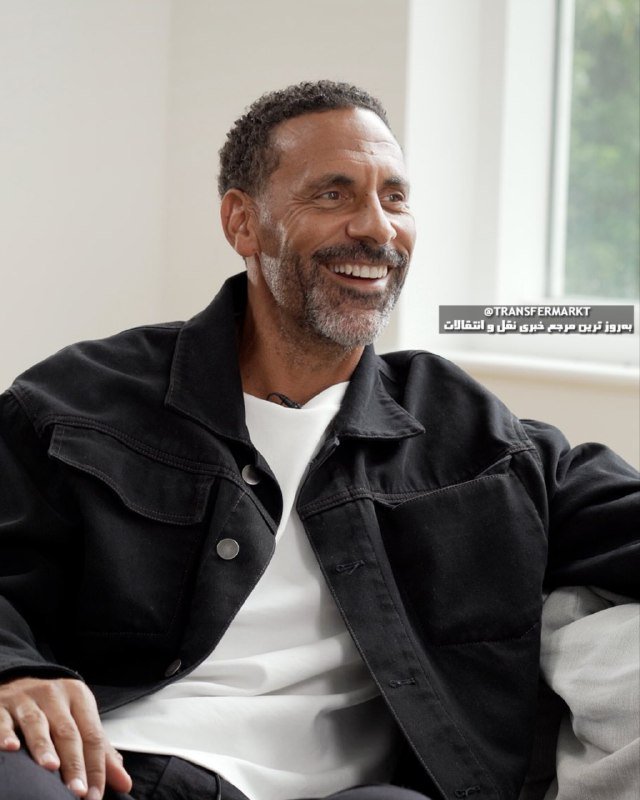
Rodri has said he will not address his Manchester City future until after the 2026 World Cup, confirming on 1 June 2026 that the matter can wait. The Ballon d'Or winner, whose current City deal expires in summer 2027, acknowledged that speculation around his next move is natural given the timing of his contract, but insisted he is relaxed about the situation.
The statement marks the clearest public position Rodri has taken on a question that has shadowed City's season. Real Madrid have been long-linked with a move for the Spain international, and the Spanish club's interest is not new. What is new is Rodri's willingness to frame the delay as deliberate rather than as uncertainty — a distinction that matters for both clubs as they plan their respective summers.
The Contract Arithmetic
City's position is straightforward in theory: tie down their best midfielder to a new deal or risk losing him for nothing when his contract runs down. In practice, the club faces a familiar Premier League problem — the gap between what a player is worth to his current employer and what the market will bear grows sharply once a contract enters its final 18 months. Rodri turns 29 in June. A two-year extension at his current terms would cost City significantly; a sale this summer would at least return a transfer fee.
The sources do not specify what City have offered Rodri or what counter-proposal, if any, has come from his representatives. What is clear is that Rodri himself has imposed the delay. "When a player is nearing the end of his contract, it is natural to talk about it," he said on 1 June 2026. "I am very calm and I know my position perfectly and I tell you that maybe if it wasn't for the World Cup, the [discussion] would be different." The World Cup, scheduled for the latter half of 2026, gives him a clean pretext to defer negotiations without triggering alarm at either club.
What Madrid Wants
Real Madrid have pursued Rodri with the patience that characterises their approach to marquee signings. The club identified a long-term successor to Luka Modrić long before Rodri won the Ballon d'Or in 2024, and his elevation to the status of world's best player has only sharpened that interest. Madrid can offer Rodri the chance to lead a new project at the Santiago Bernabéu, a playing environment calibrated around his strengths, and a return to Spain that carries both personal and symbolic weight.
Whether Madrid are prepared to pay what City would demand — likely in excess of €100 million for a player of his age and record — remains the operative question. City are under no financial pressure to sell. The club reported record revenues for the 2024-25 season and faces Uefa Champions League football regardless of the outcome of any individual contract negotiation. That financial standing gives Pep Guardiola's successor (the club has not confirmed a new permanent manager at time of publication) considerable leverage in any talks.
The Structural Dimension
What is notable about this situation is not the individual drama but the pattern it reveals about elite football's labour market. When a player of Rodri's calibre — defensive midfielder, Ballon d'Or winner, irreplaceable within his team's system — is approaching the final years of his deal, the conventional logic of club power inverts. The player, not the club, controls the timeline. He can choose when to negotiate, with whom, and under what conditions. The World Cup delay is not a coincidence; it is a negotiating tactic, and Rodri is not the first elite player to use a major tournament as cover.
City have navigated similar situations before. Kevin De Bruyne's eventual extension and, before that, the club's management of肖战 Sterling and others illustrate a consistent approach: wait, offer market value, and accept that player agency ultimately sets the terms. Whether that approach produces a favourable outcome this time depends on variables City cannot fully control — Rodri's personal preferences, the state of Madrid's finances, and the ambitions of whichever manager takes charge this summer.
The Summer Ahead
If Rodri maintains his position through the World Cup, City will enter the 2026-27 season with their best midfielder in the final year of his contract. That scenario — familiar to Arsenal fans from their treatment of their own stars in recent years — is not catastrophic, but it is precarious. A player in that position carries market value that clubs outside England will probe, and Madrid are better placed than most to test City's resolve.
City have time. Rodri has given them until after the World Cup, which buys the club several months of relative quiet. But the club's hierarchy will be under no illusions about what that silence means: the most valuable midfielder in world football is keeping his options open, and the eventual resolution will define the next chapter of both his career and City's.
The Monexus desk noted that while the BBC led with Rodri's World Cup deferral as a procedural update, the framing from Transfermarkt — emphasising the naturalness of the conversation and Rodri's equanimity — suggested a player more comfortable with uncertainty than his club would like. Both framings are consistent with the available evidence; neither resolves the underlying question of where Rodri plays his football beyond 2026.
Wire provenance
This editorial synthesis draws on the following public wire/social posts:
- https://t.me/transfermarkt