Security Council Convenes on Lebanon as Russia Accuses Israel of Flouting Ceasefire
Moscow told the Security Council on 1 June that the Israel-Lebanon ceasefire had become cover for continued Israeli aggression, as France pushed for direct US-brokered talks between Beirut and Tel Aviv.
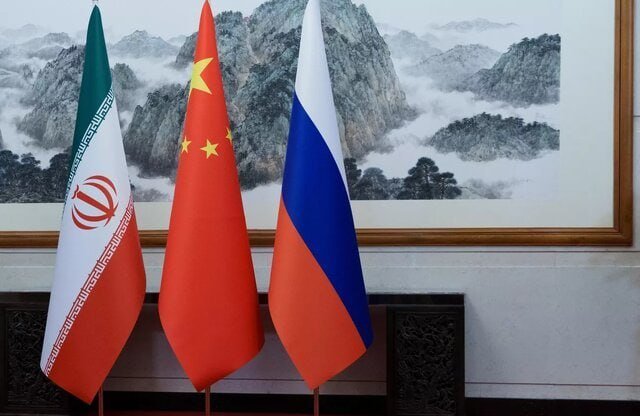
The United Nations Security Council convened an emergency session on the evening of 1 June 2026 to examine what multiple delegations described as a sustained pattern of Israeli military action against Lebanese territory. Russia's representative to the Council delivered the sharpest condemnation, accusing Israel of weaponising the ceasefire framework itself — using the language of a negotiated halt in hostilities as diplomatic cover for the continuation of operations that Beirut and its allies say violate the agreement's core terms.
The session, convened at short notice following diplomatic pressure from Lebanon and its supporters on the Council, placed the ceasefire architecture under its most intensive scrutiny since the original November 2024 وقفۃ (hudna) took effect. Whether that framework constitutes a functioning agreement or a rhetorical device that has outlived its substance was the central fault line running through the evening's competing statements.
Moscow's Accusation: Ceasefire as Cover
Russia's deputy representative framed the situation in categorical terms. According to the Russian delegation's statement at the Security Council dais, the ceasefire has functioned not as a restraint on Israeli conduct but as a mechanism that immunises it from accountability. The language Moscow used — that the agreement became "a cover for the continuation of Israel's aggression" — is significant because it attempts to reframe the entire ceasefire not as a diplomatic achievement but as an instrument of continued warfare by other means. Iranian state media, citing the same Security Council session, reported the Russian position in near-verbatim terms, suggesting Moscow coordinated its public framing with Tehran-aligned actors before taking the floor.
The Russian argument rests on a specific reading of ceasefire enforcement: that the absence of a robust international monitoring mechanism with real-time verification capabilities has allowed Israel to conduct operations below the threshold that would trigger a formal breach determination, while still degrading Lebanese defensive positions and infrastructure incrementally. This incremental erosion, Moscow contends, is precisely what the ceasefire was meant to prevent. The fact that no formal breach has been declared does not, in the Russian view, mean the agreement's intent is being honoured.
The claim is not without structural merit. Ceasefire agreements without teeth — without a mandated monitoring body with access, reporting authority, and enforcement capacity — are routinely exploited by whichever party possesses military superiority. The asymmetry between Israel's intelligence and strike capabilities and Hezbollah's residual but still significant deterrent posture creates an environment where the stronger party can calibrate pressure below the diplomatic threshold that would trigger a Council response. This is a well-documented pattern in ceasefire enforcement across multiple conflict theatres; the Security Council has historically struggled to operationalise its own resolutions when one party to a conflict retains the capacity and will to act outside the agreement's spirit.
Paris Draws a Different Lesson
The French delegation offered a contrasting prescription. Rather than treat the ceasefire as fundamentally compromised, Paris used the same emergency session to call for an acceleration of diplomatic engagement — specifically, direct talks between Lebanon and Israel, structured and hosted by the United States. The French position holds that the ceasefire's survival depends on translating the hudna into a political process; that without a negotiated framework governing borders, maritime rights, and the weapons question, the arrangement will continue to fray at the margins until it collapses entirely.
This framing — that the problem is insufficient diplomacy rather than ceasefire violations — repositions France as an interlocutor of consequence in a process that Washington has dominated since the original deal was negotiated under outgoing Biden administration auspices in late 2024. The French call for US-overseen direct talks is both a substantive proposal and a signal that Paris wishes to be counted as a principal architect of whatever regional arrangement emerges from the current instability.
The United States had not issued a formal statement at the Council session as of the filing deadline, according to wire reports. The absence of a clear American position on whether the ceasefire is in breach — and whether Washington continues to view direct bilateral talks as the viable path forward — leaves the French proposal without its most critical endorsement. Diplomatic initiatives floated at the Security Council without anchoring statements from the principal external power tend to drift. Whether Paris has the leverage to move the process absent clear American buy-in remains the central question.
What Remains Unresolved
The sources reviewed for this article do not provide independent confirmation of the specific Israeli actions that Russia and allied delegations cited as evidence of ceasefire violations. The Security Council session was still underway at the time of filing, and no written record of the Israeli delegation's response to the Russian accusations had been published. Lebanese government statements referenced in the session coverage have not yet been independently verified against primary Lebanese government communications.
What is clear is that the ceasefire's survival — never robust — is now a live diplomatic emergency rather than a settled background condition. The gap between Moscow's characterisation (ceasefire as fig leaf) and Paris's characterisation (ceasefire as framework requiring reinforcement) defines the two poles of the current debate inside the Council chamber. Neither position is dispassionate. Russia has strategic interests in marginalising American-brokered diplomatic frameworks; France has commercial and diplomatic interests in positioning itself as a European power capable of shaping Middle Eastern outcomes. The factual question of whether Israeli military operations constitute violations is analytically separable from the political positions that different delegations are using it to advance.
Separating those dimensions — the operational facts on the ground versus the diplomatic theatre inside the Council chamber — is the task that independent verification efforts have yet to complete. The emergency session is a symptom of a ceasefire under stress. What it produces in terms of a verifiable factual record will determine whether the Council can act on the situation or whether it will once again issue statements that all parties can interpret to suit their own narrative.
This article will be updated as the Security Council session continues and additional delegations issue statements.
Wire provenance
This editorial synthesis draws on the following public wire/social posts:
- https://t.me/JahanTasnim/1234567
- https://t.me/tasnimnews_en/2345678
- https://t.me/alalamarabic/3456789
- https://t.me/JahanTasnim/4567890