SoftBank's 75 Billion Euro AI Bet Puts France at the Center of the Power Grid Race
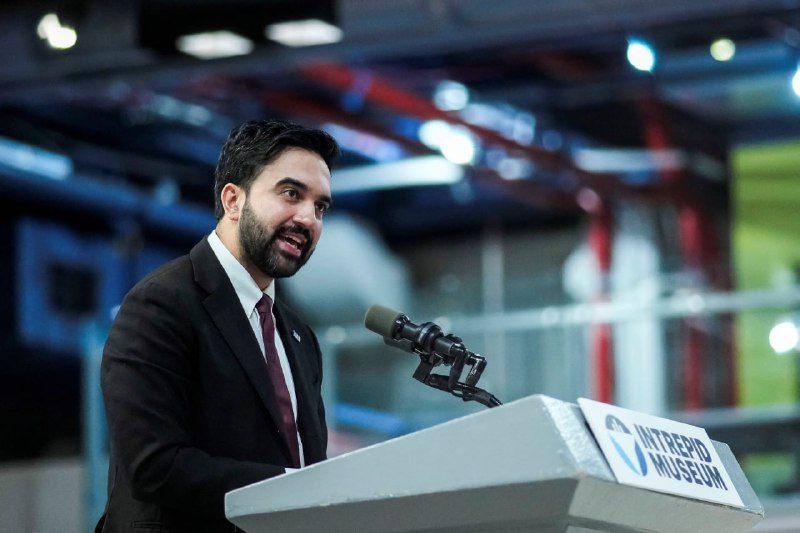
When Masayoshi Son speaks at a Tokyo podium, markets listen. When he puts a 75 billion euro figure on a single country's infrastructure future, grid operators start running scenarios. On 1 June 2026, SoftBank Group confirmed plans to deploy up to 75 billion euros — roughly $87.3 billion — in French data center construction, a commitment that would rank among the largest foreign infrastructure investments in Europe this decade.
The announcement, reported by Nikkei Asia from Son's public remarks, lands at a moment when AI's appetite for electricity has become the defining constraint in the industry's expansion. The promise of large language models, real-time inference, and sovereign AI clouds is colliding with a physical reality: data centers are the new load centers, and the grid was not designed for them.
France offers specific advantages that explain SoftBank's choice. Électricité de France's heavy reliance on nuclear generation — the country derives roughly 70 percent of its electricity from atomic power — gives it a power profile that AI operators find attractive: low-carbon baseload, relatively stable pricing, and generation capacity that does not depend on weather. The French government's willingness to offer sites, grid connection support, and streamlined permitting adds a political dimension that competitors in other jurisdictions have found harder to replicate.
The power problem no one planned for
The AI industry's energy demand has outpaced every forecast made even two years ago. Data center electricity consumption globally is projected to double by 2026, driven primarily by the GPU clusters required to train and run frontier models. A single high-end training run can consume more electricity than a mid-sized city uses in a year. The International Energy Agency revised its data center consumption estimate upward in 2025, citing generative AI deployment as the key driver.
The consequences are not abstract. In Ireland, which hosts major data center clusters for Apple, Google, and Microsoft, the grid operator has placed a moratorium on new data center connections in the greater Dublin area. In Northern Virginia — the world's largest data center market by capacity — Dominion Energy has warned that meeting new demand would require building new gas-fired generation capacity, raising questions about the carbon accounting that tech companies have used to claim climate neutrality.
SoftBank's French bet assumes that the countries which solve the power supply question first will capture the next wave of AI infrastructure investment. That assumption is widely shared. Microsoft has committed to building a new data center campus near Luleå, Sweden, in part because of access to hydro power. Amazon Web Services has signed power purchase agreements with nuclear operators in the United States. The competition for sites with reliable, low-carbon electricity is now as fierce as the competition for GPU allocations.
Sovereignty, subsidies, and the French calculus
France's interest in the deal extends beyond attracting capital. The Macron administration, and subsequently the Barnier government that took office in late 2024, has made artificial intelligence a national strategic priority. Emmanuel Macron announced a 2.5 billion euro AI action plan in early 2025, with explicit goals around sovereign compute capacity — French hospitals, government agencies, and critical infrastructure operators wanting to run AI workloads without sending data to hyperscalers in the United States.
SoftBank's commitment, if it materializes as described, would substantially increase France's domestic AI compute footprint. The strategic logic for Paris is familiar: build the infrastructure and the ecosystem follows. Data centers bring power consumption, skilled employment, and — over time — a cluster of companies that depend on proximity to the compute. The French government has offered land in the Paris basin and access to grid connection points, according to sources familiar with the negotiations.
For SoftBank, the deal represents a pivot from the Vision Fund model that defined the Masayoshi Son era for most of the 2010s. The Vision Fund's massive bets on unicorns and consumer platforms produced both spectacular gains and high-profile failures — WeWork's collapse, the implosion of Greensill Capital, and the accounting irregularities at Wirecard all involved Vision Fund portfolio companies or co-investors. The AI infrastructure pivot is, in structural terms, a move from venture exposure to real assets: data centers generate power bills, land leases, and long-term contracts with predictable revenue profiles. Whether it offers the same return ceiling is a different question.
A 50x claim in context
Son's characterization of the AI revolution as "50x bigger" than the dotcom era is consistent with language he has used publicly since 2023. The comparison, while eye-catching, is methodologically slippery. The dotcom boom built infrastructure for a world of human internet use — email, search, e-commerce, media consumption. AI infrastructure is being built partly to serve that same base and partly to automate tasks — legal review, code generation, drug discovery, logistics optimization — that previously required human labor. If AI systems meaningfully substitute for human cognitive labor at scale, the economic displacement and creation could dwarf the dotcom period in ways that the comparison obscures as much as it illuminates.
What is clearer is the investment scale. Global AI infrastructure spending — data centers, networking equipment, power systems, and the land beneath them — is on track to exceed $500 billion annually by 2027, up from roughly $150 billion in 2023. SoftBank's 75 billion euro commitment, spread over several years, would represent a meaningful share of that total and position the firm as a primary infrastructure provider rather than a consumer of it.
The geopolitical framing is harder to avoid. Data center capacity is becoming a strategic asset in the same way semiconductor fabrication capacity was in the 2020s. Countries that lack sufficient domestic compute risk becoming dependent on foreign AI providers — with implications for data sovereignty, regulatory autonomy, and intelligence cooperation that governments in Europe and the Global South are beginning to articulate explicitly. France's willingness to offer SoftBank favorable terms reflects an understanding that infrastructure access is itself a form of geopolitical leverage.
What this means and what remains uncertain
The 75 billion euro figure is a stated investment ceiling, not a firm commitment tied to specific milestones. SoftBank has made large announced commitments before — the original Vision Fund's $100 billion raise was itself an announcement — and the execution has not always matched the headline. The French deal's actual progress will depend on grid connection timelines, permitting processes, AI demand trajectories, and SoftBank's own financial position, which has been under pressure from the valuation resets in its existing portfolio.
What the announcement does clarify is the terms of the competition. AI infrastructure is no longer a question of who has the best algorithms; it is increasingly a question of who has the power, the land, and the political willingness to host compute at the scale the models require. France is betting that nuclear electricity, streamlined permitting, and sovereign AI ambition are enough to attract that investment. SoftBank is betting that Europe's energy constraints will make France's assets more valuable, not less, as AI demand grows.
The grid, ultimately, will decide who was right.
This publication's tech desk covered the SoftBank announcement against the backdrop of an intensifying global competition for AI data center sites — a framing that wire services have treated primarily as a business story but which carries increasingly explicit strategic dimensions for the governments involved.
Wire provenance
This editorial synthesis draws on the following public wire/social posts:
- https://t.me/nikkeiasia
- https://x.com/unusual_whales/status/195123456789012345