Strait of Hormuz Standoff Reshapes Global Oil Markets as Iran-US Tensions Enter Critical Phase
The temporary closure of the world's most critical oil transit corridor has sent shockwaves through global markets, with both sides trading accusations while commercial shipping navigates an increasingly militarized waterway.
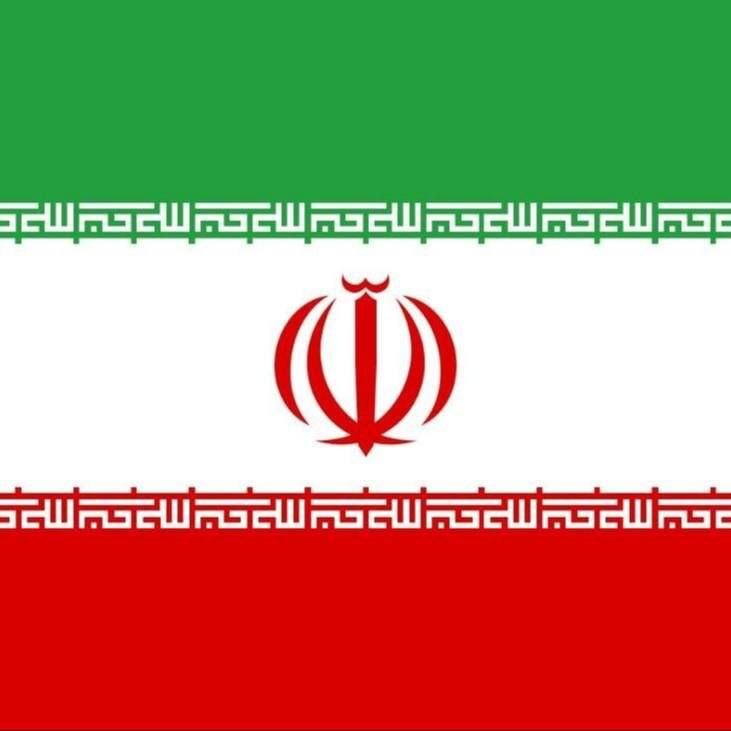
The Strait of Hormuz, the narrow waterway through which roughly a fifth of the world's oil passes, has become the focal point of the most acute US-Iran confrontation in years. On 1 June 2026, air strikes exchanged between Iranian and US forces near the strategic corridor sent Brent crude prices sharply higher, exposing the fragility of a global energy architecture that has long taken the passage's security for granted.
The immediate trigger is a three-month-old crisis that has progressively tightened restrictions on commercial shipping. The US Navy has reportedly guided approximately 70 commercial vessels through the Strait in the past three weeks alone, according to Polymarket reporting on 31 May 2026, a figure that underscores both the scale of disruption and the degree to which American naval assets have been redirected toward escort operations. Yet the convoy diplomacy has not prevented price volatility: oil markets, which had priced in a relatively stable Persian Gulf status quo for years, are now recalibrating around a scenario in which the corridor's throughput cannot be taken for granted.
The Naval Geometry
The US Navy has moved from passive deterrence to active blockade posture, a shift that has sharply escalated tensions with Tehran. Iranian state-aligned outlets have characterized the American presence as an illegal interference in international waters, while the Islamic Revolutionary Guard Corps has deployed assets into the Strait and announced plans to impose transit fees on vessels — a direct challenge to the longstanding norm that the passage functions as open international seaway under US naval protection.
The commercial implications are immediate and measurable. Tankers carrying Gulf crude now face insurance premiums that reflect a war-risk environment, and several operators have begun rerouting vessels around the Cape of Good Hope, adding two weeks to journey times and substantially increasing costs. The rerouting option, while available to bulk carriers, is not viable for the LNG carriers serving South Asian markets that lack alternative infrastructure to receive their cargoes at destination ports.
Pakistan, whose fuel supply chain has been exposed by three months of disruption, has begun planning a strategic oil reserve to buffer against future shocks. The initiative, reported by Nikkei Asia on 1 June 2026, reflects a broader reassessment among regional importers who assumed that the Strait's reliability was a permanent feature of the energy landscape. Islamabad's decision to begin reserve planning is a signal that even governments outside the immediate combat zone are treating the corridor's security as a negotiable variable, not a given.
Trump's Negotiating Window
Into this charged environment, the Trump administration has injected a competing narrative: that a peace agreement with Iran remains within reach. Speaking on 31 May 2026, the President indicated that talks were targeting a deal centred on nuclear restraint in exchange for sanctions relief and the reopening of the Strait. The administration framed its military posture as both pressure tactic and insurance policy — a way to bring Tehran to the table while ensuring commercial flow even if diplomacy fails.
The claim that Iran has agreed to nuclear restraint requires careful parsing. According to reporting from CryptoBriefing on 31 May, the administration has asserted that Iranian negotiators have accepted the framework, but the terms remain contested and verification mechanisms are unspecified. Iranian state media has not publicly confirmed the specifics of any agreement, and the Revolutionary Guard's parallel deployment of assets into the Strait suggests a bifurcated decision-making process within Tehran that the White House may be underestimating.
The market's reaction has been bifurcated accordingly. Futures initially surged on the blockade news, then partially retraced on peace-deal optimism, before resuming their climb as traders concluded that even a successful diplomatic outcome would not immediately restore normal commercial throughput. The curve suggests that traders are pricing in a period of elevated friction regardless of the political headline.
Structural Vulnerabilities
What the current crisis has laid bare is the degree to which global oil markets remain concentrated around a single chokepoint that has no practical substitute at scale. The Strait of Hormuz cannot be substituted by pipeline, redirectable tanker routes, or strategic reserves in the short term. The twenty percent global figure understates the strategic importance: for Asian buyers — China, India, Japan, South Korea — the Strait carries a substantially higher share of their import needs. Their energy security calculus runs through a waterway that is now, for the first time in decades, the scene of direct military confrontation between a nuclear-armed power and a regional state with extensive anti-ship capabilities.
The media framing of the crisis has been shaped by the inherent difficulty of reporting from the Strait itself. Most coverage derives from official statements, military briefings, and commercial shipping intelligence — sources that tend to reflect the perspective of the parties with standing to speak. Iranian state media frames the blockade as American aggression; US military communications frame escort operations as defensive and legal. Both framings are self-interested; neither is complete. The structural reality — a corridor that serves global commerce but is governed by the security apparatus of a single outside power — receives less coverage than the immediate combat dynamics.
Stakes and Forward View
The trajectory is not binary. The most immediate risk is an incident — a miscalculation between escorting US warships and Iranian patrol craft, or a merchant vessel struck in the crossfire — that escalates the confrontation beyond the current parameters. Such an incident would not require political intent; it would require only operational accident in a confined waterway under tension.
The economic stakes are equally clear. Every week of elevated friction adds to the insurance cost of Gulf crude, which translates into pump prices for consumers across importing nations. The International Energy Agency's emergency reserve release mechanisms exist for precisely this kind of scenario, but their effectiveness depends on a disruption that is reversible — and the Strait's operational status depends on political decisions, not market mechanisms.
Pakistan's decision to build reserves marks a threshold: governments that once treated the Strait's reliability as background infrastructure are now actively hedging against its disruption. If other Asian importers follow — and China, Japan, and South Korea all have the storage capacity to do so — the demand signal from strategic reserve builds would itself affect spot markets, creating a second-order price pressure layered on top of the physical disruption.
Whether the Trump administration's negotiating posture succeeds in producing a diplomatic off-ramp depends substantially on whether Tehran's internal politics permit a deal — and on whether the Revolutionary Guard's operational posture is driven by internal logic that the White House cannot influence through public statements. The corridor's fate, and with it a significant portion of global energy supply, rests on that institutional contest in Tehran as much as on anything decided in Washington.
This desk tracked the Strait of Hormuz coverage primarily through US military and commercial shipping sources, with Iranian state media providing counter-framing. The structural dimension — global dependence on a single regulated chokepoint — received less coverage in the initial wire framing than the immediate military dynamics warranted.
Wire provenance
This editorial synthesis draws on the following public wire/social posts:
- https://t.me/CryptoBriefing/12487
- https://t.me/nikkeiasia/18934
- https://x.com/polymarket/status/1924321098763210841
- https://t.me/CryptoBriefing/12480
- https://t.me/CryptoBriefing/12478
- https://t.me/livemint/45219