Tehran's Noor Festival Illuminates Iran's Soft Power Ambitions
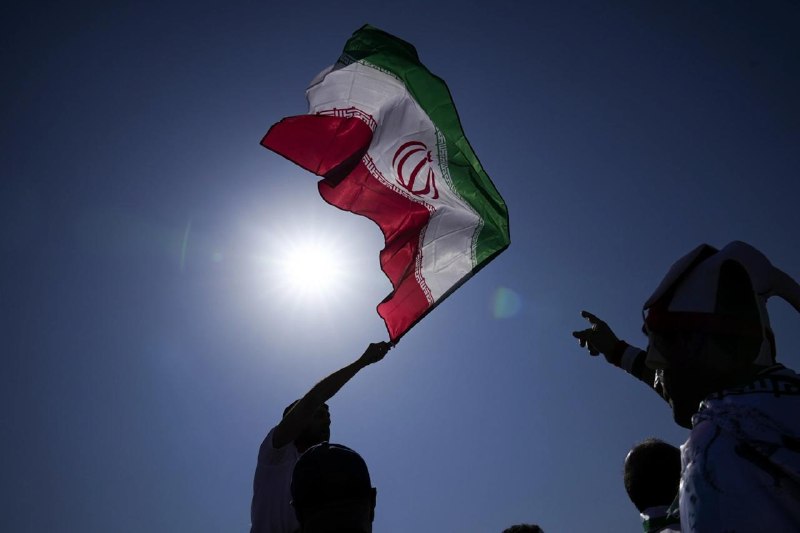
The lights came on along Keshavarz Boulevard on 1 June 2026, as Tehran inaugurated its annual Noor (Light) Festival — a week-long cultural event running between Eid al-Adha and Ghadir, two significant dates on the Islamic calendar. Photographs from Mehr News Agency show elaborate installations, performances, and crowds filling the capital's central thoroughfare. Whether viewed as civic celebration or calculated projection, the festival raises questions about how Iran seeks to shape its image — both domestically and abroad — through cultural expression.
The Noor Festival occupies a specific position within Iran's broader cultural calendar. The timing is deliberate: running between Eid al-Adha (the Festival of Sacrifice) and Ghadir (commemorating the appointment of Imam Ali), the event bridges two significant Islamic observances. During this window, Tehran's public spaces become canvases for artists and designers. The choice of Keshavarz Boulevard as the primary venue is equally purposeful — it is a central artery connecting Tehran's northern and southern districts, ensuring visibility and accessibility for ordinary city residents.
A Tool of State Soft Power
Iran's deployment of cultural events as diplomatic instruments follows a pattern visible across the region. Gulf states have invested billions in cultural infrastructure — Abu Dhabi's Louvre, Qatar's Museum of Islamic Art, Saudi Arabia's expanding festival circuit — all designed to position these countries as regional cultural hubs. The Noor Festival represents Iran's response, and it differs in important ways. While Gulf initiatives often target international tourists and cultural tourists specifically, the Tehran festival appears primarily domestic in orientation. It is a form of nation-building through shared cultural experience, a statement directed as much inward as outward.
The aesthetic language of the festival draws on Persian artistic traditions — geometric patterns, calligraphic elements, color palettes referencing centuries of cultural production. This is not an attempt to import global cultural trends wholesale. It is an assertion of cultural inheritance, of continuity with a pre-revolutionary and pre-Islamic past that Iranian state identity has always navigated carefully. The tension between religious state and secular cultural heritage runs through Iranian public life; the Noor Festival does not resolve this tension so much as place it under illumination.
Domestic Politics and International Perception
In a country where state messaging frequently conflicts with lived reality, a festival that transforms Tehran's streets into spaces of collective wonder offers something harder to quantify: a sense of shared joy and communal identity that transcends the political divisions defining much of Iranian public life. The festival becomes a reminder that cultural life persists alongside — and sometimes independent of — political contestation. This domestic dimension carries its own political weight. A successful cultural event reinforces legitimacy not through ideological declaration but through the simpler mechanism of providing people with something to enjoy.
Internationally, the calculation is more complex. Iran operates under significant sanctions that constrain cultural exchange — artists face difficulties traveling, institutions struggle to participate in global cultural circuits, and the country's international standing affects even informal cultural diplomacy. A festival like Noor cannot fully offset these structural constraints. What it can do is demonstrate resilience, continuity, and creative capacity to international audiences watching from a distance. The images that emerge from Keshavarz Boulevard reach audiences who may have few other points of contact with Iranian cultural life.
Regional Competition and Its Limits
The festival's success as a soft power instrument depends on whether it can balance Iranian authenticity with sufficient international accessibility. Gulf states face no such tension — they have invested in infrastructure, logistics, and international marketing that makes their cultural events accessible to global visitors. Iran's advantages are different: they are organic, rooted in genuine cultural tradition, less obviously manufactured for international consumption. The risk is that these advantages become disadvantages if the festival remains too insular to attract the regional and international attention that would amplify its impact.
The Noor Festival also exists within a competitive media environment. State media coverage, including reporting from Mehr News, presents the event in positive terms — as a success, as evidence of Iranian cultural vitality. This framing should be read with awareness of its source. Independent assessment of attendance, international participation, and genuine cultural impact remains difficult to verify from public materials alone. What can be said is that the festival continues annually, suggesting it has achieved some threshold of success in its domestic objectives.
What Remains Unclear
The sources do not specify the festival's budget, official attendance figures, or the number of participating artists and installations. Iranian government statistics on cultural spending are not always transparent, and the extent to which the Noor Festival represents a strategic allocation of resources — versus a more traditional state-sponsored cultural event — remains difficult to assess. Similarly, the composition of the audience and whether the festival successfully reaches beyond Tehran's middle classes to engage working-class communities in the southern districts is not clear from available documentation.
The geopolitical context constrains what the festival can achieve. International sanctions and Iran's contested standing in global cultural institutions create structural limitations that no cultural event can fully overcome. Whether the Noor Festival represents a genuine pivot toward cultural openness or a carefully managed performance of normalcy in difficult circumstances is a question the event itself does not answer.
Stakes and Forward View
If the Noor Festival succeeds in establishing itself as a recurring regional fixture, it contributes to a narrative of Iranian resilience and continuity — a country that maintains cultural life despite external pressure. This matters for domestic legitimacy and for international perception, even in an environment where political relations remain strained. The risk is that cultural events of this kind become ends in themselves — spectacles that substitute for the broader institutional reforms and open society investments that would more fundamentally address Iran's international isolation.
The festival's light installations will eventually dim. What remains is the question of whether Iran's cultural ambitions extend beyond the boulevard — whether the creative energy on display translates into the kind of cultural ecosystem that generates lasting soft power, or whether it remains a seasonal celebration, impressive in the moment but disconnected from the deeper transformations that would reshape the country's international standing.
This publication's coverage of the Noor Festival foregrounds the event's cultural dimensions rather than its political framing in state media — a choice that reflects the festival's own primary purpose.
Wire provenance
This editorial synthesis draws on the following public wire/social posts:
- https://t.me/mehrnews