Tehran's red line: Iran signals direct intervention if Israel's Lebanon operations continue
Iran's Parliament Speaker Mohammad Baqer Ghalibaf told his Lebanese counterpart Nabih Berri on 1 June that if Israeli attacks on Lebanon persist, Tehran will not merely pause diplomatic engagement — it will intervene directly. The warning marks a notable shift in Iranian signalling and raises the question of whether the regime in Tehran is genuinely willing to cross the threshold from proxy support to direct confrontation.
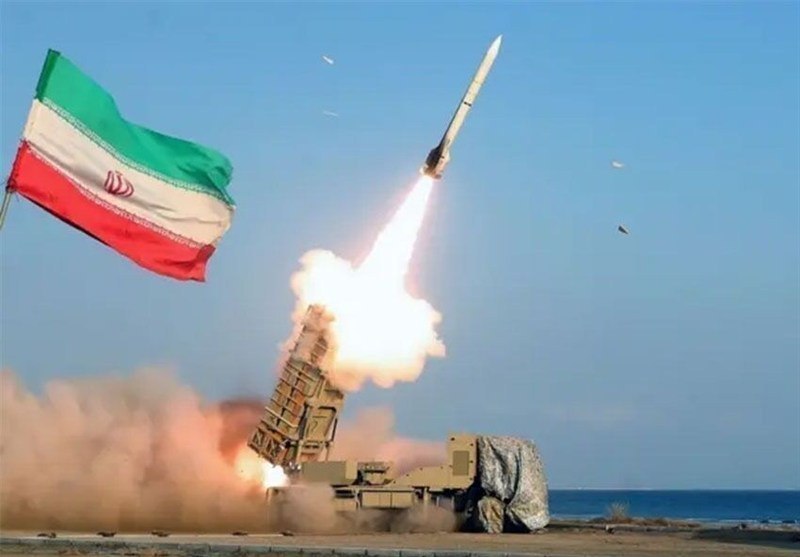
On 1 June 2026, Mohammad Baqer Ghalibaf, the Speaker of Iran's Islamic Council, placed a phone call to his Lebanese counterpart, Nabih Berri — who also heads the Amal movement, a political and paramilitary organisation allied with Hezbollah. The content of that call, reported across multiple regional and Iranian state-aligned sources, carried a blunt message: the bond between Iran and Lebanon is unbreakable, and if Israeli military operations inside Lebanese territory do not cease, Tehran will not merely halt its participation in ongoing diplomatic negotiations. It will act directly.
That is not the language of a regime managing a proxy relationship at arm's length. It is the language of a state drawing a red line in sand and daring another power to cross it.
What Tehran actually said
The specifics matter. Ghalibaf reportedly told Berri that Hezbollah and Amal — Lebanon's two principal Iran-aligned movements — are today defending not merely Lebanese territory but the broader resistance architecture that Tehran has spent decades constructing. Iran's parliament speaker used the phrase reported by Mehr News: "Our lives and yours are one and the same." Berri, for his part, reportedly responded that Lebanon would never forget Iran's positions at what he termed "this critical juncture."
The framing from the Iranian side carries unmistakable weight. It is not rhetorical. It is a declaration of shared fate. The question the international community must now confront is whether Tehran intends that declaration to be backed by force.
Escalation or theatre?
Every diplomatic analyst watching this situation will immediately ask the same question: is this a genuine signal of willingness to go kinetic, or a calibrated pressure move designed to stiffen the resolve of Western interlocutors who still hold a potential US-Iran nuclear dialogue in play?
The honest answer is that both readings have merit. Ghalibaf's statement followed what multiple channels described as "growing calls from Iran" — indicating that the pressure for a harder public posture was building inside the Iranian system before the parliament speaker spoke. That internal pressure does not evaporate after a single public statement. If anything, it compounds.
At the same time, Tehran has historically preferred to fight through proxies precisely because direct Iranian military involvement invites a level of international response — from both Western governments and regional rivals — that the Islamic Republic has found difficult to absorb. The memory of how quickly the 2020 Soleimani strike destabilised Iranian decision-making is not lost on the regime's strategic planners.
But the calculus changes if Iran's leadership concludes that allowing Israeli operations to continue unchecked in Lebanon without consequence erodes the credibility of the entire network. Iran has spent decades cultivating its deterrence reputation through precisely the kind of veiled threat Ghalibaf has now issued openly. Retreating now, in front of a Lebanese audience and a watching region, carries its own costs — potentially larger ones.
The structural context nobody is discussing
Lost in the immediate diplomatic noise is a quieter reality: the region is at an inflection point where multiple separate trajectories are colliding simultaneously. Iran's nuclear programme has re-entered a zone of serious international concern. The US-Iran diplomatic channel — fragile as it has always been — remains technically open but under severe strain. Israel has made clear, through repeated operations, that it does not consider itself bound by the existing rules of engagement in Lebanon.
Into this collision comes Ghalibaf's call. It is not happening in a vacuum. It is happening at a moment when the architecture of restraint that kept the region from a wider war for the better part of two decades is under unprecedented stress. Each player is testing the edges of what the others will tolerate.
There is also a domestic Iranian dimension that cannot be ignored. Ghalibaf, as parliament speaker, occupies a specific institutional position — one that allows him to speak publicly with a directness that the more cautious foreign ministry apparatus might not sanction. His statement signals that the hardline parliamentary faction is now willing to go further in public than the diplomatic track might suggest is wise. That internal balance matters.
What comes next
Israel's military posture in Lebanon is the immediate trigger. If operations continue or escalate in the coming days, Tehran will face the choice it has now spelled out publicly. The diplomatic cost of inaction — in terms of Iranian credibility across the region — will be significant. Every actor from Baghdad to Sanaa will be watching to see whether the statement holds.
The US, for its part, finds itself in an awkward position. Washington's leverage over Tehran has rested substantially on the prospect of a negotiated outcome to the nuclear file. A direct Iranian military commitment to Lebanon complicates that prospect significantly. Iran, if it acts on Ghalibaf's words, will have chosen the Lebanese front over the diplomatic one — and the calculus for Washington changes accordingly.
Whether that outcome arrives depends on decisions not yet made in Jerusalem and Tehran. But the warning has now been issued. The region's next several days will determine whether it was a bluff.
This publication's Lebanon coverage drew on Telegram-sourced wire reports from multiple regional and Iranian state-aligned channels, which provided near-identical accounts of the Ghalibaf-Berri phone call. Western wire services had not yet published independent verification at time of filing.
Wire provenance
This editorial synthesis draws on the following public wire/social posts:
- https://t.me/Middle_East_Spectator/4832
- https://t.me/FotrosResistancee/1241
- https://t.me/presstv/9812
- https://t.me/mehrnews/7654
- https://t.me/GeoPWatch/2210
- https://t.me/tasnimnews_en/4451