Tigers-Rays Series Offers Window Into Early-Season AL Contender Calculus
A collision between two teams trending in opposite directions — Detroit surging, Tampa Bay searching — presents an early-June inflection point neither franchise can afford to treat casually.
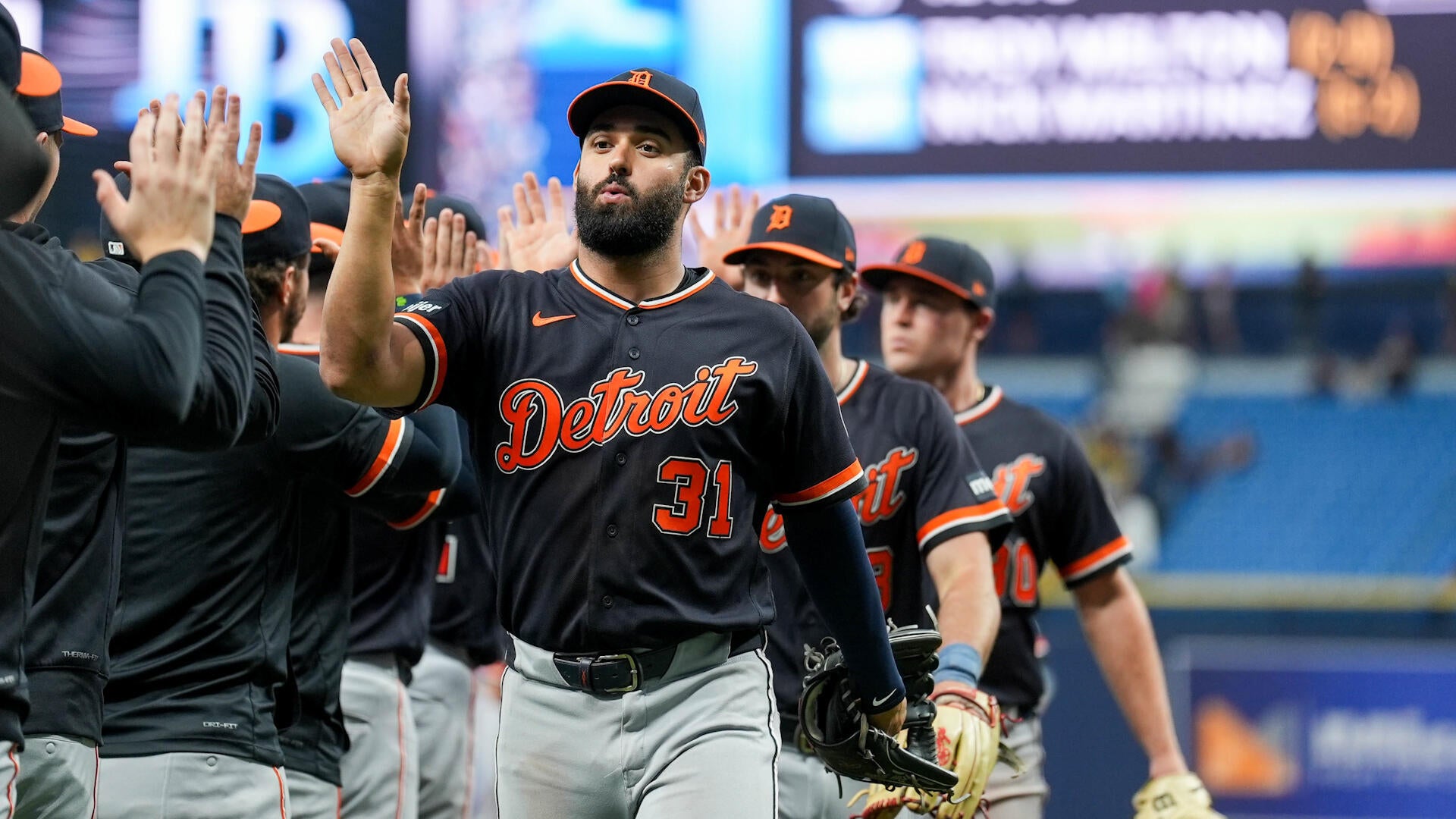
The Detroit Tigers and Tampa Bay Rays open a new series on Monday, June 1, 2026, in a matchup that illustrates how quickly early-season momentum can reshuffle the American League hierarchy. Detroit arrives having exceeded most outside expectations through the first two months of the campaign. Tampa Bay enters the series searching for consistency after a start that fell short of the standard the franchise has set over recent seasons.
The divergence between the two clubs is stark. Detroit has built its standing on a combination of offensive production and a rotation that has performed beyond what conservative projections anticipated entering the year. Tampa Bay, by contrast, has struggled to find its rhythm, with several key contributors enduring prolonged stretches of underperformance. The result is a Rays team that enters a critical stretch of the schedule with ground to make up in the standings.
SportsLine's predictive model has run 10,000 simulations of Monday's contest, generating picks that account for starting pitcher matchups, bullpen load, and each team's recent form. The model's output reflects a statistical composite rather than a guarantee — baseball's variance-heavy structure means that even well-calibrated projections carry substantial uncertainty bands. The simulations favor one side, but the margins involved warrant treating the output as probabilistic guidance rather than笃定的 prediction.
For Detroit, the series represents an opportunity to demonstrate that its fast start is rooted in genuine improvement rather than fortunate sequencing. A strong performance against Tampa Bay would quiet remaining skepticism about the Tigers' contender credentials. The Rays, meanwhile, need results that reverse the narrative around their season. A series win — or even a competitive showing — would provide a data point suggesting Tampa Bay's underlying metrics are due for positive regression.
The structural context matters here. The American League lacks a clear dominant team entering the summer months. Several franchises occupy the middle tier of the standings with realistic paths to postseason positioning. In that environment, each series carries amplified weight. A team that builds margin in June can create separation; one that sputters risks finding itself chasing a crowded field by the All-Star break.
Tampa Bay's recent history suggests the Rays are capable of running hot over a sustained stretch when things click. The franchise has built a sustained competitive window on development pipelines that consistently replenish its major league roster. That track record provides reason for patience, but patience has limits in a sport where 162 games compress into five months of meaningful competition. The June schedule will test whether Tampa Bay can generate the kind of run needed to re-enter the upper tier of the AL picture.
The pitching matchup for Monday's game will determine much. Detroit's rotation has outperformed expectations, but Tampa Bay's staff retains the capacity to neutralize even productive lineups when execution matches preparation. The Rays have historically excelled at exploiting opponent tendencies; if Tampa Bay's pitchers can establish the control patterns that define the franchise's defensive approach, the Tigers' offense faces a stiffer test than its season-long numbers suggest.
The SportsLine simulation's value lies not in its output but in its methodology — a large-sample statistical model that strips individual game narrative from the equation. That detachment is both its strength and its limitation. Real games unfold under conditions no simulation fully captures: the specific umpire's strike zone, the defensive alignment, the mental state of a player entering a high-leverage moment. The model's picks provide a baseline; the teams provide the outcome.
For bettors and fans alike, the series offers a test of how much weight to assign recent performance versus established pedigree. Detroit has earned credibility through results. Tampa Bay retains the benefit of institutional credibility built over years of consistent playoff appearances. Which factor proves more determinative over three games will say something about how the AL's competitive balance is beginning to take shape as summer approaches.
This publication's coverage prioritizes game context and structural framing over gambling-adjacent prediction content. SportsLine's model is cited as a reference point for how predictive analytics process the Tigers-Rays matchup, not as an editorial endorsement of any specific wagering outcome.