Trump's Beirut Ceasefire: The Gap Between the Announcement and the Reality
President Trump's claim on 1 June 2026 to have brokered a ceasefire between Hezbollah and Israel obscures a factual problem: the agreement was announced six weeks earlier, on 16 April. The president's framing of 'troops turned back from Beirut' is not supported by any known military posture. What his announcement reveals about the political grammar of executive foreign-policy communication is more revealing than the ceasefire itself.
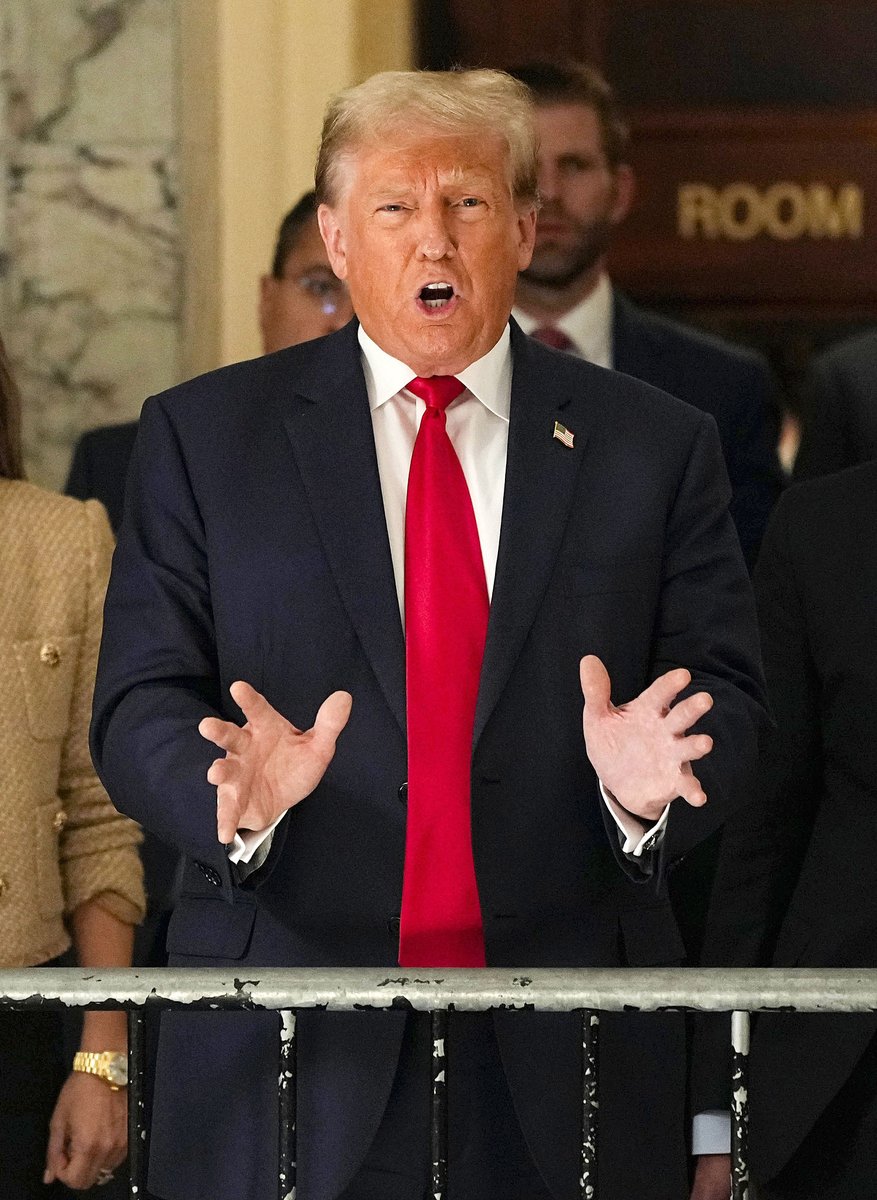
On 1 June 2026, President Trump told assembled reporters that American forces en route to Beirut had been "turned back" and that both Israel and Hezbollah had agreed to cease all hostilities. The claim landed in wire reports and regional Telegram channels within hours. The factual record, however, presents a more complicated picture. A ceasefire between Israel and Hezbollah had already been announced on 16 April 2026, following a period of intensive diplomatic activity involving multiple intermediaries. Trump's statement on 1 June did not mark the beginning of a cessation of hostilities. It marked the beginning of a public-relations episode — one in which the president's description of military movements did not correspond to any observable deployment, and in which diplomatic credit for an existing agreement was claimed as though it were a fresh achievement.
The announcement warrants scrutiny on its own terms. The factual inaccuracies are not incidental. They reflect a structural tendency in executive foreign-policy communication to frame diplomatic outcomes as military interventions, to retroactively author agreements already concluded, and to narrate events in terms that serve domestic political needs rather than regional realities. The ceasefire itself — its origins, its terms, its fragility — deserves separate consideration from the performance surrounding it.
The Announcement and What Trump Actually Said
The thread of reporting that emerged on 1 June 2026 began with Trump's claim that "no troops are going to Beirut" and that those "en route have been turned back." According to accounts carried by Middle East Spectator and corroborated by Faytuks News, the president stated through "highly placed representatives" that he had spoken directly with Hezbollah, and that both sides had agreed "all shooting between Israel and Hezbollah will stop." The framing presented the president as an active broker — one who had dispatched representatives, secured a commitment, and halted a military movement that was, by his account, already in progress.
The problem with this framing is straightforward: there is no public record of American forces being deployed toward Beirut in the days preceding Trump's announcement. Regional military analysts and open-source intelligence accounts have not documented any such movement. The claim that troops were "en route" and then "turned back" appears to describe a diplomatic intervention rather than a reversal of military orders — but the language of reversal was chosen, for reasons that bear on how this administration communicates its foreign-policy record.
The Cradle Media noted the specific oddity in the phrasing: the ceasefire itself had been announced six weeks earlier, on 16 April. Trump's 1 June statement did not introduce a new element to the agreement. It introduced a new narrative about it. The president appeared to be presenting an existing diplomatic fact as a fresh presidential achievement — and anchoring that presentation in a description of military activity that did not correspond to known deployments.
The Timeline: April 16 and the Six-Week Gap
The ceasefire between Israel and Hezbollah was formally announced on 16 April 2026. The agreement brought an end to months of intensified cross-border hostilities that had followed the broader Israel–Gaza conflict and had produced significant casualties on both sides. The precise terms of the agreement — monitoring mechanisms, the status of Hezbollah's military infrastructure in southern Lebanon, the positioning of Israeli forces along the northern border — were not made fully public, which is consistent with mediated agreements of this kind.
What is clear is that the announcement on 16 April did not come from Washington. It came through diplomatic channels involving intermediaries — a process consistent with the indirect negotiations that have characterized Israel–Hezbollah diplomacy for decades. Whether the United States played a decisive role in bringing the April agreement about, or whether it was reached primarily through other intermediaries, is not a question the available sources resolve with specificity.
The six-week gap between 16 April and 1 June means that Trump's announcement on 1 June was, by any straightforward reading, a restatement rather than a creation. The shooting had already stopped. The agreement was already in force. By 1 June, both sides had, by all available accounts, broadly honored the ceasefire terms — though as with any agreement of this kind, there were reports of localized incidents and ongoing tensions along the border zone.
The president's decision to announce the ceasefire as though it were a new development on 1 June — and to frame that announcement around a non-existent troop movement — raises a question about what the announcement was actually for. The ceasefire did not need to be announced on 1 June. It needed to be sustained. And the mechanism for sustaining it is not a presidential photo opportunity but the diplomatic and military monitoring arrangements that were presumably embedded in the April agreement.
What the Ceasefire Actually Represents
It is worth stepping back from the announcement politics to consider what the Israel–Hezbollah ceasefire represents as a regional fact. The conflict that preceded it was not a marginal incident. Months of intensified exchanges along the Israel–Lebanon border displaced tens of thousands of people on both sides of the line, killed several hundred people — including a significant number of Hezbollah fighters, Lebanese civilians, and Israeli civilians and soldiers — and brought the two sides to a level of hostilities that many analysts feared could expand into a broader regional war.
The April ceasefire halted that trajectory. Its significance for the people living within range of the border zone is concrete and immediate. It is not a minor achievement. An agreement that brings a stop to killing and displacement in a region where such agreements are rare and fragile is, by any measure, worth noting.
The structural problem is that credit for such agreements is inherently contested. Hezbollah's leadership will present the ceasefire as a vindication of resistance and a demonstration of the group's military deterrence. Israel's government will present it as a product of military pressure and diplomatic isolation of Hezbollah. Neither framing is complete, and the truth — that the agreement reflects a balance of costs and incentives that neither side fully controls — is less narratively satisfying than either.
The role of the United States in bringing the April agreement about is the most contested element. American diplomatic activity in the region is well documented; the question is whether it was decisive. The sources do not establish with specificity what weight Washington's engagement carried relative to that of other actors — Qatar, Egypt, and France have all been cited in various reports as having played mediating roles in the broader Lebanon-diplomacy context. What is clear is that a ceasefire does not emerge from a vacuum. It emerges from a process that involves multiple governments, multiple channels, and a specific alignment of costs and incentives on all sides.
The Grammar of Executive Foreign-Policy Announcements
Trump's 1 June announcement illustrates something that observers of executive foreign-policy communication have long noted: the political grammar of presidential diplomacy rewards announcements more than it rewards outcomes. A president who quietly facilitates a diplomatic process over months receives little credit; a president who announces a cessation of hostilities receives a great deal. The incentive structure is oriented toward public moments rather than private process, and toward the framing of existing facts as presidential achievements rather than the slower work of sustained engagement.
This is not a phenomenon unique to the current administration. Every recent White House has engaged in some version of this dynamic. The difference lies in the degree to which the framing diverges from the underlying factual record. When a president claims credit for an agreement reached six weeks earlier, and anchors that claim in a description of military activity that did not occur, the divergence is not incidental. It is structural.
The language of "troops turned back from Beirut" performs a specific function: it transforms a diplomatic communication — a message passed through intermediaries, a commitment extracted through pressure — into a military intervention story in which the president plays the role of commander-in-chief who called off a deployment. This reframing elevates the stakes of what was, in substance, a routine diplomatic development. It positions the president as having prevented a military escalation rather than having facilitated a political settlement.
Why does this matter? Because the framing shapes how the event is understood both domestically and regionally. An American audience that hears "I turned back the troops" processes the president as having made a consequential military decision. A regional audience that knows no troops were in motion processes the same statement as something else entirely — as, perhaps, a signal about American priorities or as an indication that Washington is actively engaged in shaping the regional order, regardless of whether the specific claim is accurate.
There is also a domestic dimension. The announcement arrives at a moment when the administration's foreign-policy record is under scrutiny across multiple simultaneous engagements. Ceasefire announcements — especially in the Middle East — are high-visibility events that generate positive coverage in the short term. The incentive to announce an existing ceasefire as a new development, or to retroactively claim authorship of a diplomatic outcome, follows logically from an information environment in which visibility is treated as equivalent to influence.
The Fragility of the Agreement and What Follows
The ceasefire between Israel and Hezbollah is, at this stage, holding. Both sides appear to have broadly respected the terms since 16 April, and the reports emerging from the border zone on 1 June — the day of Trump's announcement — did not indicate any significant violations of the agreement. That is genuinely good news, and it is worth stating plainly: a ceasefire that holds is preferable to one that collapses, and the people of northern Israel and southern Lebanon have, for now, been spared the resumption of hostilities that many analysts feared was imminent in the months before April.
But the ceasefire is fragile in ways that the announcement grammar obscures. The agreement, as publicly understood, does not resolve the underlying disputes that produced the hostilities. Lebanon and Israel remain in dispute over maritime boundary delimitation in the eastern Mediterranean — a matter that has direct commercial significance due to offshore gas reserves. Hezbollah's military wing remains intact as a fighting force, even if its cross-border operations have ceased. Israel has not withdrawn from disputed positions along the border in a manner that would constitute a full normalization of the boundary. The ceasefire freezes the situation; it does not resolve it.
The historical record of Israel–Hezbollah agreements suggests that ceasefires of this kind are more often temporary suspensions than durable settlements. The 2006 war ended without a formal peace agreement. Subsequent diplomatic frameworks — including a 2021 understanding brokered through American and French mediation — were never fully implemented. The April 2026 ceasefire is more substantive than some prior arrangements, but the structural conditions that have produced periodic escalation remain in place.
Whether it holds depends on factors that no presidential announcement can determine: the internal politics of both Israel and Lebanon, the behavior of regional actors, the management of the maritime boundary dispute, and the willingness of both sides to absorb the domestic political costs of compliance. American diplomacy — quiet, sustained, and backed by credible pressure — can contribute to that outcome. A 1 June announcement that retroactively claims credit for a six-week-old agreement, anchored in a description of military activity that did not occur, does not obviously contribute to it.
The ceasefire deserves better than the politics surrounding it. The people living along the border — Israeli and Lebanese — are not abstractions in a foreign-policy ledger. Their security depends on the durability of the agreement, not on the accuracy of a presidential description of its origins. If the ceasefire holds, the credit belongs to the negotiators, the monitors, and the soldiers on both sides who chose, for now, not to resume shooting. It does not belong to a claim about troops that were never in motion.
Monexus covered this story through regional Telegram wire services on 1 June, leading with the president's announcement as reported. The discrepancy between the stated claim and the existing ceasefire was noted in the reporting but not foregrounded in the initial wire framing.
Wire provenance
This editorial synthesis draws on the following public wire/social posts:
- https://t.me/Middle_East_Spectator/12458
- https://t.me/Middle_East_Spectator/12457
- https://t.me/TheCradleMedia/8921
- https://t.me/TheCradleMedia/8920
- https://t.me/osintlive/15821
- https://en.wikipedia.org/wiki/2006_Lebanon_War
- https://en.wikipedia.org/wiki/Hezbollah
- https://en.wikipedia.org/wiki/Israel%E2%80%93Lebanon_border_dispute