Trump's Beirut Ceasefire: Diplomatic Victory or Manufactured Headline?
President Trump declared a ceasefire in Beirut after a single phone call with Netanyahu. The question worth asking is whether the deal reflects diplomatic muscle — or diplomatic theatre.
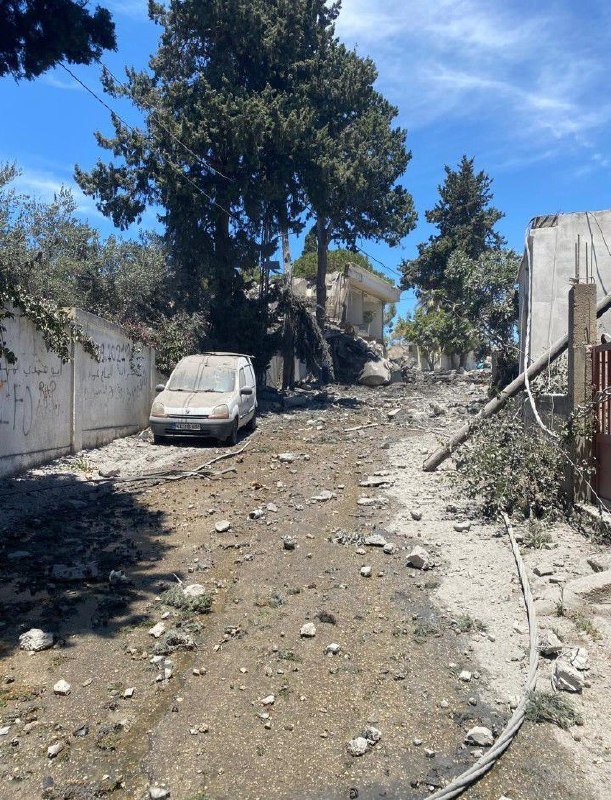
There is a specific grammar to American presidential announcements: something happens, and then the president takes credit for it. On 1 June 2026, the something was a halt to Israeli military movement toward Beirut. The credit, posted to Truth Social, ran to a handful of sentences describing a "very productive" phone call with Prime Minister Bibi Netanyahu and an assurance that any Israeli troops already en route to the Lebanese capital had been "turned back." Open source analysts were quick to note that the wording appeared to conflate ground forces with combat aircraft — a distinction that matters considerably in a theatre where Israeli air operations and the threat of a ground invasion operate as distinct instruments of pressure.
Hezbollah, for its part, announced simultaneously that all shooting would stop. That detail — that both sides declared a cessation at the same moment — is the part of the story most likely to get buried under the presidential self-congratulation.
The Diplomat and the Deadline
Trump's post was not the first instance of an American president declaring an outcome achieved through personal diplomacy only for subsequent reporting to complicate the attribution. The structure is familiar: the Oval Office phone call, the theatrical announcement, the implicit message to domestic audiences that strength brought peace. What differed this time was the open source community's near-immediate correction — flagging the "troops" versus "fighter jets" ambiguity before mainstream wire services had finished running the headline.
That correction did not go far. By the time Hezbollah's parallel announcement surfaced in regional reporting, the dominant framing had already calcified around Trump's version of events. That is the pattern worth examining. A head of state claims credit for a ceasefire; the claim is plausible on its face; and the mechanisms by which the ceasefire actually came about receive a fraction of the column inches devoted to the claim itself.
Whose Ceasefire Was It Anyway?
The structural question is not whether Trump spoke to Netanyahu — he almost certainly did — but whether the conversation produced the cessation or merely coincided with it. Hezbollah's simultaneous declaration suggests the latter. Tehran-adjacent outlets were quick to frame the outcome as validation of resistance posture, with Mehr News running the line that "Trump understands the language of force well" — a characterisation that flatters the White House while implying the real deterrent was something other than a phone call.
Iranian state media and Hezbollah-aligned channels are not disinterested narrators. But neither is the American president. The discrepancy between Trump's account — in which a single diplomatic intervention halted a military operation — and the concurrent Lebanese announcement is the genuine news here. It is the gap between the official story and the layered reality beneath it.
The Theatre of Restraint
There is a version of this episode that is simply about message discipline. An administration that spent months allowing the threat of a Beirut ground operation to hang over ceasefire negotiations needed a way to declare victory without acknowledging that the threat had been the leverage all along. A public call, described as productive, accomplishes that: it lets all parties step back while saving face.
That version is probably too cynical for a publication that takes evidence seriously. But it is worth holding alongside the more generous reading — that direct American pressure genuinely moved an Israeli government that had signalled openness to escalation. Both readings cannot be fully right. Neither can be fully ruled out from the material available as of this writing.
What the episode reveals is less about this specific negotiation and more about the machinery that surrounds it. Presidential announcements travel faster than verification. Hezbollah's parallel statement was factualised by OSINT researchers before wire editors had processed it. The gap between those two velocities — the announcement's speed and the slower, more careful work of confirmation — is where the most consequential misreadings tend to accumulate.
What Remains Unresolved
The sources do not establish with certainty whether Trump's call preceded Hezbollah's announcement, whether the two were coordinated, or whether the timing was coincidental. Israeli military operations along the Lebanon border have historically involved phased escalation language — threats that serve as pressure while leaving diplomatic off-ramps visible. Whether this episode follows that pattern, or represents a genuine negotiated freeze, is not yet clear from the available record. What is clear is that the announcement of a diplomatic win arrived faster than the evidence for one.
The broader pattern is not unique to this administration or this conflict. It is the structure of great-power diplomacy as it travels through social media: the call that ends a crisis, the tweet that averts a war, the post that announces a deal. Each announcement is addressed simultaneously to the adversary, the domestic audience, and history. The adversary gets the reassurance; the domestic audience gets the win; history gets whatever the press复制s first. What gets lost, usually, is the more inconvenient question of what would have happened anyway.
Trump's post on Truth Social on 1 June 2026 may describe a genuine diplomatic intervention. It may equally describe a president arriving at a conclusion already in train and dressing it in the language of personal achievement. The honest answer — that the record does not yet resolve the attribution — is less satisfying than the headline. That is typically the case.
This publication's wire copy led with Trump's account. The analysis above reflects an attempt to hold that account alongside the concurrent Lebanese announcement, which received less prominent play in initial wire reporting.
Wire provenance
This editorial synthesis draws on the following public wire/social posts:
- https://t.me/osintlive/12487
- https://t.me/rnintel/3102
- https://t.me/osintlive/12488
- https://t.me/WarMonitors/9891
- https://t.me/mehrnews/55712
- https://t.me/tasnimnews_en/44101