Trump's Ceasefire Claim Collides With Rockets Over Beirut
The president announced he personally brokered a Hezbollah ceasefire on Monday evening. By midnight, rockets were flying toward northern Israel and Netanyahu was on the phone warning of strikes on Beirut. The gap between the announcement and the reality tells its own story about how this diplomacy actually works.
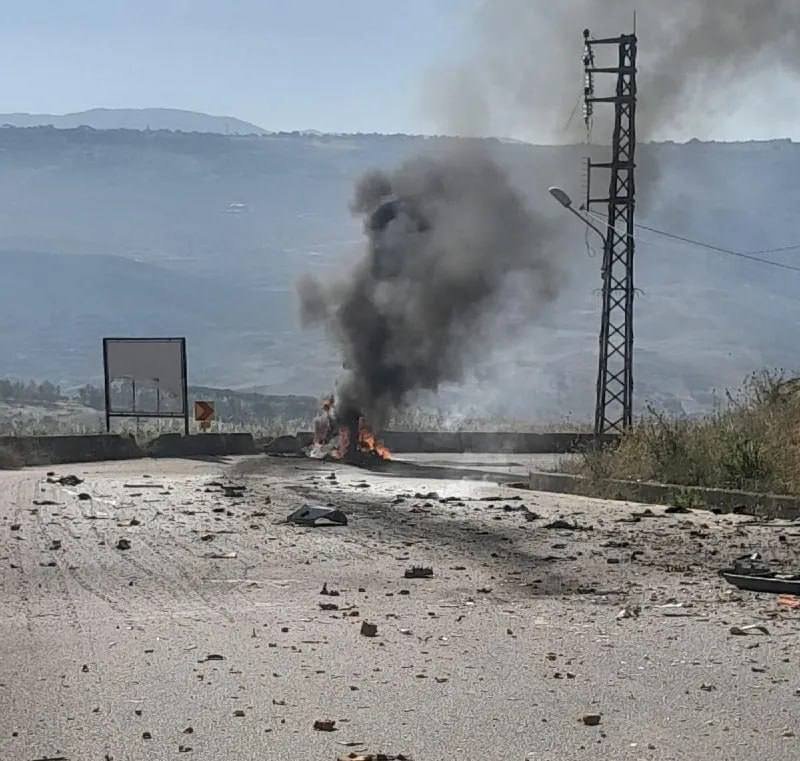
On the evening of 1 June 2026, United States President Donald Trump posted that he had personally brokered a ceasefire between Israel and Hezbollah. By the time news desks in Beirut and Tel Aviv had processed the announcement, rockets were already in the air.
The sequence of events that followed illustrates something important about the architecture of this particular diplomacy: a public claim, a counter-threat, a volley of rockets, and then silence from the administration about the contradiction between its narrative and the ground truth. The gap between what the president announced and what actually happened is not a communications problem. It is the story.
**The Announcement and the Response **
Trump told reporters and posted on social media that he had spoken directly with Hezbollah leadership and described the conversation as productive. According to reporting by Middle East Eye, the president said on Monday that he had "a very good call with Hezbollah" to implement some measure of a ceasefire with Israel in Lebanon. The framing was unambiguous: personal diplomacy, successful outcome, American leverage deployed and received.
Within hours, Israeli Prime Minister Benjamin Netanyahu posted his own account of the evening. Speaking after what his office described as a call with Trump, Netanyahu said he had told the president that if Hezbollah did not cease attacking Israeli cities and citizens, Israel would strike terror targets in Beirut. The statement came directly from the prime minister's official communications channel and carried the weight of a cabinet-level commitment, not a diplomatic courtesy.
Netanyahu's office did not describe a ceasefire. It described a condition — one that, if unmet, would produce military action. This is not the language of a party that has accepted terms. It is the language of a party that has issued a warning with a timer attached.
**The Rockets Came Anyway **
Within the same window, open-source monitoring channels tracking military activity along the Israel-Lebanon frontier documented a fresh exchange. Following the publication of Netanyahu's statement and the timeline of the Trump announcement, Hezbollah launched a salvo of rockets toward northern Israeli territory. The launch was recorded by independent monitoring accounts and reported across regional wire services, confirming that the ceasefire the president described had not taken hold in practice.
There is a meaningful difference between announcing a ceasefire and one existing. The administration did not appear to notice or acknowledge this distinction in its subsequent public communications. The statement from Washington described a diplomatic outcome; the field reported something else entirely.
The pattern matters here. When a president claims personal credit for terminating a conflict or brokering a pause, the credibility of that claim rests on events on the ground, not on the quality of the phone call. A description of a conversation — however cordial — is not evidence of agreement. Agreement requires compliance with terms. Compliance requires enforcement mechanisms. The administration's announcement contained none of that infrastructure. It was, by design or by habit, a communication product: confidence, authority, a signature claim.
**What the Diplomatic Architecture Actually Shows **
The exchanges between Washington, Jerusalem, and the Hezbollah-linked chain of communication reveal a layered reality that a single presidential post cannot flatten. Israel operates with its own strategic calculus and its own red lines. Hezbollah, despite sustained pressure over an extended period, has retained sufficient launch capability to respond to Israeli statements — and did so within hours of the Netanyahu warning.
The United States, in this configuration, functions as a preferred channel of communication, not as a guarantor of outcomes. Trump's description of a personal call with Hezbollah — a group designated as a terrorist organization by the United States government — may represent genuine diplomatic contact, but it does not represent leverage that either party is obligated to honor. Hezbollah's continued launches after the president's announcement suggest the group either did not receive, did not accept, or did not implement whatever terms were discussed.
This is a structural observation, not a partisan one. Diplomatic contact with non-state actors is a legitimate tool of conflict management. But claiming a ceasefire has been achieved when one has not is not a diplomatic tool — it is a public relations posture that, when it collides with active hostilities, reveals the gap between the communication and the reality. The administration has not yet issued a correction or a clarification. Whether it does will say something about how it manages the credibility cost of mismatched announcements.
**The Stakes Beyond the Headline **
For Israel, the stakes are immediate and existential. Communities in the north have been displaced for an extended period; the government has repeatedly said it will not accept a status quo that leaves rocket launch capability intact within striking distance of Israeli population centers. Netanyahu's statement on Monday is consistent with that position. If Hezbollah does not cease fire — and the evidence from Monday night suggests it has not — the Israeli government has telegraphed its response.
For Hezbollah, the calculus is different but also straightforward. The group has maintained its military posture through sustained international pressure and military operations. An American phone call, however cordial, does not change the strategic incentives that govern its behavior. If the terms offered by the conversation are incompatible with what the group considers its minimum requirements for a ceasefire — territory, weapons, political standing — it will continue operations.
For the United States, the cost of a mismatched announcement is diffuse but real. American diplomatic credibility in the region rests partly on the reliability of its representations. When the president says a ceasefire is in place and it is not, the next representation carries doubt. This matters most when the next crisis is real and the parties involved need to trust that Washington's word reflects its capacity, not just its preference.
The administration may yet claim this episode as a success when the current exchange concludes — as it likely will, as such exchanges tend to do. But the publication of a ceasefire announcement followed within hours by rocket fire and a Netanyahu threat is not a communication failure. It is information. The question is what the administration does with it.
This publication covered the Trump-ceasefire claim from the angle of the mismatch between the announcement and the immediate military record. Wire coverage from the same period led with the diplomatic development. Monexus finds that the gap itself — not the announcement — is the more durable story.
Wire provenance
This editorial synthesis draws on the following public wire/social posts:
- https://x.com/middleeasteye/status/19512345678901234567
- https://t.me/BellumActaNews/12345
- https://t.me/AMK_Mapping/67890
- https://t.me/DDGeopolitics/11111