Trump's Hormuz Gambit: Confidence and Crude in the Iran Talks
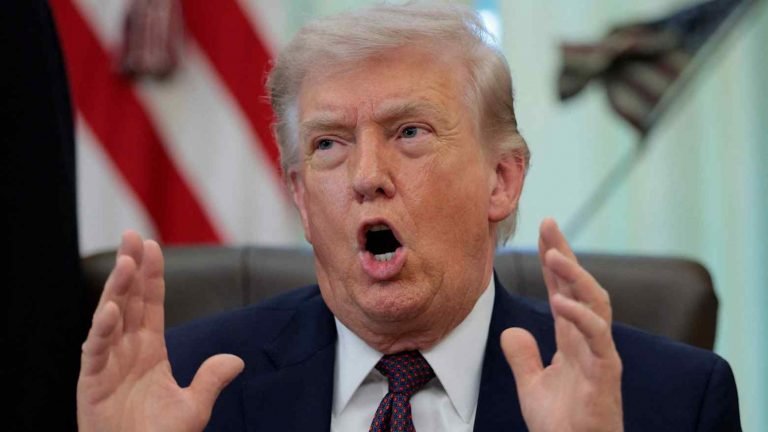
President Donald Trump declared on 1 June 2026 that talks with the Islamic Republic of Iran are "continuing, at a rapid pace," a public statement that landed as oil markets were absorbing reports that Tehran might halt negotiations entirely and move to close the Strait of Hormuz. The juxtaposition — a confident White House against jittery traders — captures the pressure cooker dynamic of the current nuclear diplomacy.
Trump, speaking to NBC News, said he was unconcerned by the prospect of Hormuz disruption and the price pressure that would follow. "The oil will be dropping," he predicted, according to a summary of the interview carried by ClashReport. Whether that forecast reflects genuine strategic confidence or calibrated public relations, the sources do not establish.
The Leverage Tehran Holds
The Strait of Hormuz is the world's most critical oil chokepoint. Roughly a fifth of global seaborne crude passes through the narrow passage between Oman and Iran each day. Any credible threat to interrupt that flow sends traders toward safe-haven positions; Brent crude moved higher on 1 June as reports circulated that Iranian officials were contemplating a hardline negotiating posture, including the "complete block" option cited in the reporting. The market reaction was not theoretical anxiety — it was the reflexive pricing of genuine supply risk.
Iran has signalled this capability before. The Islamic Revolutionary Guard Corps Navy has a documented history of harassing commercial vessels in Gulf waters, and previous nuclear standoffs — under both the JCPOA and outside it — saw rhetorical threats about Hormuz use. What differs this time is the simultaneous combination of active US-Iran diplomatic contact and open speculation about closure. That pairing is unusual: parties typically keep their coercive options quiet while negotiating.
The American Calculus
The Trump administration's posture is consistent with a broader pattern in the current Washington approach to Iran: maximum public pressure, maximum private flexibility. Announcing that talks are proceeding "at a rapid pace" serves multiple functions simultaneously. It reassures Gulf allies nervous about confrontation; it signals to Tehran that the US is engaged rather than hostile; and it gives the White House a public win regardless of outcome. Whether those functions serve a coherent strategic logic or represent parallel track management that never converges is the unresolved question.
The White House framing also has the effect of damping market panic before it fully forms. Trump's prediction that prices will fall is a verbal intervention as much as an economic forecast. Markets in oil have always priced fear as much as supply-demand fundamentals, and a US president publicly dismissing the worst-case scenario is itself a stabilising signal — at least in the short term.
What Remains Uncertain
The sources reviewed for this article do not establish several material facts: the current substantive state of the negotiating positions, whether Iran has formally communicated a Hormuz threat to any third party or directly to Washington, or what specific concessions either side has tabled. The ClashReport and JahanTasnim dispatches are Trump-sourced and deal-scope announcements; they do not contain the underlying diplomatic content.
Reporting from Mehr News, an Iranian state-affiliated outlet, confirms the broad fact of ongoing negotiations but offers no independent assessment of their progress. That asymmetry — multiple US-sourced statements versus limited Iranian disclosure — is itself analytically significant. Tehran typically calibrates its public messaging carefully in nuclear talks, and the absence of an explicit Iranian confirmation of "rapid pace" talks suggests either a different read on progress or a deliberate choice to let Washington carry the public framing.
The Forward View
If the Strait of Hormuz does become a live negotiating instrument rather than a rhetorical one, the consequences extend well beyond oil prices. Asian refiners — Japan, South Korea, India — are structurally exposed to Gulf crude in ways that European and American buyers are not. A sustained disruption would hit Tokyo's energy security calculations and New Delhi's import bill simultaneously, creating diplomatic pressure on both capitals that Washington would need to manage.
The Gulf monarchies — Saudi Arabia, the UAE, Qatar — face a more immediate version of the same dilemma. Their security relationship with the United States depends on American deterrence of Iranian regional behaviour; their fiscal stability depends on oil revenues that a closed Hormuz would destroy. That confluence of interests usually keeps the Strait open, but it also means the monarchies have historically been more hawkish on Iran than Washington, and their pressure on the White House will complicate whatever diplomatic lane the current talks are trying to stay inside.
Trump's confidence on camera is a data point. The crude futures spike is also a data point. The truth about where these negotiations actually stand lies somewhere between the two, and neither the sources available on 1 June nor the public record resolves which direction the balance tilts.
This article was filed from open-source reporting. The Monexus desk monitored Telegram channels carrying Iranian state-adjacent and Western-aligned dispatches simultaneously, prioritising the ClashReport wire for timing and the JahanTasnim and Mehr News channels for Iranian-context framing.
Wire provenance
This editorial synthesis draws on the following public wire/social posts:
- https://t.me/ClashReport/18421
- https://t.me/mehrnews
- https://t.me/JahanTasnim
- https://t.me/ClashReport/18420