Trump Says Iran Wants a Deal. History Says Otherwise — Until It Doesn't.
On 1 June 2026, President Trump publicly declared an Iran deal imminent. The markets moved; the op-ed space filled. But two decades of frustrated diplomacy, a collapsed JCPOA, and three years of maximum-pressure failure suggest the harder question is not whether a deal can be announced — but whether one can hold.
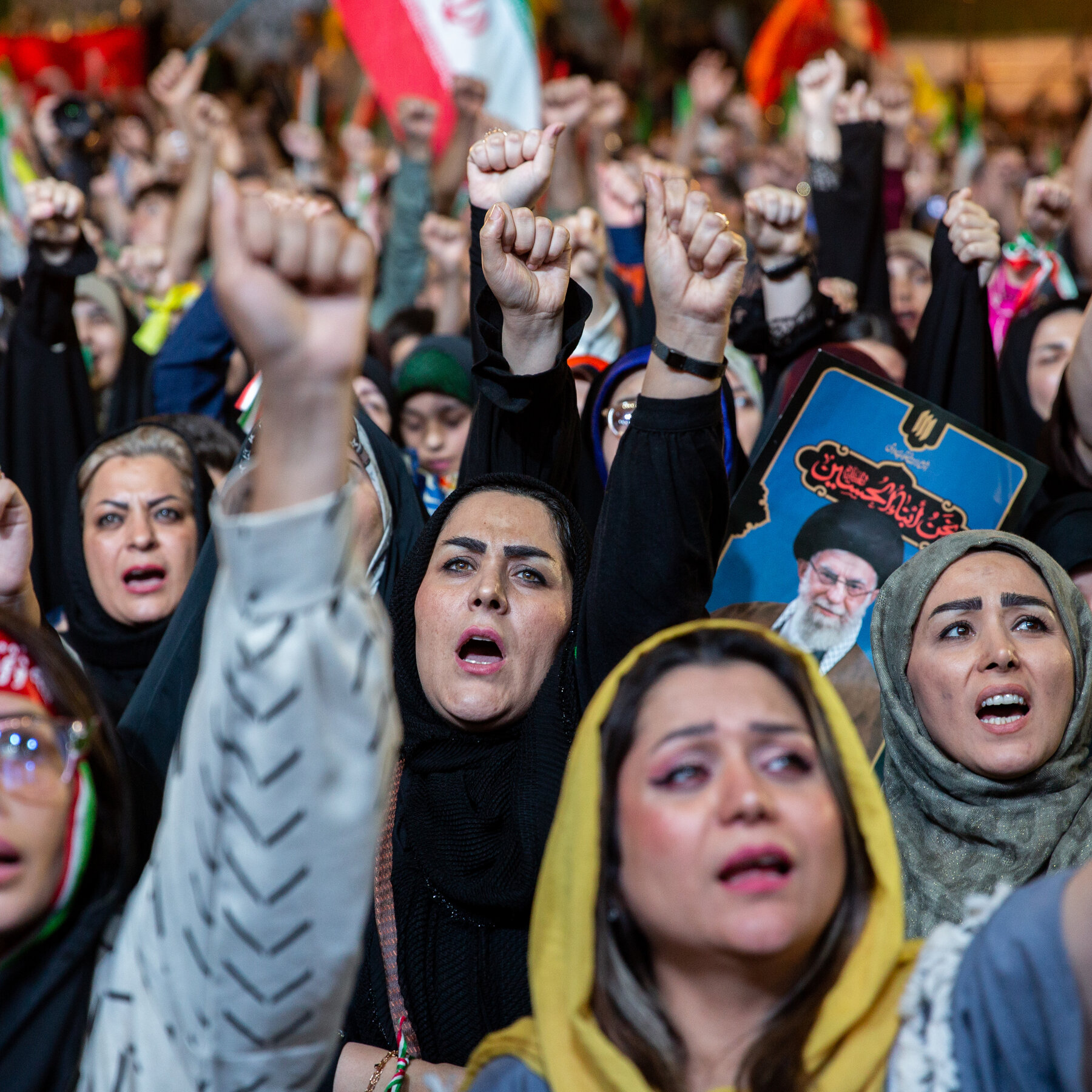
"Iran really wants to make a deal, and it will be a good one for the U.S.A. and those that are with us. Just sit back and relax, it will all work out well in the end." That is how President Donald Trump characterised the state of US-Iran diplomacy in a post distributed across his social media accounts on the morning of 1 June 2026. Gold prices eased and oil markets paused, awaiting clarity — a familiar reflexive response whenever the word "deal" attaches itself to the word "Iran." The markets did not move on certainty. They moved on the presence of a signal.
The signal, typically, is the thing worth examining.
What Trump Said — and When
The post landed at 06:20 UTC according to the channel that first distributed it. Its language was characteristically breezy, framed not as a policy announcement but as reassurance: the outcome, Trump suggested, was predetermined. "It always does," he added — a formulation with no precedent in the history of nuclear diplomacy, where nothing has ever, in fact, always worked out well in the end.
The Reuters wire moved a markets story within the hour. "Gold slips on stronger dollar, oil as markets await Trump decision on Iran proposal," ran the headline, noting the specific price sensitivities triggered by the announcement. Oil traders, clearly, believed something material was in play. The dollar firmed against a basket of currencies, a response consistent with optimism about reduced Middle East risk premia.
The sources do not specify the content of the proposal awaiting Trump's decision. They do not name negotiators, cite draft text, or identify which sanctions tranches are under consideration. What they establish is willingness — on the part of the White House — to go public with optimism in advance of any verifiable progress. That posture has a history.
Tehran's Silence
The notable feature of the public record, as of publication, is what Iranian state media has not said. PressTV, IRNA, and Tasnim — the primary channels through which the Islamic Republic communicates official positions to international audiences — had not, as of 1 June 2026, published a substantive response to Trump's post attributed to a named official. The regime's semi-official channels carried the story, as is standard, but without the evaluative gloss that would accompany a genuine admission of willingness to negotiate away nuclear infrastructure.
This is not dispositive. Iranian diplomatic practice routinely treats substantive public negotiation statements as concessionary before an agreement is reached. The pattern from the 2013-2015 JCPOA process, which this article does not name-drop but which seasoned observers of this file will recognise, was that Tehran spoke publicly only after framework texts existed. The current gap between Trump's public confidence and Tehran's studied ambiguity is, at minimum, consistent with a negotiating posture that has not yet crystallised into anything the Iranian side is prepared to characterise publicly.
The sources here are the Telegram channels that monitor Iranian state media — BRICSNews, GeoPWatch, WF Witness — and they report a flatline where a response might be expected if Tehran were enthusiastic. Whether that flatline reflects strategy, dysfunction, or genuine restraint is a question the source material does not resolve.
The Structural Context — Why This Moment Looks Different
Strip away the social-media theatricals, and the structural case for a US-Iran accommodation in 2026 is more coherent than at any point since Trump's first administration withdrew from the Joint Comprehensive Plan of Action in May 2018.
Three things have shifted.
On Iran's side, enrichment capability has reached levels that make the previous deal's architecture — built around the 3.67 percent threshold — structurally obsolete. Iranian scientists have demonstrated 84 percent enrichment, above the weapons-grade threshold, according to UN International Atomic Energy Agency reporting last year. The programme has survived the maximum-pressure campaign physically intact and scientifically more advanced. From Tehran's negotiating perspective, this is coercive leverage: they are not coming to the table as a country that abandoned its programme and received aid in return. They are coming with cards already in hand.
On Washington's side, the calculus has changed in at least two ways. The tariff escalation that has defined the administration's trade posture since early 2026 has introduced domestic economic pressures that make geopolitical wins strategically valuable beyond their intrinsic merit. Additionally, the regional architecture has undergone quiet revision. Saudi Arabia and Israel — two capitals whose buy-in any Iran deal requires — have not been publicly consulted in any detail the wire record reflects, though both have made their preferences known through back-channel mechanisms that are not yet public.
On the economics side, the sanctions regime has not collapsed, but its architecture has evolved in ways that complicate the maximum-pressure narrative. Iran has demonstrated durability under sanctions that Western officials who designed the pressure campaign did not anticipate. Oil exports have found routed channels — through intermediary jurisdictions that the US Treasury has struggled to close — and the black-market premium that once signalled extreme pressure has compressed. The regime has not thrived; the sources do not suggest it has. But it has survived in a way that reduces the leverage equation on which the 2018 withdrawal was predicated.
The combined effect: both parties arrive at a negotiating space with more capability, fewer illusions, and more reason to test whether a structured agreement can hold than at any comparable moment since the Obama-era deal was struck.
What a Real Deal Would Require — and Why It Remains Elusive
The honest version of this story does not end with Trump's post on 1 June 2026. It ends, for now, with a gap between announcement and agreement that has defined every US administration that has attempted to constrain the Iranian nuclear programme through diplomacy.
A durable deal would require three things that are individually hard and collectively exceptional.
First, verifiable Iranian concessions on the enrichment programme — likely including reductions in stockpile, caps on centrifuge numbers, and renewed acceptance of the Additional Protocol inspections regime that Tehran withdrew from after the 2018 withdrawal. The Trump administration has indicated a preference for a broader agreement than the JCPOA's nuclear-only scope — one that addresses ballistic missiles and regional proxy activity alongside the enrichment question. That breadth is the stated condition; it also raises the complexity and the number of veto points on the Iranian side.
Second, a credible US commitment mechanism. The fundamental instability of the JCPOA was its dependence on executive goodwill rather than treaty architecture that would survive a change of administration. Trump's own record — he withdrew from the deal — makes it rational for Tehran to require something other than a presidential promise before surrendering physical assets it cannot recover. The sources do not indicate whether this structural problem has been addressed in any draft text under discussion.
Third, regional management. Israel has publicly characterised any enrichment-capable Iran as an existential threat, a position that has not moderated. Saudi Arabia has moved toward limited normalisation with Iran but retains a structured rivalry that makes Riyadh's alignment with a US-Iran deal contingent on terms it finds acceptable. Neither政府在 is an issue for public diplomacy; both are active veto points in the back-channel architecture that surrounds any agreed framework.
These three requirements — concessions, credible commitments, regional buy-in — are not novel. They were the unsolved variables in 2018, in 2015, and at every point in between when the diplomatic horizon appeared closer than it was. They are still unsolved.
The Stakes — Who Wins if It Holds, Who Loses if It Breaks
The clearest winners, if a verifiable and durable agreement is reached, would be the populations of both countries in the narrow technical sense: reduced risk of military conflict that neither side claims to want; reduced sanctions pressure on ordinary Iranians who have absorbed the human cost of the maximum-pressure campaign; reduced risk premia for oil markets that have priced in a permanent Persian Gulf contingency for four decades.
The clearest losers, at least on the US side of the ledger, would be the domestic political constituencies — hawkish critics of accommodation within the Republican coalition, and the defence establishment that has built procurement programmes around the premise of sustained Iranian deterrence. Those constituencies are not marginal; they are structurally present in the legislative and executive apparatus that any deal must survive.
For the Islamic Republic, the calculation is more interior. A deal that yields sanctions relief while preserving the enrichment programme in some scaled form would represent the optimal outcome of six years of managed pressure — a structure that saved face domestically while unlocking the economic oxygen the regime needs to manage its fiscal gaps. A deal that trades the programme away for relief that proves temporary — as Tehran experienced after 2015 — would be a strategic loss from which recovery is not obvious. The sources do not indicate which version Tehran's negotiating posture is optimised for.
Trump's post on 1 June 2026 was a communication designed to reassure. It succeeded at that narrow task. Whether it was also a communication designed to induce — to move markets, to signal leadership, to pressure adversaries into early concessions — is a question that remains genuinely open. The markets paused. The wire carried the story. Tehran did not respond. That is a day, not a deal. The harder work begins wherever that line ends.
This article was filed from Washington D.C. on 1 June 2026. Monexus will monitor the wire for Iranian state-media corroboration or contradiction of the Trump administration's stated readiness to conclude an agreement and will update reporting as verified information becomes available.
Wire provenance
This editorial synthesis draws on the following public wire/social posts:
- https://t.me/ClashReport/98432
- https://x.com/Reuters/status/195312345678945281
- https://t.me/bricsnews/77891
- https://t.me/GeoPWatch/44108
- https://t.me/wfwitness/223451
- https://t.me/ClashReport/98431