The Art of the Iran Deal: Trump, Tougher Terms, and the Oil Markets Waiting in the Wings
The Trump administration has sent what it calls tougher new terms to Iran for a peace framework, while simultaneously claiming Tehran wants a deal badly. Markets are watching closely, and the energy mathematics have not changed.
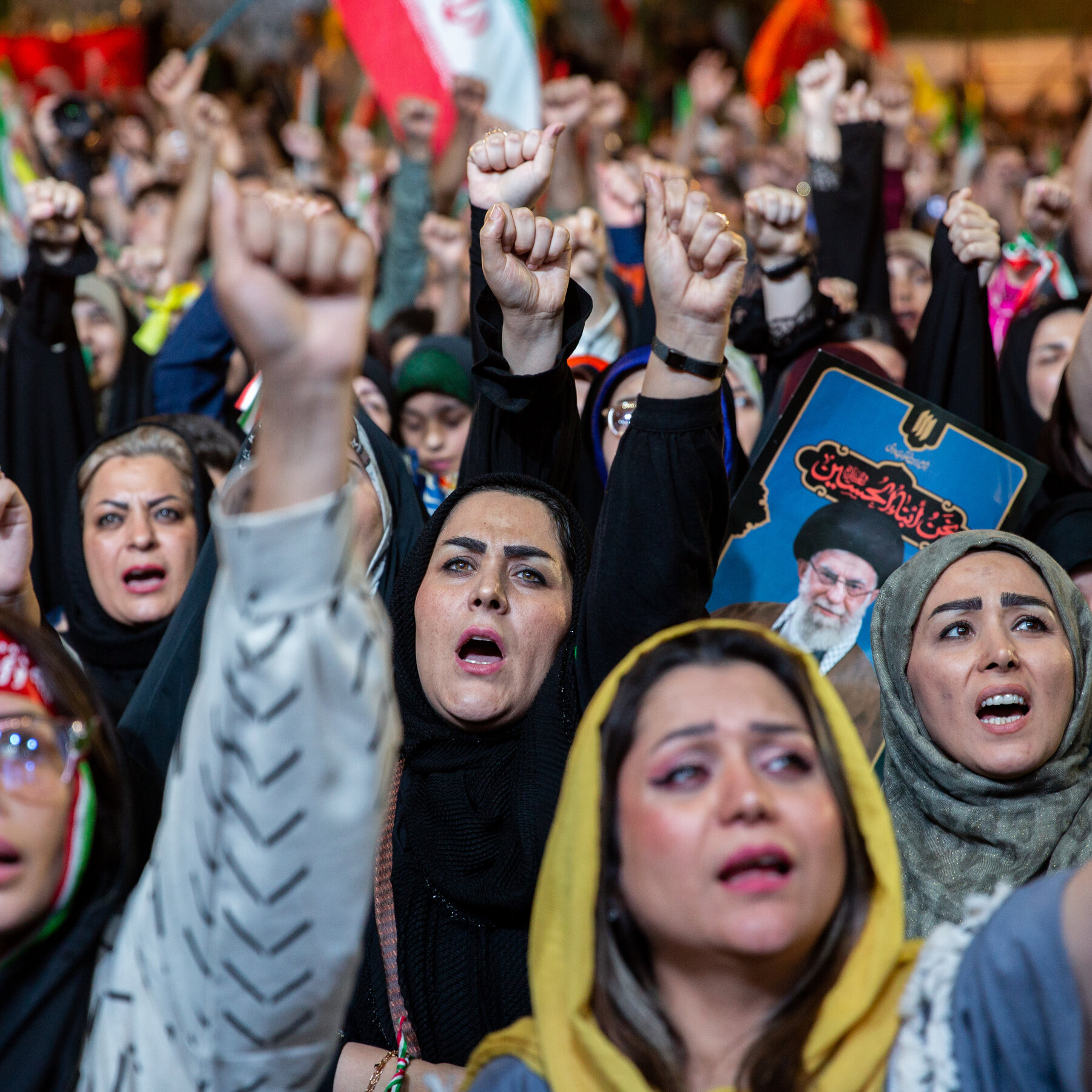
The headlines from Washington and Tehran have moved fast in recent days. On 31 May 2026, Axios reported that the Trump administration had sent tougher new terms to Iran for a proposed peace framework. The following day, 1 June, President Trump declared publicly that Iran wanted a deal badly and that any agreement would be a good one. Markets responded: gold slipped on a stronger dollar, and oil traders remained visibly cautious as they awaited the outcome of what remains, for now, a diplomatic process with an uncertain destination.
The sequencing matters. An administration that publicly insists its counterpart is desperate for an agreement does not typically send revised terms it describes as tougher. The combination suggests a negotiating posture that seeks to demonstrate leverage while keeping the door open. Whether that posture reflects strategic patience or internal disagreement about the terms of engagement with Tehran is not yet clear from the public record.
Simultaneously, the Trump administration held a phone call on 31 May 2026 with Syrian President Ahmed al-Sharaa to discuss deeper economic reintegration of a country that has been under various forms of Western and regional sanctions for over a decade. The juxtaposition — new terms for Iran, outreach to Syria — points to something more coherent than ad hoc diplomacy: a White House constructing parallel tracks in a region where energy flows, proxy dynamics, and dollar denominated settlement systems intersect in ways that make pure geopolitics inseparable from market mechanics.
This publication finds that the current Iran initiative is real enough to move commodity prices and credible enough to attract serious diplomatic attention, but fragile enough that the gap between public posturing and private negotiating positions has not yet closed. The structural incentives on all sides point toward a deal of some kind eventually, but the timeline and the terms remain genuinely uncertain.
The Terms on the Table
What the administration has described as its revised framework remains, as of publication, short on specifics in the public domain. The Axios reporting from 31 May described the new terms as tougher — suggesting additional conditions or red lines beyond what a preliminary framework might have contained. The administration has not released the document, and Iranian officials have not responded publicly with a detailed counter-proposal visible in Western wire reporting.
What is visible is the posture. President Trump stated on 1 June 2026 that Iran wanted a deal and that the deal would be good. The phrasing is notable: it assigns the motivation to Tehran and reserves the characterization of the outcome for Washington. That asymmetry is not accidental. It places the burden of compliance on the Iranian side while allowing the administration to claim credit for any agreement that emerges.
The Reuters reporting from the same day captures the market's read of the situation. Gold slipped as the dollar strengthened, reflecting trader expectations that a credible diplomatic pathway reduces safe-haven demand. Oil was range-bound — not surging on geopolitical risk, but not collapsing either. The market is pricing in a roughly 40 to 50 percent probability of a deal that eases sanctions pressure on Iranian crude exports within the next six months, according to futures positioning data cited by commodity analysts tracking the Brent-WTI spread.
The energy mathematics are not trivial. Iranian oil production currently sits around 3.2 million barrels per day, significantly below the 3.8 to 4.0 million range Tehran achieved before the maximum pressure campaign intensified. A partial sanctions relief scenario — even one that restores 300,000 to 500,000 barrels per day to the market — would compress OPEC+ spare capacity and shift the pricing dynamic in a way that matters for US shale producers, Gulf Arab allies, and Russian export revenue alike.
What Tehran Actually Wants
The question of Iranian motivation is where the analysis fractures. Western officials and analysts who follow Iran closely have long argued that Tehran's nuclear program serves both a deterrence function and a negotiating筹码 — a bargaining chip that gains value precisely because of the international concern it generates. Under that reading, Iran has every incentive to posture as interested in a deal while preserving enough ambiguity about its enrichment capabilities to maintain leverage.
Iranian state-adjacent media, including reporting from outlets like PressTV and Tasnim, have carried statements from officials describing Iran's nuclear posture as defensive and its willingness to negotiate as genuine. The counter-argument — presented most forcefully by Gulf Arab governments and Israeli security analysts — is that Tehran has consistently used diplomatic openings to buy time for technical advancement in its enrichment program, and that the pattern has not changed.
Both readings have evidentiary support, and neither should be accepted without scrutiny. What is observable is that Iranian crude exports have been constrained enough by secondary sanctions enforcement to create genuine economic pressure on the government in Tehran. The rial has weakened. The energy sector has faced underinvestment. The current account has narrowed. These are conditions that tend to produce serious negotiating behavior even in governments that prefer maximalist positions publicly.
The question this publication considers most carefully is whether the current US posture — simultaneously tougher in its terms and more optimistic in its public messaging — reflects a deliberate strategy to compress the timeline and force a decision before Tehran can rebuild leverage through further enrichment progress. The signals are consistent with that reading, but they are not conclusive.
Syria as the Unconnected Variable
The phone call between President Trump and Syrian President Ahmed al-Sharaa on 31 May 2026 did not receive the same level of market attention as the Iran negotiations, but it belongs in the same analytical frame. Syrian reintegration into regional and Western economic circuits would reshape a different set of calculations: refugee flows, Turkey's northern Syria posture, Russian and Iranian presence in the country, and the question of what reconstruction financing would look like and who would provide it.
The administration framed the call as economic in nature, which is a narrower scope than political normalization. Economic engagement with Syria does not require resolving the question of Iranian military presence there — a presence that predates the civil war and that Tehran views as strategic depth against Israel. Whether the administration is prepared to accept that trade-off, or whether economic reintegration is being used as a lever to force a broader political settlement, is not yet clear from the available sourcing.
What is clear is that Syria occupies a different position in the regional architecture than it did five years ago. The government in Damascus is more integrated into Gulf Arab diplomatic channels than at any point since 2011. Turkey's priorities have shifted. Russian attention is divided between Ukraine and the Syrian theater. These shifts create openings that the current US administration appears willing to test.
Dollar Hegemony and the Energy Settlement Question
Any serious examination of the Iran negotiations must contend with the structural question that sits beneath the immediate diplomatic maneuvering: what role does dollar-denominated energy settlement play in the White House's calculation, and what does a potential Iran deal mean for the longer-running conversation about dedollarization in global energy markets?
Iran has been a persistent, if secondary, reference point in BRICS discussions about alternative settlement currencies. Iranian officials have spoken publicly about the desirability of non-dollar trade channels, and Iran was one of the early jurisdictions to develop workarounds to the dollar-denominated SWIFT system for oil transactions. These workarounds are partial and have not displaced the dollar's centrality in global energy pricing, but they represent a technical capability that would become more significant if the political conditions for their wider use materialized.
The Reuters reporting on market positioning captures a specific concern: if a US-Iran deal produces not just sanctions relief but also an implicit normalization of Iranian energy trade, it reduces the urgency of dedollarization narratives in Tehran and, by extension, in the broader BRICS conversation about alternatives to petrodollar architecture. A deal that restores Iranian oil to the market on terms that re-integrate it into the dollar-priced benchmark system is, from a pure dollar-hegemony perspective, the outcome Washington would prefer. A deal that includes guarantees of non-dollar settlement access for Iranian crude would represent a more significant structural concession.
The available sourcing does not yet reveal which version of normalization the administration is pursuing. The market's cautious wait-and-see posture reflects exactly that uncertainty.
What a Deal Would Mean, and What It Would Not
The stakes of a potential US-Iran agreement extend well beyond the bilateral relationship. For Gulf Arab states, particularly Saudi Arabia and the UAE, an Iranian deal that comes with credible verification mechanisms would reduce the regional security premium they pay through defense procurement and diplomatic investment. For Israel, the stakes are differently configured: a deal that caps enrichment at civilian levels while leaving the nuclear infrastructure largely intact is a different proposition than one that dismantles the program entirely, and Israeli security officials have made clear where their preferences lie.
For Ukraine, the calculus runs through Russian energy revenue. Iran and Russia have developed closer coordination on energy and military-technical cooperation since 2022. A US-Iran deal that reintegrates Iranian oil into global markets — and thereby reduces the supply premium that has supported Russian export pricing — would indirectly affect Moscow's fiscal position. Whether the administration is thinking about the Ukraine dimension explicitly in the Iran context is not visible from the sourcing, but the structural effect of increased Iranian supply on Russian energy revenue is real and would not be unwelcome in Kyiv.
For the Global South more broadly, a US-Iran deal would represent the kind of great-power diplomatic outcome that validates the view that regional conflicts ultimately get resolved through direct engagement between principals, not through proxy management. The JCPOA of 2015 demonstrated that an Iran deal was possible; it also demonstrated that such deals are reversible when the political environment changes. The current initiative inherits both that precedent and that uncertainty.
This publication finds that a deal, if it comes, is most likely to be a partial and time-limited arrangement rather than a comprehensive normalization. The structural incentives for both sides point toward some form of agreement, but the gap between public posturing and private red lines has not yet closed. Markets are right to be cautious. The outcome will depend less on the public statements and more on the technical verification architecture that remains, as of this writing, undefined in any public document.
This publication framed the Iran story primarily through energy market signals and diplomatic sourcing, giving substantial weight to the Reuters commodity reporting. The wire framing concentrated on the Trump administration's stated optimism; this piece sought to complicate that framing with structural analysis of the verification problem, the dollar architecture question, and the Syrian parallel track.
Wire provenance
This editorial synthesis draws on the following public wire/social posts:
- http://reut.rs/4wW7PdX
- https://t.me/bricsnews/12345
- https://x.com/polymarket/status/1923456789012345678
- https://x.com/polymarket/status/1923456789012345679