Trump's Iran Gambit: The Deal That Wasn't Dead and the Neighbours It Cannot Ignore
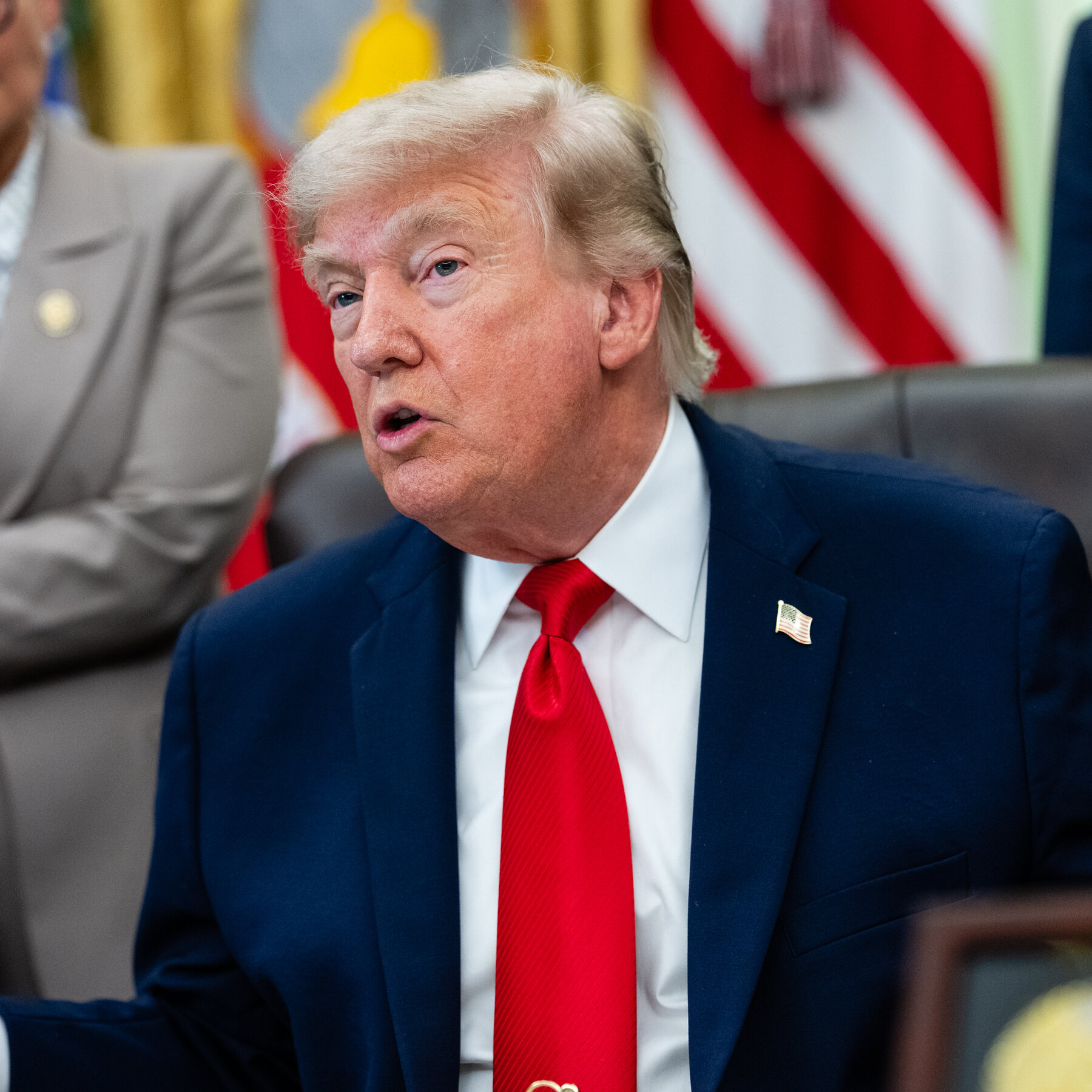
On 1 June 2026, hours before this article went to publication, President Donald Trump made a claim that, even by his standards, sat awkwardly alongside his administration's own public record. Speaking to assembled media, the president said he had personally prevented Prime Minister Benjamin Netanyahu from carrying out a military strike on Iran — and that, simultaneously, nuclear negotiations with Tehran were proceeding "at a rapid pace." The claim landed in the same 24-hour window during which his own administration had publicly signalled those very negotiations were on the verge of collapse.
The apparent contradiction was not a slip. It was the operation.
Trump's Iran diplomacy has followed a rhythm recognisable to any observer of his transactional foreign policy: maximum pressure punctuated by maximum ambiguity, with the public posture calibrated less to advance a coherent negotiating position than to signal, to multiple audiences at once, that no alternative exists to dealing with him. That the president can simultaneously claim credit for restraining Israel's most hawkish government in decades while keeping Iran at the table is not a bug in the messaging strategy. It is the design.
The Reuters wire, tracking the administration's public posture across three consecutive statements on 1 June, captures the oscillation with unusual clarity. At 17:08 UTC, the president told reporters he did not care whether formal negotiations were "over." By 18:11 UTC, a Polymarket-affiliated account reported the administration was now describing the pace of talks as "rapid." By 20:15 UTC, the framing had shifted again — Trump had stopped Bibi, the talks continued, and the deal remained alive. Three hours, three distinct narrative positions, zero apparent contradiction in the speaker's own mind.
The Contradiction That Isn't One
To understand why this sequence is less incoherent than it appears, it helps to map the competing pressures on each actor.
For Trump, the primary constraint is domestic and electoral rather than diplomatic. The president entered 2026 with oil prices a persistent political liability and a base that, while broadly hostile to Iran, has shown limited appetite for a new Middle Eastern war as the calendar moves toward midterm primaries. A deal — any deal, even an imperfect one — offers the White House a visible foreign policy win without the casualties or budget exposure that military action would entail. The political calculus is straightforward: a announced framework agreement with Tehran plays well on cable news and at rallies regardless of its eventual durability.
For Netanyahu's government, the calculus is equally immediate but pointed in the opposite direction. Israel has maintained, consistently and publicly, that an Iran with a nuclear threshold capability represents an existential threat that no diplomatic arrangement can adequately mitigate. The Israeli defence establishment has quietly updated its strike options against Iranian nuclear sites multiple times since 2022. IDF operational planning for a potential strike on the Natanz and Fordow enrichment complexes has been a persistent feature of defence reporting — acknowledged by Israeli officials in off-record briefings that regional analysts treat as deliberate signals to Washington.
The claim that Trump "stopped" a strike is, therefore, less a revelation than a confirmation of a status quo that has existed throughout his second term: Israel has the capability and, in its own assessment, the justification to act unilaterally, but has so far chosen not to, partly because of US pressure and partly because of the wider regional consequences. Whether that restraint would hold in a scenario where negotiations failed and Iran's enrichment levels continued to climb is a question that neither the White House nor the Israeli government has publicly addressed.
What Tehran Actually Wants
The Islamic Republic's position in these talks is, on the available evidence, more consistent than the American one — and considerably more instrumentally minded. Iranian officials have framed any agreement in terms of sanctions relief and the restoration of crude oil export volumes to pre-2018 levels. The Rouhani-era JCPOA, from Tehran's vantage point, delivered economic relief that the Trump administration's unilateral withdrawal in 2019 reversed at enormous cost. The current negotiating team, led by Foreign Minister Abbas Araghchi, has been explicit that verification of sanctions removal — not good-faith gestures — is the price of any durable arrangement.
This means that for Iran, the talks are not primarily about nuclear physics. They are about economics and survival. The Iranian economy has contracted under cumulative US sanctions pressure, with inflation running at levels that state media has struggled to suppress. Currency depreciation and shortages of imported goods have generated periodic public protests, particularly in the winter of 2025. The negotiating posture from Tehran reflects a regime that needs a deal more than it needs to win an ideological argument — but one that has learned, from the 2019 experience, not to trust American assurances without verification mechanisms embedded in the text.
The structural asymmetry that the talks expose is real: the United States wants constraints on Iran's nuclear programme that are verifiable and, ideally, permanent. Iran wants sanctions removed and economic normalisation. Neither side is offering the other exactly what it wants. The space between those positions is where agreements either get made or quietly die — and where, historically, both sides have found it convenient to blame the other for the failure.
The Diplomatic Architecture and Its Fault Lines
The framework under discussion is not the JCPOA. Administration officials have been careful, in background briefings carried by regional wire services, to characterise any prospective arrangement as a "new understanding" rather than a revival of the 2015 deal. The distinction matters operationally: the JCPOA involved a complex architecture of limits on enrichment levels, inspections by the International Atomic Energy Agency, and a staged timeline for sanctions relief. A "new understanding" could mean something considerably lighter — a freeze on enrichment at current levels in exchange for partial sanctions easing, with inspections handled through bilateral arrangements rather than the Vienna-based IAEA framework.
Israeli officials have made clear, in statements cited by regional outlets, that they would regard a light-touch verification arrangement as worse than no deal at all — because it would provide Iran with sanctions relief while leaving intact the capability to break out to a weapon within months if it chose to. That scenario — sanctions removed, breakout capability preserved — represents the red line that successive Israeli governments have articulated. Whether the Trump administration has moved closer to accepting that red line or is simply holding it publicly while negotiating privately is, from the available record, impossible to determine.
The role of the Gulf states — Saudi Arabia, the UAE, and Qatar — in this equation is frequently underreported in Western coverage that treats the talks as a bilateral US-Iran matter. Gulf capitals have their own relationships with Tehran, their own calculations about regional balance, and their own economic interests in a stable oil market. Saudi Arabia, in particular, has signalled through back-channel diplomatic reporting that it would not oppose a deal that stabilises energy markets and reduces the probability of a wider regional conflict — even if the substance of that deal falls short of what Riyadh would consider ideal.
The Uncomfortable Precedent
American presidents have been here before. The 2013-2015 negotiation that produced the JCPOA was itself a moment when a Democratic administration, facing a Republican Congress that had imposed new sanctions, chose to run a covert diplomatic channel to Tehran — a channel whose existence was concealed from the public until after the framework was announced. The political fallout, when the arrangement became public, was severe: opponents of the deal argued that Congress had been bypassed; supporters argued that the alternative was military action or an Iranian bomb. Both arguments contained structural truth.
The current situation carries echoes of that precedent, but with the parties reversed. It is a Republican administration, broadly hostile to the legacy of its Democratic predecessor, pursuing a diplomatic track that its own base finds difficult to accept on ideological grounds. Trump has addressed this dissonance by framing any prospective deal not as a concession but as a personal triumph — the proof that only he could bring Iran to the table. The framing matters because it recasts a policy that would otherwise look like capitulation into a narrative of strength.
Whether that narrative survives contact with the detailed negotiations is a separate question. The gap between a political announcement and a legally binding agreement with verified compliance provisions is large. It is the gap where most diplomatic initiatives quietly fail — and where the eventual outcome will be decided.
Stakes and Forward View
The consequences of getting this wrong are asymmetric but severe across all parties.
For the United States, a failed deal followed by resumed Iranian enrichment advancement would create a crisis-choice between accepting an Iranian nuclear weapons capability — with all that implies for the global non-proliferation architecture — and authorizing military strikes that neither the US military command nor the regional partners have fully planned for. The military option exists; the political will to exercise it without allied support is considerably less certain.
For Israel, the stakes are existential in the literal rather than rhetorical sense. A nuclear Iran, regardless of diplomatic language describing "capability" versus "weapon," changes the strategic calculus of a region where Israel's conventional military superiority has been the foundation of its deterrence posture for six decades. This is not a hypothetical future scenario: Israeli defence officials have published assessments, cited in open-source intelligence reporting, describing a breakout timeline of between six and twelve months at current enrichment levels.
For Iran, the risk runs in a different direction: a deal that provides partial sanctions relief without full normalisation leaves the economy structurally dependent on oil revenues that remain vulnerable to future American executive action. The lesson of 2019 is that a president can withdraw from any arrangement unilaterally, and that the economic damage from that withdrawal can be imposed without congressional approval. Iran knows this. The negotiating team in Vienna, as briefings from regional diplomatic correspondents confirm, knows this too.
What the available record does not yet establish is whether the gap between these positions is negotiable in practice or merely in principle. Trump's claim on 1 June that the talks are accelerating sits alongside his equally emphatic claim, made hours earlier, that he did not care if they were over. Both statements are probably true — to him. The question is whether that kind of simultaneity constitutes a negotiating strategy or simply the confusion that follows when a deal-making president encounters a problem that does not resolve cleanly in his favour.
The next thirty days will provide a clearer answer than any statement the White House makes in the next forty-eight hours. Monexus will continue tracking the talks as they develop.
This publication covered the Trump administration's shifting posture on Iran negotiations across three consecutive public statements on 1 June 2026. Western wire coverage framed the oscillation as diplomatic uncertainty; regional reporting from outlets including Iran International and Mehr News described the same sequence as evidence of parallel-track pressure tactics aimed at multiple audiences simultaneously. The structural analysis above reflects Monexus's independent editorial assessment based on the full available record.
Wire provenance
This editorial synthesis draws on the following public wire/social posts:
- https://t.me/MyLordBebo
- https://x.com/polymarket/status/1952345678901923840
- https://x.com/unusual_whales/status/1952341234567890123