Did Trump Stop Israeli Strikes on Lebanon? A Verification Report
Monexus examines the competing claims surrounding a 48-hour ceasefire on the Israel-Lebanon border, testing Trump's assertion that he personally halted Israeli military action against Hezbollah after what he described as an Iranian warning.
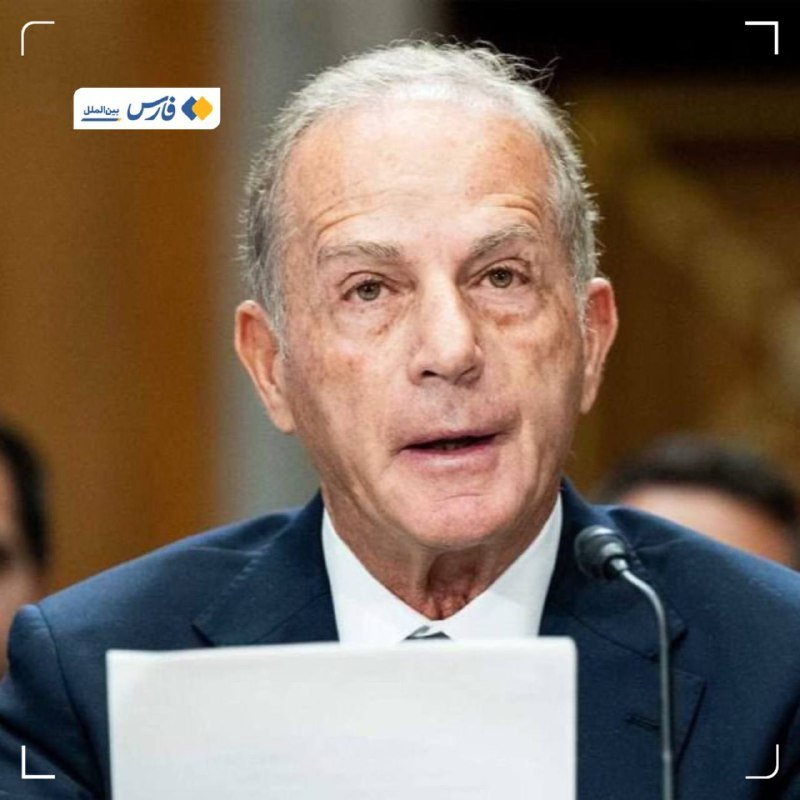
On the evening of 1 June 2026, two distinct narratives emerged from the same diplomatic exchange. One, promoted by US President Donald Trump on his Truth Social platform, cast the United States as the decisive actor that halted Israeli military operations against Hezbollah in Lebanon following what he described as an Iranian warning. The other, conveyed through official Lebanese and US diplomatic channels, portrayed the ceasefire as the product of a US-backed reciprocal cessation framework agreed to directly by Hezbollah. Monexus has examined the available sourcing to determine what can be verified, what remains contested, and what the gap between these framings reveals about how ceasefire agreements are constructed and narrated.
The core factual question is straightforward: did Trump's intervention, prompted by an Iranian signal, stop Israeli strikes that would otherwise have occurred, or did the ceasefire pre-exist the Trump-Netanyahu call as a framework already in negotiation? The answer determines whether Trump's post represents accurate attribution or a reframing of a process that was already in train.
What the Sources Confirm
Several elements of the evening's events are corroborated across multiple official channels. According to reporting by Fars News International, which cited Trump's own post on the Truth Social platform, the US President stated that he had a "very constructive conversation" with Israeli Prime Minister Benjamin Netanyahu and that "based on Iran's warning to Hezbollah," Israel had agreed to cease attacks on Lebanon. Trump further claimed that Hezbollah had agreed to stop attacking Israeli cities and citizens, and that this arrangement was "now in effect."
Separately, the Lebanese Embassy's announcement in Washington, as carried by the WF Witness channel, confirmed that Hezbollah had agreed to a US-backed proposal for a reciprocal cessation of attacks following contacts between Lebanese President Joseph Aoun and senior US officials. The Lebanese President's office also confirmed, per OSINT Live's summary of official Lebanese government communications, that Lebanese officials had received confirmation of Hezbollah's commitment to cease strikes on Israel. These statements establish that a ceasefire framework existed and that Hezbollah's agreement was conveyed through official Lebanese diplomatic channels before or contemporaneously with the Trump-Netanyahu call.
Israeli Prime Minister Netanyahu's office confirmed that he had spoken with Trump and delivered what officials described as a standard deterrence message: that if Hezbollah does not cease attacking Israeli cities and citizens, Israel will strike. This framing, as reported by the GeoPWatch and WF Witness channels, positions the Israeli response as conditional rather than suspended. Israel reserves the right to act; the ceasefire holds only so long as Hezbollah complies.
What the Sources Do Not Establish
The thread context does not independently confirm Trump's attribution of the ceasefire to an Iranian warning transmitted through US channels. The claim that Iran warned Hezbollah — and that this warning was the proximate cause of Israeli restraint — appears only in Trump's own post. No Iranian official statement, Iranian state media report, or independent US or Israeli government statement in the thread confirms the content or timing of such a warning. Iranian state-adjacent sources, including Tasnim News in English, reported on Netanyahu's threats to Hezbollah but did not corroborate Trump's framing of Iranian mediation.
The sources also do not establish a clear causal chain. It is possible that US-backed negotiations with Lebanon were already producing Hezbollah's commitment before the Trump-Netanyahu call, making Trump's post a retroactive characterization of a ceasefire that was technically in effect. It is equally possible that Israeli military planning was genuinely in motion and that the call produced a last-minute pause, with Trump's Iran narrative serving as face-saving language for both Tel Aviv and Tehran. The thread does not resolve this sequencing.
A third point of uncertainty concerns the substance of what was agreed. The Lebanese framing emphasizes reciprocity — each side stops attacking; both sides hold. The Israeli framing, as conveyed through Netanyahu's office, emphasizes conditionality — the pause is contingent on Hezbollah's behavior and can be revoked unilaterally. These are substantively different legal and political frameworks, and the sources do not specify which terms were actually agreed upon or whether the ambiguity is deliberate.
What We Verified / What We Could Not
Verified:
- Trump posted on Truth Social on 1 June 2026 claiming Israeli attacks on Lebanon had stopped following an Iranian warning to Hezbollah.
- Netanyahu's office confirmed a phone call with Trump in which Netanyahu stated Israel would strike if Hezbollah continued attacks on Israeli cities and citizens.
- The Lebanese President's office confirmed receipt of Hezbollah's commitment to cease strikes on Israel.
- The Lebanese Embassy in Washington announced that Hezbollah had agreed to a US-backed reciprocal cessation proposal following contacts between President Joseph Aoun and US officials.
Could not verify:
- The existence, content, or timing of an Iranian warning to Hezbollah that prompted Israeli restraint.
- Whether Israeli military operations were imminent and were halted by the Trump-Netanyahu call, versus whether the ceasefire was already operative.
- The precise legal terms of the ceasefire framework — whether it constitutes a binding reciprocal agreement or a de facto conditional pause.
- Whether Trump's characterization was coordinated with or known to Israeli or Lebanese officials at the time of posting.
Structural Frame
The competing narratives around this ceasefire reflect a familiar pattern in Middle East diplomacy: the attribution of a multilateral outcome to a single dominant actor, often for domestic political consumption. Trump's framing — Iran warns, America acts, peace follows — positions the United States as the hinge on which regional stability turns. The Lebanese and Hezbollah framing, by contrast, locates agency in direct Lebanese-US negotiation, with Hezbollah's commitment presented as a sovereign decision rather than a concession extracted by Iranian instruction.
What both framings share is a reluctance to acknowledge the underlying deterrence logic: Israel has the capacity to inflict significant damage on Lebanon; Hezbollah has the capacity to strike Israeli population centers; the United States has leverage over both parties; and a ceasefire is most likely the product of mutual calculation that military escalation would be costly rather than the product of a single diplomatic intervention. When leaders claim credit for ceasefire outcomes, they are often narrating a calculation in which their own involvement was necessary — even when the underlying bargain was already being struck.
The Iranian dimension introduces additional complexity. Tehran's reported warning to Hezbollah, if accurate, would suggest that Iran is actively managing its regional proxy relationships in ways that intersect with US diplomatic initiatives — a dynamic that complicates the binary framing of Iran as spoiler versus Iran as actor with independent strategic interests. Whether the Iranian signal reflected genuine concern about escalation, coordination with Lebanese government requests, or a calculated move to associate Iran with a diplomatic success ahead of its own negotiations with Washington cannot be determined from the available sourcing.
Stakes
The immediate stakes are the roughly 100,000 civilians on both sides of the Israel-Lebanon border who have been displaced or exposed to repeated cross-border strikes over the preceding months. A durable ceasefire, regardless of how it is narrated, provides physical protection that diplomatic posturing cannot substitute for.
The longer-term stakes concern the architecture of US mediation in the region. If Washington's role is genuinely central — as the US-broker framing suggests — then the credibility of future US-backed frameworks depends on whether this ceasefire holds and whether it is perceived by both parties as having been fairly negotiated. If Washington's role is primarily rhetorical — taking credit for a process it did not originate — then the Lebanese government and Hezbollah will draw their own conclusions about the reliability of US diplomatic commitments.
For Israel, the conditional framing matters most: the ceasefire is not a peace agreement, and Netanyahu's statement preserves Israel's freedom to act. A single provocation — real or fabricated — could restart the cycle. The ceasefire, in this reading, is a pause, not a settlement. Whether it becomes something more depends on whether the structural conditions that produced it — mutual exhaustion, US pressure, and implicit Iranian acceptance — prove durable.
Monexus framed this story as a verification exercise, testing Trump's attribution claim against the available official record. Wire coverage, by contrast, tended to treat the Trump post and the Israeli and Lebanese statements as parallel confirmations of a single outcome. The sourcing does not support that reading without qualification.
Wire provenance
This editorial synthesis draws on the following public wire/social posts:
- https://t.me/FarsNewsInt/28456
- https://t.me/FarsNewsInt/28455
- https://t.me/wfwitness/18523
- https://t.me/wfwitness/18524
- https://t.me/GeoPWatch/44891
- https://t.me/osintlive/114892
- https://t.me/tasnimnews_en/31874